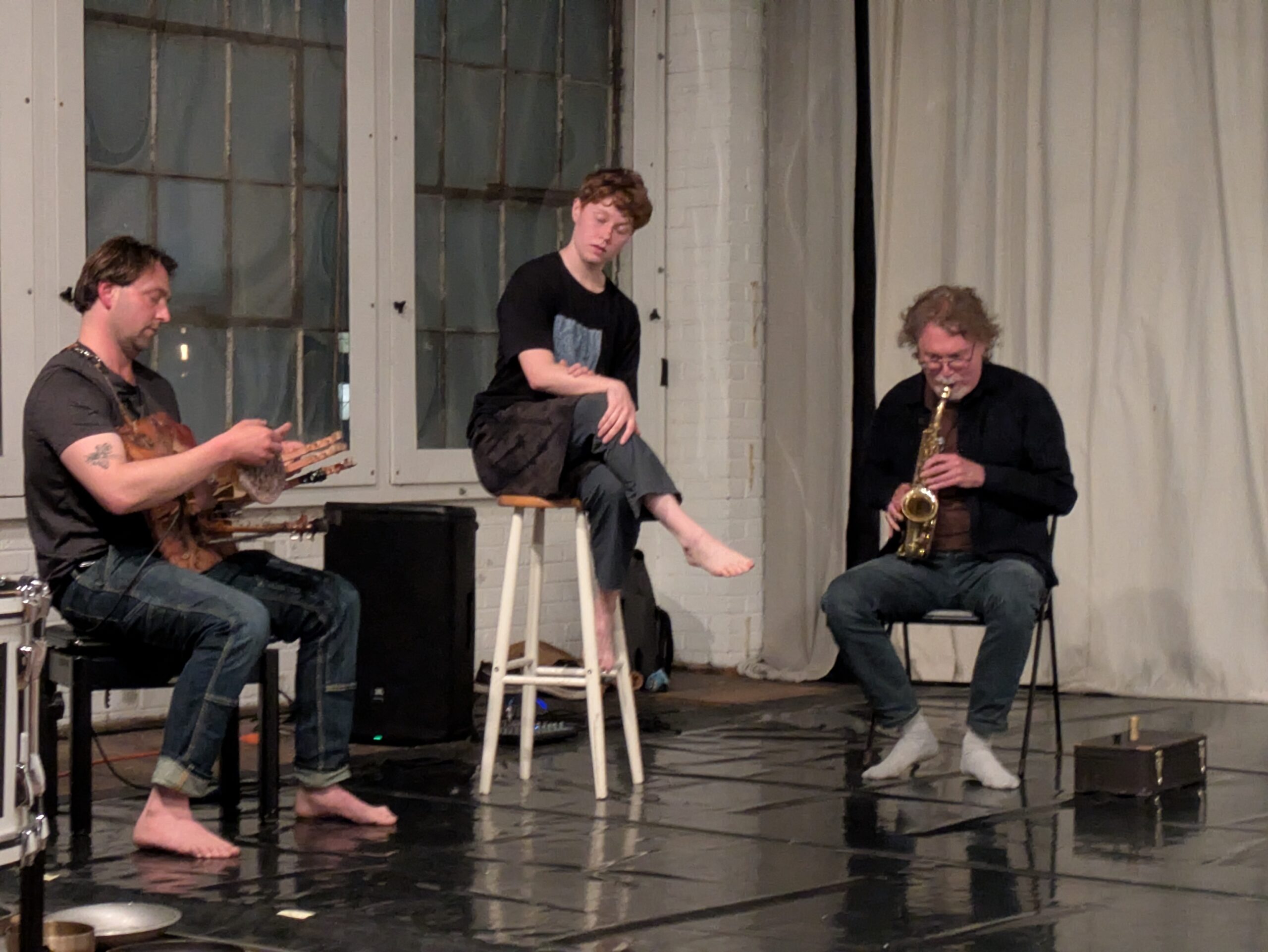
One more flight, the man at the top of the stairs said encouragingly. I took a deep breath and reached the fourth floor of thefidgetspace. This scene was a blast from the past. I was a young dancer loft hopping and experiencing dance in Soho in the early 1970’s and many of the spaces looked just like this one.
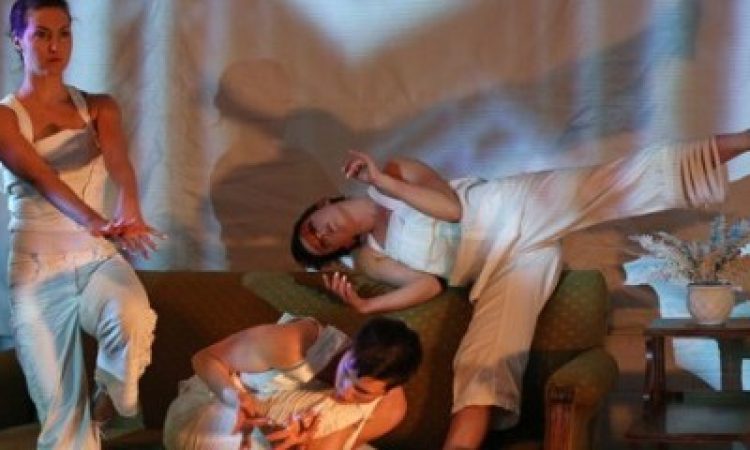
situation: becoming, an evening length work conceived and directed by Megan Bridge was presented at thefidgetspace this weekend. Before the performance began, my attention was drawn to a pulsing bass rhythm. The audience was instructed to sit on white cushions in the middle of the floor. My senses, now on overload, were engulfed by dim lights, an electronic soundscape, moving images on the four walls, and four dancers moving in different tempos, positions and areas. Chevrons and zigzags of light whirled and turned, making me feel like I was turning too. The dancers, dressed in white overalls, moved around the room so that we had to shift our positions frequently in order to see everyone.
When the window shades were lifted, the night entered the dialogue with the dancers and soundscape.
Peter Price, a musician and director of the projections, is half of the group fidget. Seated, concealed behind artwork, he worked his magic with sound and light. Mauri Walton wrote on the wall, sorted objects from a basket, and made origami figures. Megan Bridge, the other half of fidget, balanced, extended, jerked, jumped and leaned, all without losing her momentum. Annie Wilson lent a soft strength, luxuriating at times so that she was almost on my lap. It was a sensual moment, as we saw her close up and personal in a way that happens rarely in performance. Zornitsa Stoyanova engaged us with penetrating stares and movements that shifted space and territory. There was a translucent and luminous aura in the dancers’ faces, making them other-worldly.
situation: becoming is a work that requires serious contemplation. Its sounds, movements and textures orient the viewer, but in a disconcerting way.
Messages whispered in our ears were dutifully passed on to others. The dancers engaged us with words, space and an intimacy that was profound. There was no ending; the dancers and musician simply morphed into hostesses and host as they offered us wine, water, beer and snacks. The audience gradually stood and started talking to each other and the artists. It was family. Community. And it felt good!
situation: becoming, , thefidgetspace, May 3-5, 8p; May 6 at the Center for Performance Research, NY.