“Glocalization” is a buzzword of sorts: globalization is not a one-way street, we are told, because “locals” take up the products and cultural forms of the dominant globalizing forces, adding an indigenous spin. Gangster rap consumed in Pakistan leads to local Pakistani gangster rap that might end up on the playlist of a Brooklyn hipster DJ anxious to distinguish herself in the crowded market of Brooklyn hipster DJs by specializing in, say, “Asian fusion gangster rap.” “Westerners” are particularly enamored of this notion of “fusion” but we lose sight of the fact that the elements of the local culture that make their way back to the dominant culture are those most readily assimilated. The periphery contributes only “flavor” to the cultural center.
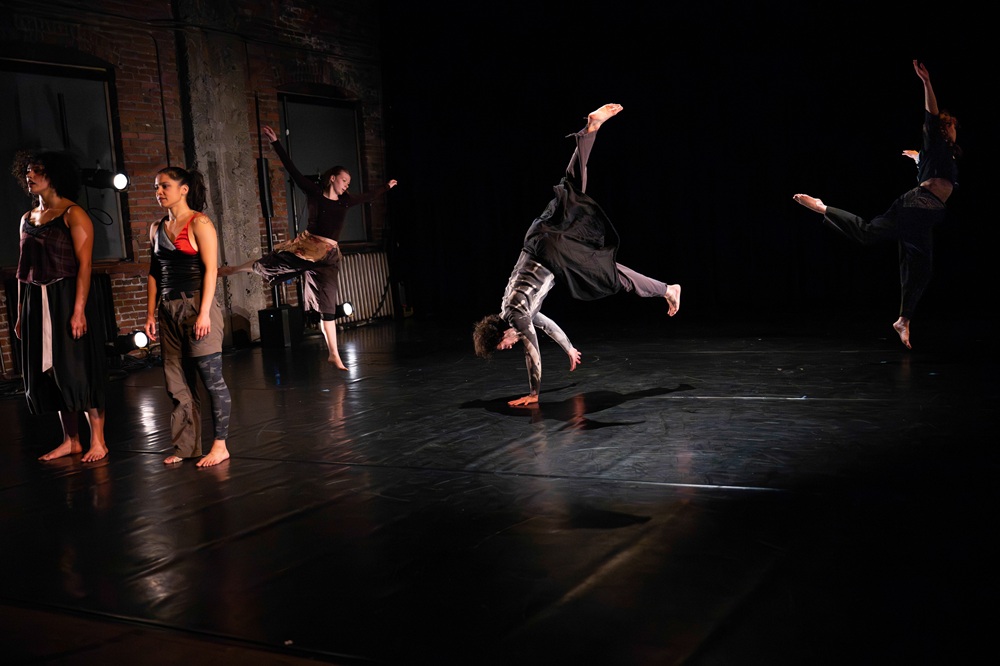
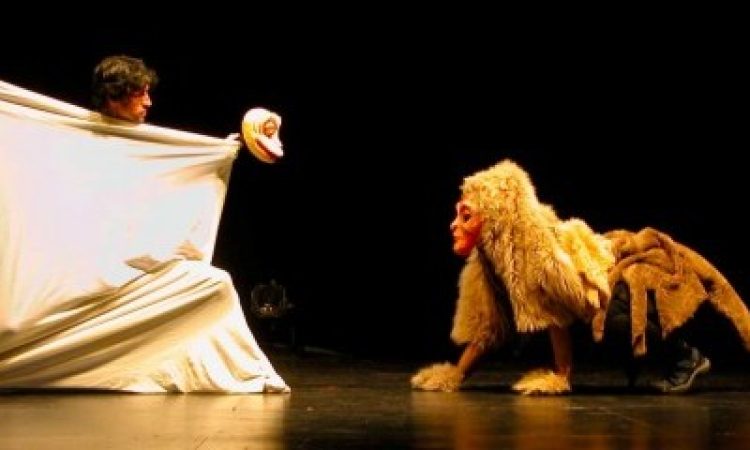
Saturday’s performance at the Annenberg’s Harold Prince Theater of Two Hands by Hua Hua Zhang’s Visual Expressions in collaboration with Kun-Yang Lin was an uneasy fusion of East and West yes, but also an uneasy fusion of Zhang’s project with Lin’s company of dancers, and of the dancers with Zhang and Sebastienne Mundheim’s puppetry.
Although much of the dancing was technically proficient, choreographic intent went missing, and indeed the printed program did not state who was responsible for the movement. Kun-Yang Lin, whose choreography usually has more invention and precision, is credited as “choreographic consultant.” Although Lin advertises his work as a fusion of American and Asian influences, he is first and foremost a modern dance traditionalist and with every taste of traditional Chinese dance, Tai Chi or martial arts comes a full helping of Martha Graham (not everyone’s cup of tea).
At its best, through the fluid strength of Lin’s own body, or those of the always engaging Olive Prince and Scott McPheeters, Two Hands satisfactorily projected traditional images of grace and beauty. At its less-than-best we were served a plate of lukewarm modernism desperately in need of the 1960s to happen. But to view Hua Hua Zhang’s “visual expressions” through the prism of its dancing is unfair. This performance is, first, the work of a puppet artist attempting to speak to the experience of growing up in China and now trying to find a unique voice within the Chinese diaspora.
Zhang’s program notes told us that Two Hands “encourages the audience to distinguish between Western and Asian values and to see how they both contrast and embrace each other”; Zhang seeks something other than mere “fusion,” but this reviewer struggled, without further context, to determine which Western and Asian values were on display and how we might read them. Elsewhere the notes stated that Two Hands “blends puppet arts, dance, music and theater to present a classical, elegant, dream-like performance.” And that’s an accurate description of what was on the menu.
Two Hands, Hua Hua Zhang’s Visual Expressions, Annenberg Center, October 14-15. No further performances.
Editor Note: In response to Ken Metzner’s letter to the editor and the subsequent posts, the title of this work, originally “One from Column A…” was changed on 12/5/2011. Metzner’s letter along with responses from TD and author Peter Price are published in Letters to the Editor.