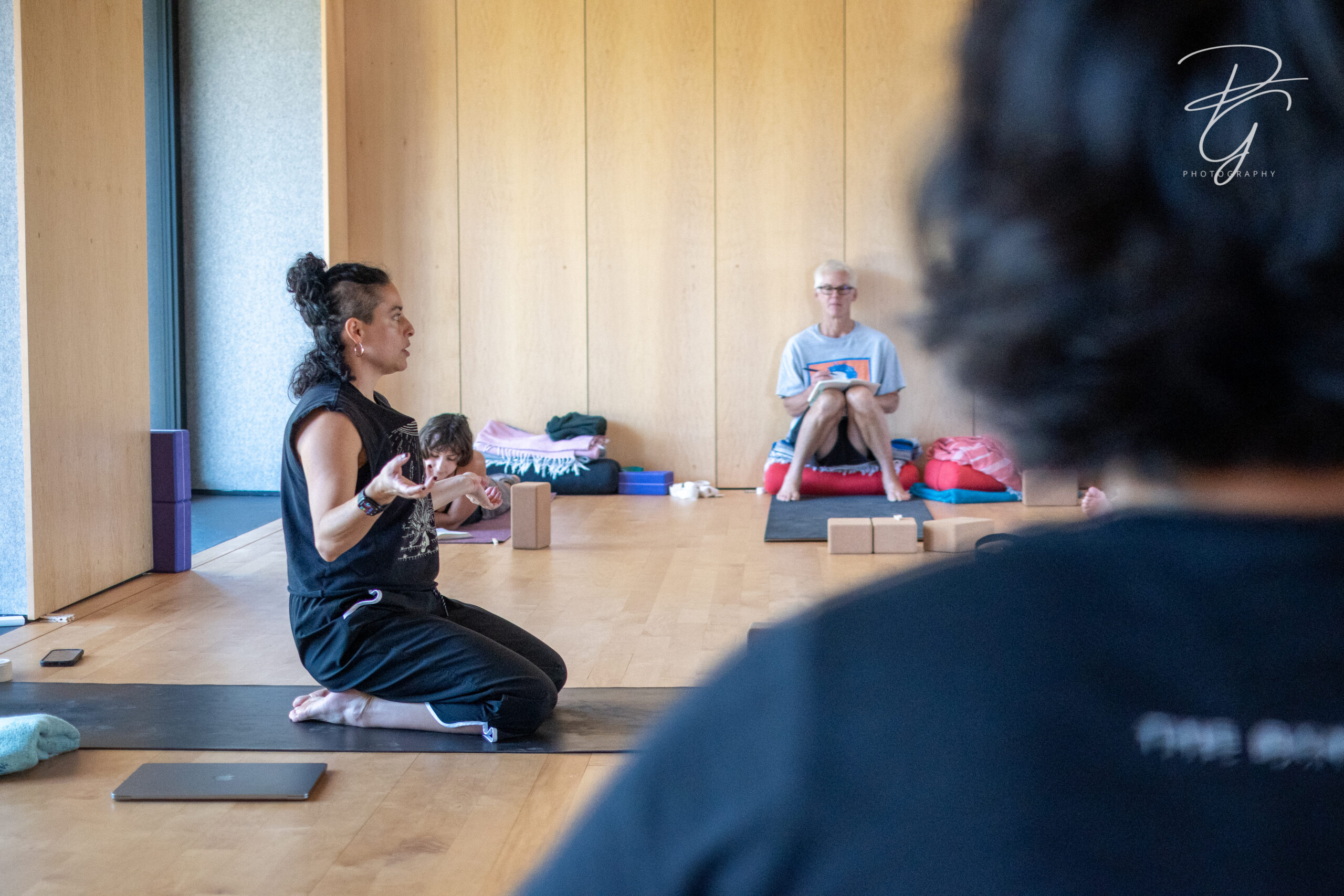
“Our responsibility is to support the field,” Wendy Perron declared to a small crowd of dance writers and community members gathered in the Live Arts Brewery space. Perron, Editor-in-Chief of Dance Magazine, was in Philadelphia leading a 3-day writing workshop for thINKingDANCE. The intensive weekend closed with a public conversation on criticism, responsibility and the changing world of arts journalism. At times boldly unequivocal and at others candid and contemplative, the respected writer and dancer held forth for 90 minutes sharing lessons from her varied career.
Lisa Kraus, Editor-in-Chief of thINKingDANCE, began the conversation by asking Perron to reflect on her early career, beginning with a stint writing for the SoHo Newsin the mid-1970s. “We were writing about the things that were between categories,” Perron said. “There were people from theater, from visual arts, from performance and from dance. I wrote about all of that. If I saw an auction and I wanted to write about that as a performance, I wrote about it. It was great to write about that unclassifiable stuff in the ’70s. nce, I went to a baseball game and I wrote about it as a performance.”
Perron noted the stark differences in the publication process between the 1970s and today. “You actually cut and pasted! If I wanted a photo, I had to run to Babette Mangolte’s loft and get it from her.”
While espousing a love for print, Perron was enthusiastic about the rise of social media and the Internet in the journalistic world. “I love having all of [Dance Magazine’s] content on the Internet. Theoretically you don’t have to subscribe [to the print edition] to see everything, but having the magazine in your hand is an emotional experience.” Citing a recent interview with Robert Battle as an example, Perron pointed out that online content can enhance a reader’s experience. “In print it’s 1400 words, but it’s a great interview so I put the whole interview online: it’s about 3000 words. If you really want to get to know Robert Battle, you can read the full thing,” she said.
The Internet as a tool for a more expansive experience was a recurring theme in the conversation. Perron encouraged dance writers to watch YouTube videos of performers with whom they were not familiar prior to reviewing them and she highlighted the ease of alerting readers to supplemental information on current performances by posting Dance Magazine articles as links on Twitter.
Ultimately, however, she acknowledged that for her publication the online content was dictated by the print form. “The dance world is huge; our job is to narrow it down and put it through a funnel for the number of pages we have.” Perron continued, “one of the ways we do that is through whatever photos are available, to be totally honest about it. There might be a fascinating, important thing that’s happening in the dance world, but if the pictures are fuzzy or dark, our art editor is going to cut it.”
Perron highlighted the various aesthetic concerns that affected her magazine’s content, using a recent cover photograph of Sutton Foster as an example. When audience member Bill Thomas questioned why Misty Copeland, one of the first black female soloists for the American Ballet Theatre, did not appear in a tutu on a recent Dance Magazine cover, Perron was thoughtful. “I know we missed that opportunity to show a black ballerina in a tutu,” she said. “We haven’t had a tutu cover in years and yet we cover classical ballet. And it’s not that we don’t want to show the traditional tutu…[Copeland’s] real easy to photograph; she looks fantastic in every one. The tutu photo was not actually great. A lot of dancers don’t photograph well in a tutu. There are long staff discussions about this stuff.”
Perron was equally candid when the conversation turned to her personal philosophy on the dance reviewer’s role. “We’re to give a positive view of the field—which isn’t hard,” she said. “We have a minimal amount of snark. I don’t think it’s productive to do nasty stuff about other dance artists.”
Elaborating about her views of evaluating dance, Perron remarked, “I don’t like using the word “easy” because dance is very hard. Everything is so difficult in our field. I like to be respectful of the art, not minimize the difficulties, and at the same time give a 3-dimensional picture of the artists.”
“What do we think a review should do?” she asked the audience. “I think the main function is to enlarge the impact and the communication of the art work.”