Editor’s Note: What’s Not a Review?

Lisa Kraus

Last month a question on TD’s Facebook page got me thinking. In response to Kirsten Kaschock’s This is not  a review., Ashley Lippolis, while appreciative, also wished “that someone had given Tori Lawrence’s evening of dance a critical review.”

I see the value of more traditional reviews, of course! But also value other kinds of responses, something TD makes possible. Here’s what I wrote on Facebook:

“TD has spent a good deal of time considering what directions dance writing is moving in now. Many of us are dissatisfied with traditional review formats–description and opinion from author-as-authority. Tommy DeFrantz in his workshop with us encouraged us to consider the temperature of the room, the complete experience surrounding a performance and the questions posed by the performance. It seems to me that focusing on the question of how this work of art relates or does not to our up-to-the-moment reality falls within this brief. While one of the motivators for starting thINKingDANCE in the first place was an awareness of the insufficient response in print to serious contemporary work in PHL, and while, as an artist, I completely understand the wish to be reflected in full, I also fully support the genuine research of authors reflecting the dance they see in alternative ways. Edwin Denby rarely gave a complete picture of anything (to look to the past) and he is held in high esteem…. Because TD is not the only game in town, and because we offer our writing to the public for free, we reserve the right to pursue the art of dance writing in a way that challenges tradition and points to new possibilities.”

Sounds kind of hard line rereading it now. But how else will dance writing grow? What do you think?


Share this article

Lisa Kraus

Lisa Kraus’s career has included performing with the Trisha Brown Dance Company, choreographing and performing for her own company and as an independent, teaching at universities and arts centers, presenting the work of other artists as Coordinator of the Bryn Mawr College Performing Arts Series, and writing reviews, features and essays on dance for internet and print publication. She co-founded thINKingDANCE and was its director and editor-in-chief from 2011-2014.

PARTNER CONTENT

Keep Reading

The Willis in a Red Mansion?

Ziying Cui

The Challenge of Chinese Ballet

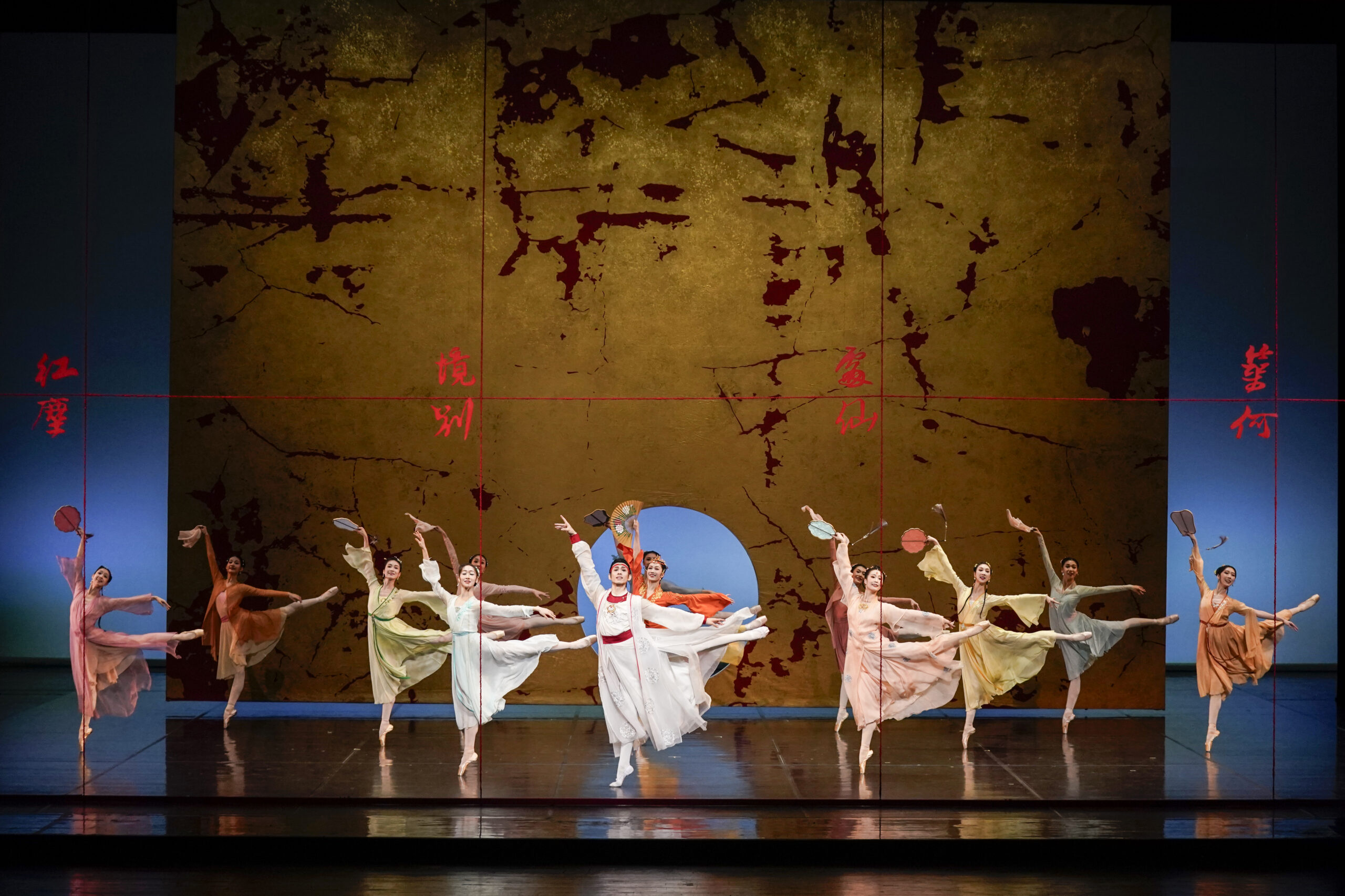
At center stage, Baoyu, dressed in flowing white robes, leads a semicircle of female dancers dressed in pastel, Han-style costumes. The dancers extend one leg in high arabesque-like lines while holding delicate props such as fans and round silk fans, creating a symmetrical and airy composition reminiscent of classical Chinese painting. Behind them is a large golden backdrop textured like aged parchment. Red calligraphic Chinese characters are written across it, associated with the supernatural framework of the story. A circular opening in the center of the backdrop reveals a cool blue background, evoking the moon or an otherworldly portal. The stage lighting highlights the dancers’ flowing sleeves and soft colors—peach, pale green, yellow, and ivory—suggesting the youthful elegance of the family's girls.
Photo: The National Ballet of China

Science and Dance in Creative Conversation

Jen George

Science in partnership with dance yields collaboration and contrasting forces.

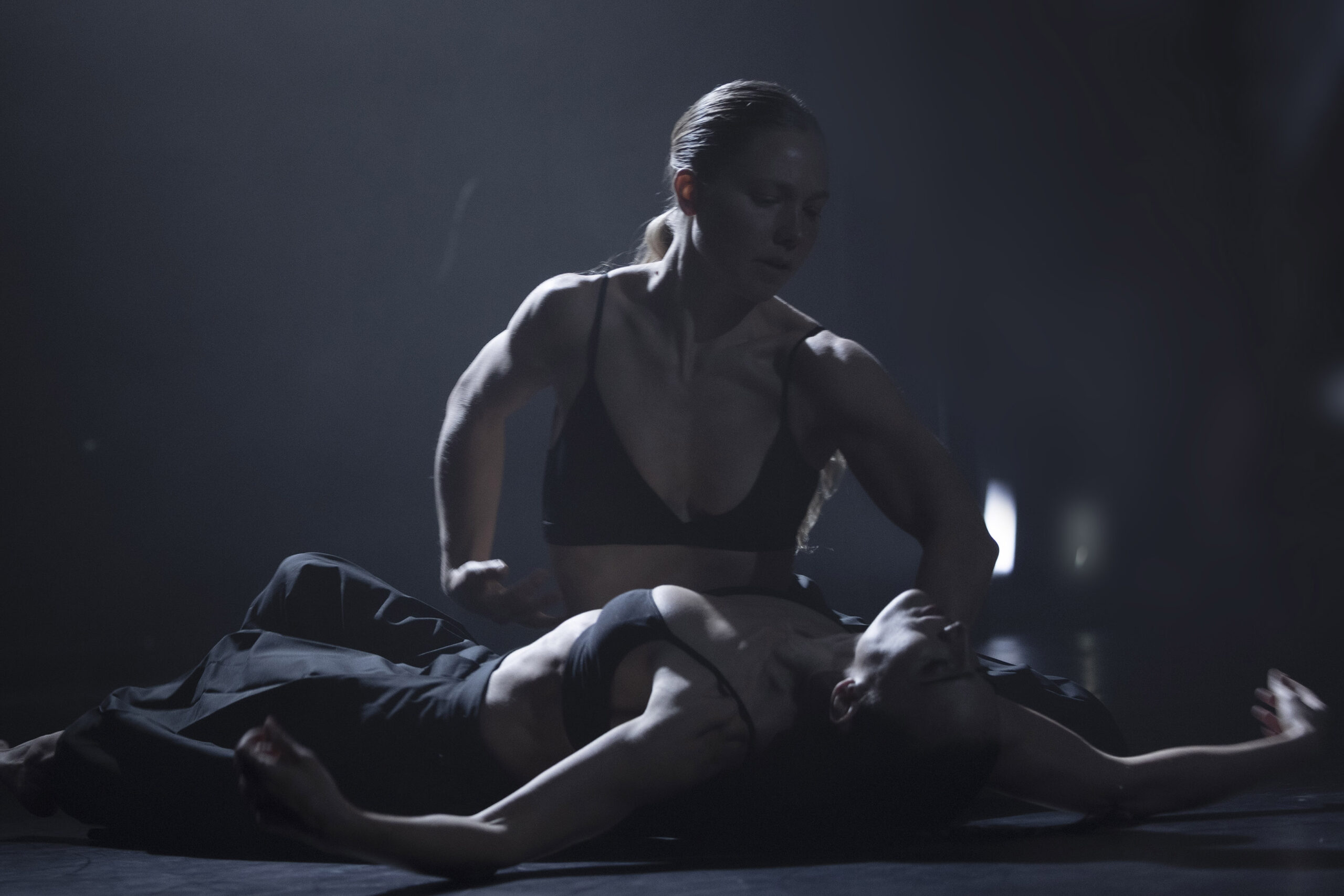
Two dancers wear black costumes, and the lighting is low and shadowy. One dancer lays face-up on the stage with arms softly outstretched to the sides and their chest lifted off the floor, legs bending at the knees. The other dancer sits, gazing downwards at them. Dancers: Sayer Mansfield, Marla Phelan
Photo: Tim Richardson