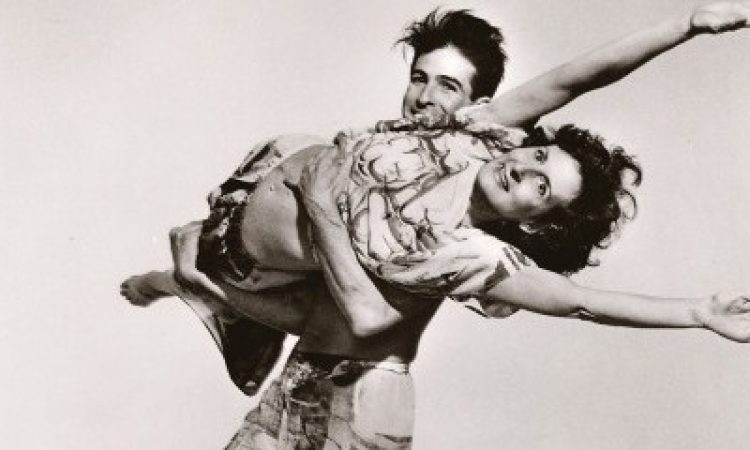
Photo: Babette Mangolte

Editor’s Note: Letter to the NY Times

Lisa Kraus

thINKingDANCE  aspires to write about dance in an open and fair way, especially dance that’s edging into new territory or otherwise not well represented. It’s a hard thing to do, and we haven’t had a perfect record. But it’s something all dance writers should be accountable for, including those at the august New York Times. 

To the Editor:

As a dance artist who has followed the work of Trisha Brown since 1975, I was gratified to see coverage of her career in Sunday’s feature (Pure Dance, Pure Finale) but was dismayed by Alistair Macaulay’s pronouncement that her style lacked rigor and that the greatness of her work is in question.

Both readers and the historical record are done a disservice when the lead dance writer at the Times fails to see that the rigor in Brown’s work is no longer about the pointed foot but about the precisely timed collision, the exact harnessing of weight falling through space, the down-to-the centimeter exactness of spatial relationships and also about a continuing investigation over the course of over fifty years that opened out new ground in multiple, distinct phases of dance making.

At the death of Pina Bausch, this writer also dismissed the value/quality of that artist’s work. Is there a thrill in the power of the writer to belittle the truly great? Dance is such a struggle as an art and a life. When someone has transformed the field, let’s recognize that and not, through ignorance or prejudice, minimize her value.

Sincerely yours,

Lisa Kraus
Former dancer, Trisha Brown Dance Company
Editor, thINKingDANCE.net

Share this article

Lisa Kraus

Lisa Kraus’s career has included performing with the Trisha Brown Dance Company, choreographing and performing for her own company and as an independent, teaching at universities and arts centers, presenting the work of other artists as Coordinator of the Bryn Mawr College Performing Arts Series, and writing reviews, features and essays on dance for internet and print publication. She co-founded thINKingDANCE and was its director and editor-in-chief from 2011-2014.

PARTNER CONTENT

Keep Reading

The Willis in a Red Mansion?

Ziying Cui

The Challenge of Chinese Ballet

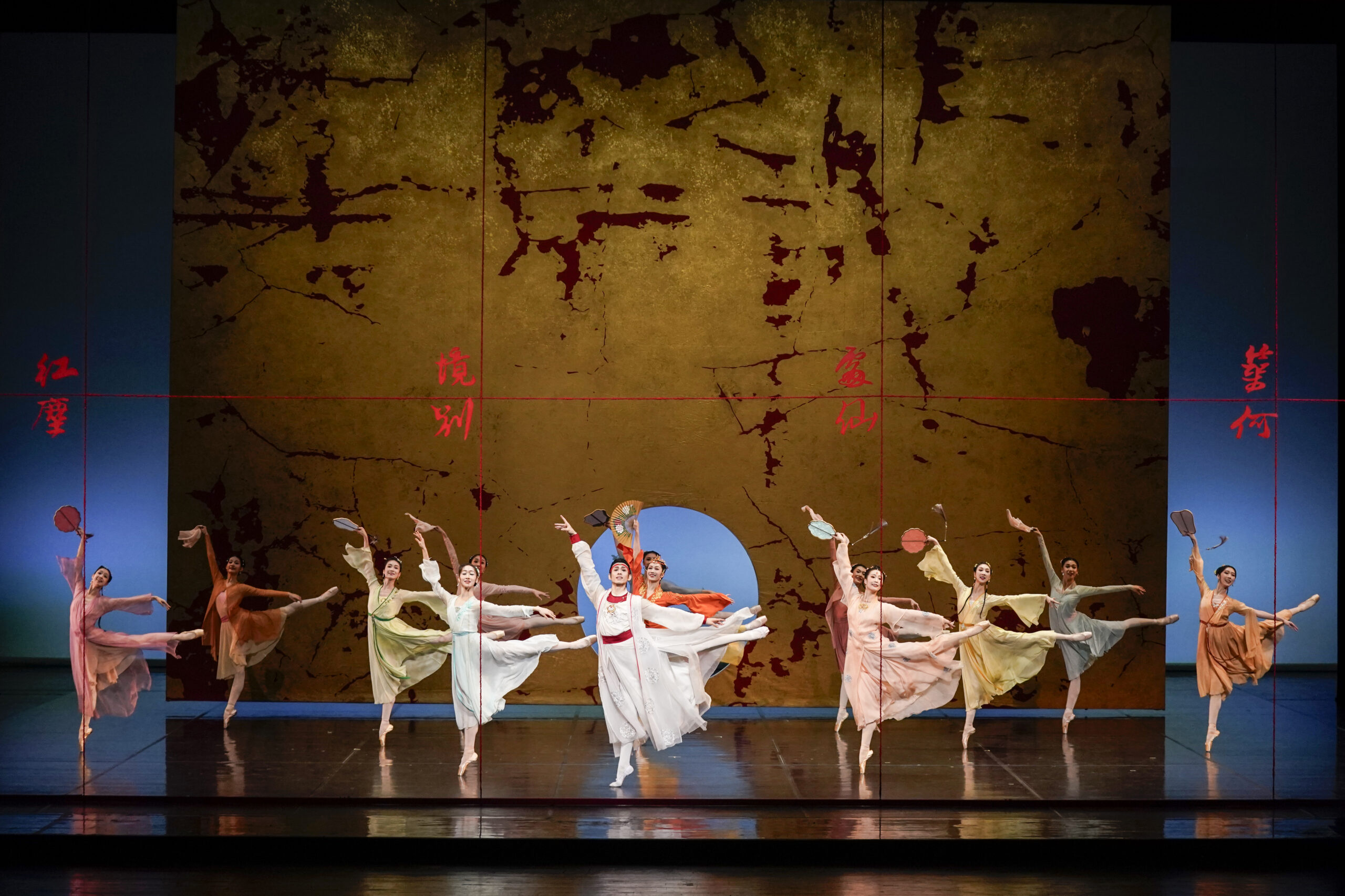
At center stage, Baoyu, dressed in flowing white robes, leads a semicircle of female dancers dressed in pastel, Han-style costumes. The dancers extend one leg in high arabesque-like lines while holding delicate props such as fans and round silk fans, creating a symmetrical and airy composition reminiscent of classical Chinese painting. Behind them is a large golden backdrop textured like aged parchment. Red calligraphic Chinese characters are written across it, associated with the supernatural framework of the story. A circular opening in the center of the backdrop reveals a cool blue background, evoking the moon or an otherworldly portal. The stage lighting highlights the dancers’ flowing sleeves and soft colors—peach, pale green, yellow, and ivory—suggesting the youthful elegance of the family's girls.
Photo: The National Ballet of China

Science and Dance in Creative Conversation

Jen George

Science in partnership with dance yields collaboration and contrasting forces.

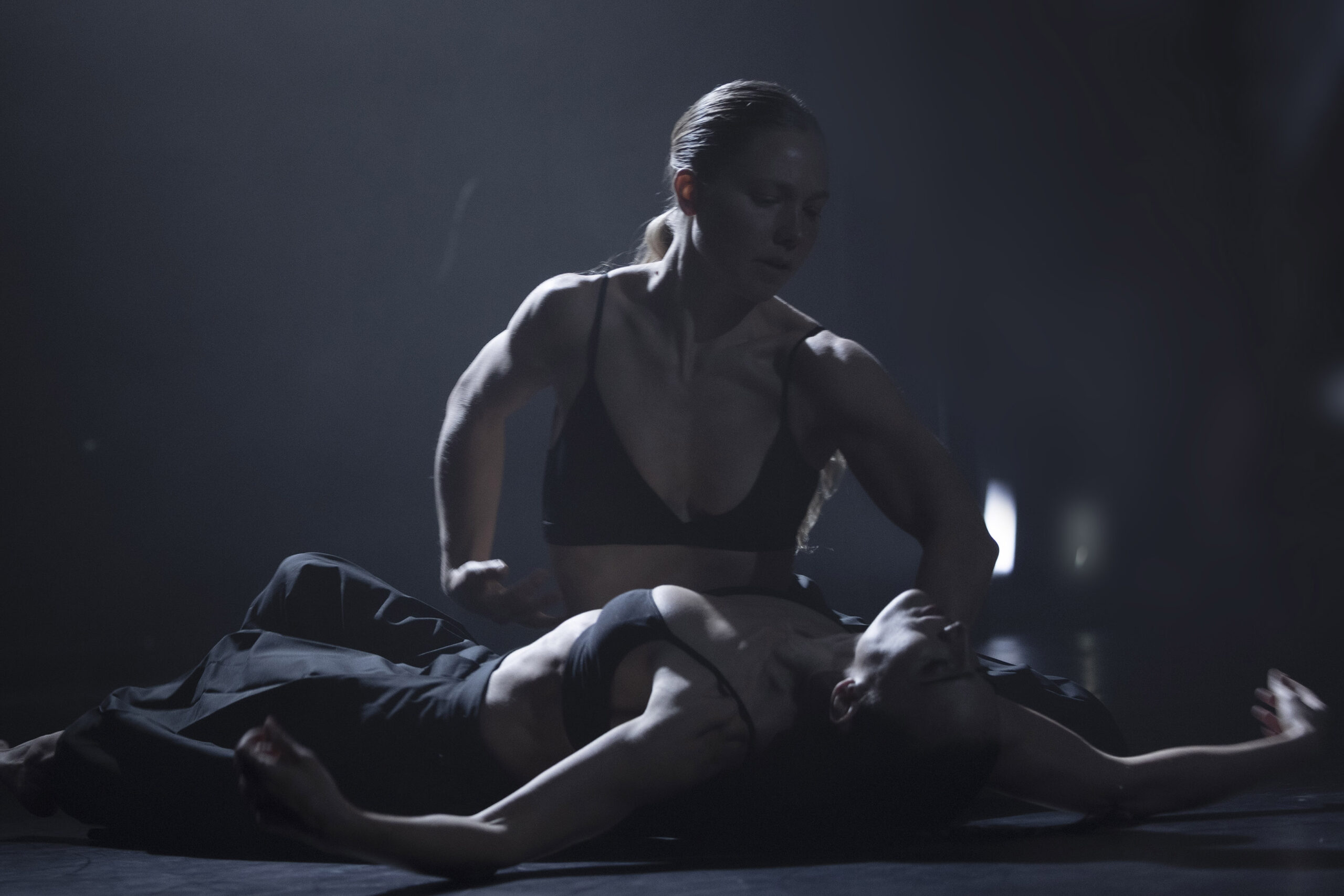
Two dancers wear black costumes, and the lighting is low and shadowy. One dancer lays face-up on the stage with arms softly outstretched to the sides and their chest lifted off the floor, legs bending at the knees. The other dancer sits, gazing downwards at them. Dancers: Sayer Mansfield, Marla Phelan
Photo: Tim Richardson