If you’d like to explore the flavors offered up by the world of screen-dance, try Dances Made to Order, a wide-ranging assortment of short films (75, if I counted right), typically each 5 or 6 minutes, by artists from all over the map (and several Philadelphians). These offerings are available for affordable purchase on a website that includes little introductory blurbs you can ponder while watching each short once, twice, or many times. Purchase an edition (3 films in each), or a “season pass,” and then the films are yours to view, re-view, share as you choose.
I watched 15 of these entries, explored the website, and admired the vision of the founders, Kingsley Irons and Bryan Koch, in creating a site intended to allow dance artists to “innovate, adapt and have a real relationship with the audience.” The artists, selected from across the nation and beyond by a process of recommendations and curation, certainly demonstrated a variety of approaches in the works I watched. The page for each film offers a comment blog, which I suppose is the means for the intended “real relationship” between artist and audience. Ah, the “real” is a whole philosophical conundrum in the worlds of film and internet—beyond the scope of this essay, but certainly a question in my mind as I explored the commentary, often by other artists represented in the series, on the pages of Dances Made to Order.
Noticeable to me as I tasted this array of dance-film art is that what the artists represented think of as “dance” ranges widely: hip-hop, modern dance, walking, “lyrical,” Parkour, salsa, Native ritual, everyday doings—that’s what I saw. The 60 dances I missed might expand that range considerably. The artists, who work with themes the website viewers “vote” on, are free to interpret these themes, within the confines of the short format and their budgets (as recompense for their work, they receive a portion of the ticket sales for their films, a good motivation for them to advertise the work to their own circles).
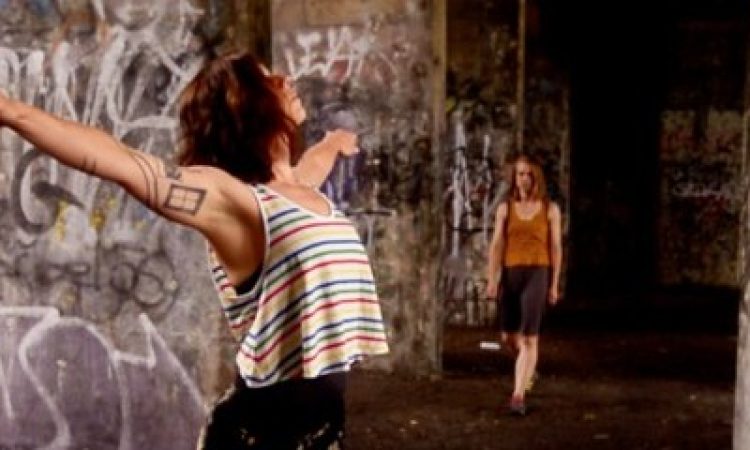
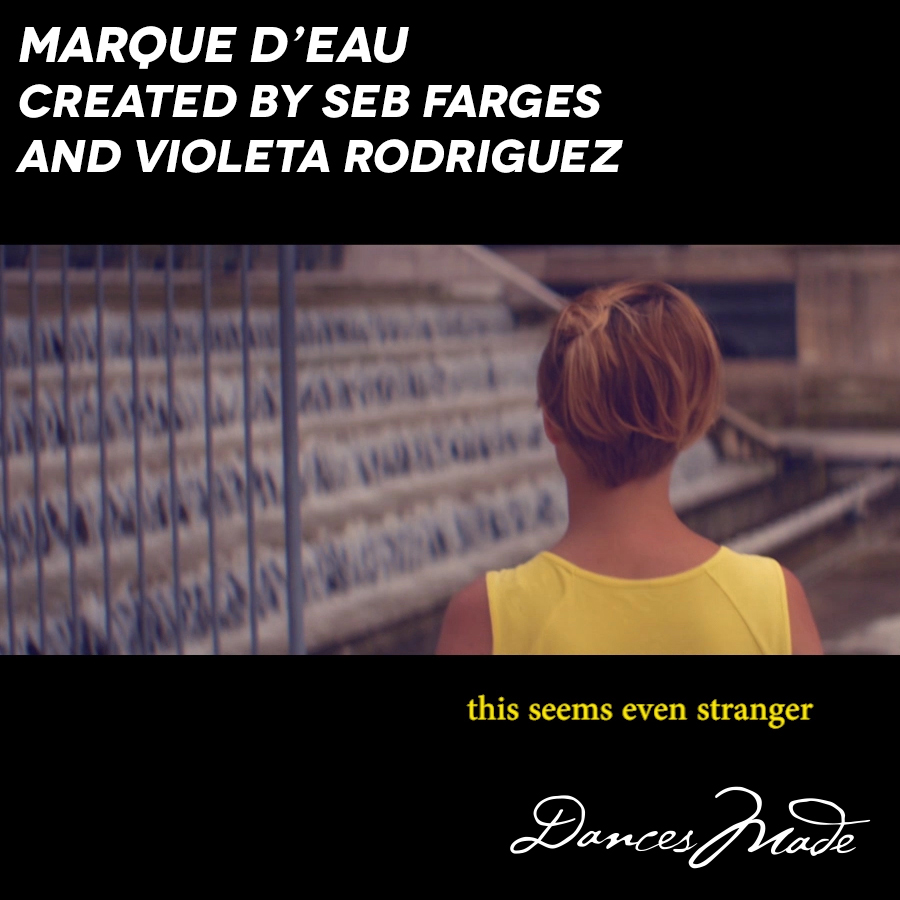
The three films in the latest edition, # 25, were inspired by the themes street art, remake, and vivid/pale. “Four Mile,” by Zena Bibler with Katie Schetlick, interpreted these themes by means of split screens into which one or two dancers crawled or whirled from unexpected angles, highlighted against sky, sand, macadam. Their entrances and exits, movement qualities, and relationship were poetic, mysterious, and dreamy, á la Maya Deren. In “No. 18,” on the other hand, Philadelphia-based Tori Lawrence placed her two dancers—Ellie Goudie-Averill and Amy Lynne Barr—amid graffiti-covered concrete pylons between which the viewer glimpses a brownish waterway lined on one side by trees. The dancers’ crunchy footsteps, the gritty setting, and occasional yearning piano music create a similar sense of mystery, though far darker, to Bibler’s interpretation. The third in this edition, “Marque d’Eau,” by Sébastien Farges and Violeta Rodriguez, is darker yet, although also redolent of mystery and dreams. A woman, seen mostly from behind, traverses narrow streets, crosses passageways, walks or runs over cobblestones, each time (according to the French voice-over text, with subtitles in English) confronting another wall, more impossible and bizarre to surmount. This film’s ending line, “and sometimes I dream,” seems a fitting epigram for Edition #25.
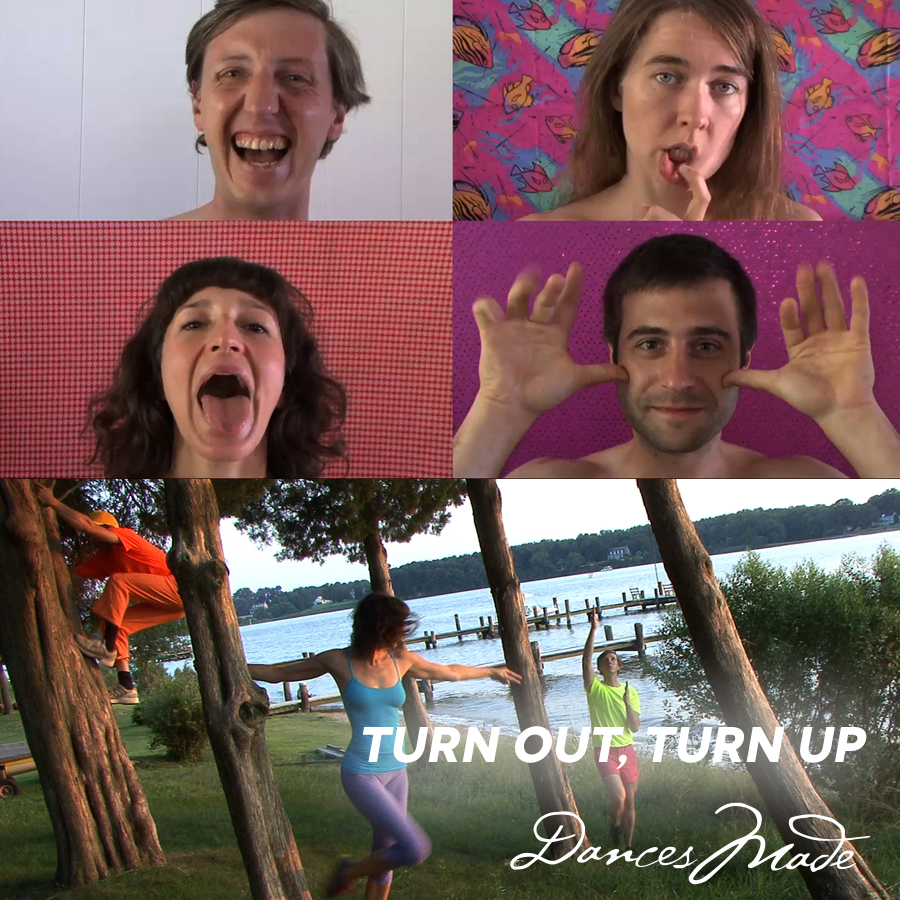
There were some standouts in the other editions I viewed. In Edition #3, Amy “Catfox” Campion’s “Pursuit” featured the remarkable Parkour traceur Danni G who climbs, jumps, rolls, and astonishes as he makes his way through urban landscapes, breakdance circles, salsa clubs, and costumed zombies. Just watch this man move for four breathtaking minutes. Another Philadelphian is represented, this time in Edition #16: Gabrielle Revlock’s* delightful and vividly colored “turn out, turn up” takes us into a bizarre summer vacation where four friends enjoy their cottage life as they walk in and out of doors in rhythmic juxtaposition or unison, drag kayaks to a lake, dance around trees and through the wind, and let their facades melt into the silliness of a summer’s romp.
Entirely different is Tracy Rector’s “Hummingbird” (Edition #22), where the gorgeous feathers and intimate camera angles take the viewer inside what appears to be an Aztec ritual dance. In Edition #23, Marianne Kim’s Orwell-inspired “option delete” is perfectly creepy in text, movement, filming, and the remarkable performance of Will Bond as the driven-to-insanity soloist. Also in that edition, Pam Vail and Jeremy Moss’s “Seer” features Vail, familiar to some Philadelphia dance-viewers through her Fringe performances, as a distant figure barely yet tantalizingly visible in the settings she crosses.
You know those ice cream stores where you can sample the flavors that intrigue you before ordering up your favorite concoction? Dances Made to Order has a similar feel—a place to play and explore, to taste a range of flavors, to decide what you love and what you can miss.
* Revlock has also been commissioned by thiNKingDANCE to create a video: “So You Think You Can’t Understand Contemporary Dance.”
Photos:
Homepage: “Alternator,” by Rodrigo Valenzuela and Molly Sides
This page, from top: “no.18,” a dance film by Tori Lawrence and collaborators, “Marque d’eau,” by Séb Farges and Violeta Rodrigue, “turn out, turn up” by Gabrielle Revlock and collaborators.