BalletX’s Winter Series was full of hearts and Valentines, the perfect confection for the lover’s holiday. The dancers performed with love in the mind and body—coy, seductive and intimately close.
Though the weather was treacherous, the audience was surprisingly full on a citywide snow day. Their trek did not go unrewarded—they delighted in the first work, Joshua L. Peugh’s Slump. Four men and four women stood in a clump, shoulders hunched and chins jutting out, staring at the audience. They flailed in a chaotic mess of gyrating limbs and hips. The women, in wide deep pliés, circled their hips and stomped their right legs as they pivoted around in a circle. The men, off to the side, moved in a way that I can only describe as a chicken dance—knocking knees and flapping elbows, they jutted their chins towards each other. In a moment of stillness, Richard Villaverde punched Jesse Sani in the gut and white feathers flew out of his mouth. Perhaps ‘chicken dance’ is not far off.
Peugh’s program notes described Slump as a “wild, aggressive dance about courtship and the instinctual rituals of mating.” In each section, Peugh crafted comedic situations that parodied romantic interactions between men and women. Chloe Felesina stared off into the distance as Colby Damon, next to her, stamped his foot, wanting attention. As soon as she turned to notice him, he turned away, ignoring her as she thumped in frustration. They repeated this for a minute, turning back and forth. The audience chuckled the whole time.
Valentine’s Day, Peugh’s world premiere featuring Andrea Yorita and Zachary Kapeluck, couldn’t have been more different from the lighthearted Slump. The subdued pas de deux embodied the calmer side of romance as the pair morphed in and out of cradling lifts and close embraces. They were in their own world, responding only to the attentions of the other. Though Yorita wore pointe shoes, she rarely danced en pointe. I wondered at this choice. If one creates a “contemporary ballet” duet, must the woman wear pointe shoes in order to identify it as ballet?
Also a world premiere, James Gregg’s Head In The Clouds comprised seven separate sections expressing variations of love and lust. The opening section was a gem: the curtain was raised only enough to reveal the dancers’ shins and feet. One by one, the ten BalletX company members stepped up to the curtain to wiggle their toes and scratch their feet. The men, clad in socks and straps, the women barefooted, they lifted the curtain, teasing the audience with their bare legs as it went up and up, only to drop it down before we saw too much. At the end of the work, bubbles floated down from the proscenium. Though the audience enjoyed the cheerfulness of the piece, I found the stage tricks gimmicky and more a distraction than a valuable contribution to the work’s intentions.
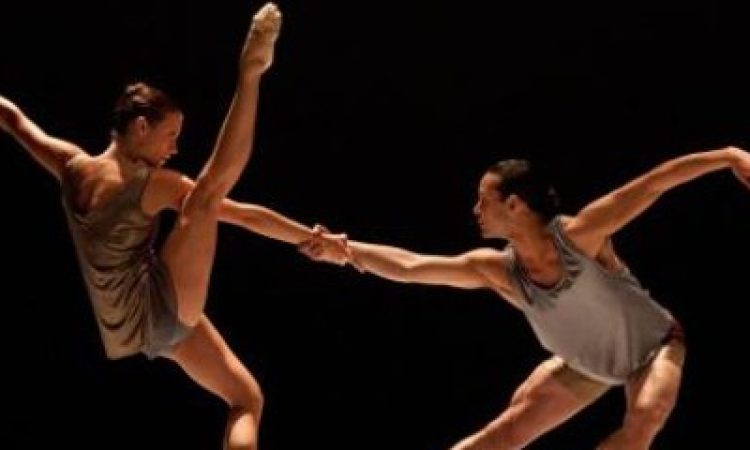
Jodie Gates’ Delicate Balance, a BalletX staple since 2012, showcased the dancers’ techniques brilliantly. William Cannon leapt into a center spot, turned on a dime and lifted his leg high to the side, balancing for what seemed like seconds too long. Felesina joined him in an intricate duet that wove, reached and spun in and out of control. As Cannon left the space, Felesina continued lengthening her arms, yearning for her absent partner. Her expressive body quickened in what seemed like a panic, only to stop—her body pulsing with fiery energy. Her movements were sharp and fluid. The clarity in her performance dynamic was striking to watch. I couldn’t take my eyes off her.
BalletX’s mixed palate of love, lust and romance was a joy to watch and certainly worth the journey into the snow. Though some pieces were choreographically stronger than others, I tip my hat to the dancers, who managed the array of emotional expression with impeccable technique and élan.
BalletX, Winter Series, Wilma Theater, February 12-16, 2014.