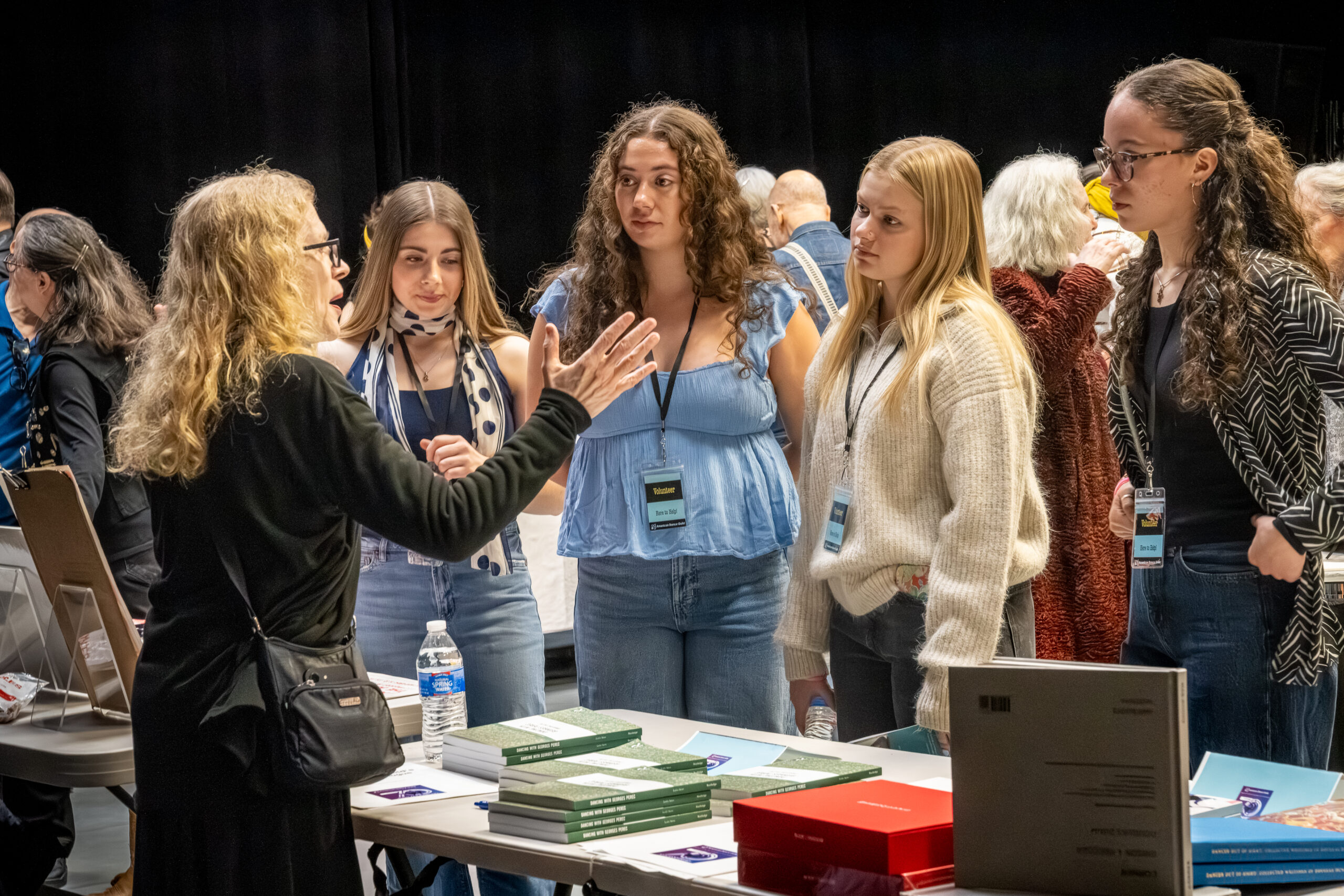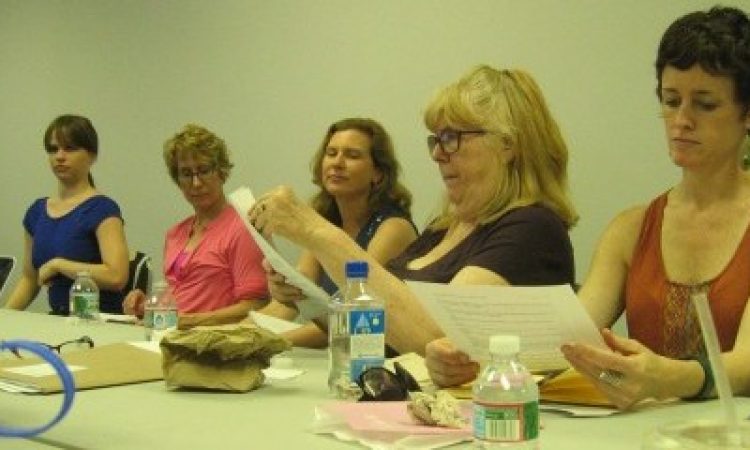
Why do we write dance criticism journalistically? This was the question posed by Kirsten Kaschock as she led the thINKingDANCE workshop on June 14th. The day was full, with Kaschock pushing us both in private TD-only workshops as well as in combination with the Dance Critics Association 2014 Conference.
Answers were as varied as those in the room–we write “journalistically” to make money; we write to provide a witnessing, evaluation, and a call to action; we write as a service; we write for a record; we write to legitimize the dance field. But what–Kashock proposed–if we let go of the “tyranny of the page” and allowed ourselves to write with the same fervor and passion of the creators of the works that we write about?
What if we suggest instead of spell out?
What if we don’t start at the beginning?
What if we wrote responsively instead of writing documentaries?
What if we wrote about the context in which we live our art? Would this make our writing–and dance as an art form–more accessible?
There were approaches aplenty:
Coding,
Questions and questions and ???
Five first lines, intentional fallacy.
“Let’s say the Mona Lisa is a dance performance in Philadelphia…” posed Ellen.
Dividing up the tangible page,
not
writing
linearly.
What I saw/What I received/What I wanted/Research I wanted to do
“Art is a disease.” // “Let it in before you cut it out.”
Short sentences/long sentences.
“______________, ______________.
___________. ____________.
______________, ______________.
___________.”
Knocking down these tried and true (and tried and tried and tried) building blocks.
Art referencing art
“This is a ballet, not a porno.” states Jerry, simply.
Indirect metaphors
NOSTALGIA.
←———creative & poetic——————————————–academic & journalistic————->
I entered the room creatively exhausted, feeling too tired to make anything interesting, worn out from months of overworking, overthinking, burned out. I walked away from the workshop with a fervor–a renewed creativity, a shared sense of exploration with my fellow writers from Philly and beyond. Kaschock blessed us with questions, not answers, and many, many tangible prompts for jumpstarting our writing beyond the worn-out, “The event took place…” A to B to C approach. My writing toolbox that much heavier, I leave you with a quotation from Kirsten herself, which sums up my experience that day: “Form is not the enemy; it’s just not singular.”