This Fringe season has harvested a lot of nudity, from joyfully jiggling rolls of fat to soft—and not so soft—porn. By the time I got to Team Sunshine’s The Sincerity Project (2016), I barely thought twice when disrobed bodies sang karaoke and competitively star jumped.
“Go!” Rachel Camp shouted, then stripped, produced one jumping jack, and re-dressed, as if racing with herself. One more jumping jack preceded her running to the other side of the stage to tense her body in a half-squat. Her face turned red, the veins in her neck popped out, and I was sure she would explode. Suddenly she bolted to the back of the stage and relaxed into an indulgent bounce, taking quick breaths through an expression of relaxed euphoria. She returned to her starting position.
“Go!” As she cycled the sequence, the audience laughed, perhaps due to her businesslike way of executing these tasks, or else because of her awkwardly blunt nakedness. With each replay, I became more desensitized. The movement became a functional routine of human needs. Undress, dress, exercise, strain, release, repeat.
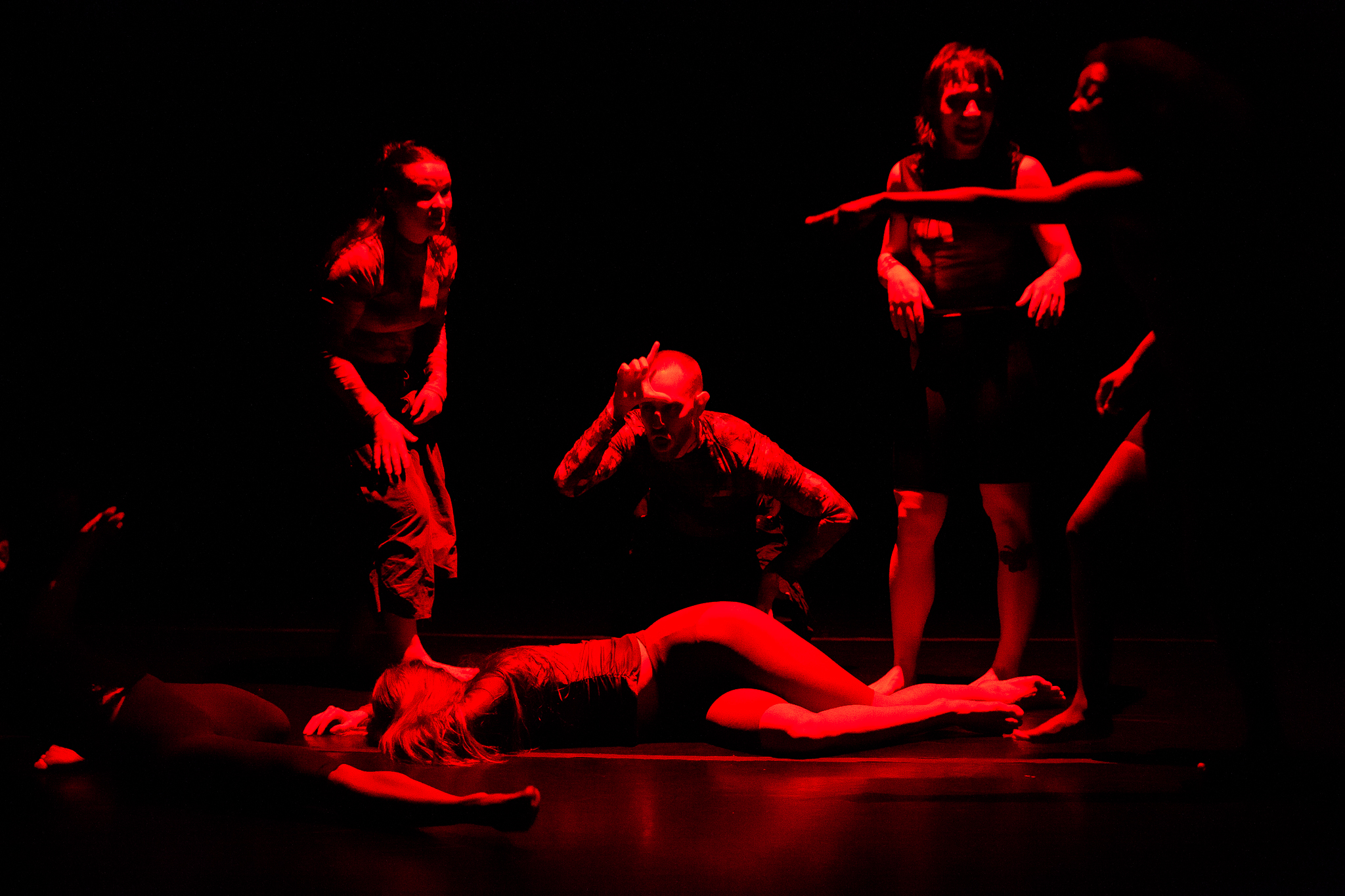
Unforeseen chains of action emerged from the seven cast members, interrupting and overlapping each other. I felt as though I was simultaneously tracking their seemingly disjointed, yet somehow affiliated, daily rituals.
I watched the actors. I watched the actors watching me. I watched the actors watching actors. I watched Melissa Krodman dry off after a bath. Privacy eliminated, self-consciousness did not penetrate this space where all were witness to behaviors that are casually enacted clandestinely, but not necessarily spectated.
The Sincerity Project examined interconnectivity by means of vulnerability and closeness. What does the simple act of observing reveal about our relations and our willingness to connect, with or without a defined relationship? What’s the difference between being lonely and alone? When is it appropriate to scream in frustration or run naked through a theater drinking a beer?
In a whirlwind of confetti, cracking eggs in a skillet, and hopping races, The Sincerity Project investigated exposing the depths of individual character. The body serves as a tool and a temple, something tangible and spiritual. The body is a canvas and historian. It is a locus from which to share and declare one’s self. In this Fringe show, nudity went deeper than the shock factor. It offered a means to appreciate and reflect on humanity’s fluctuating relationship with the self, others, and the world.
The Sincerity Project (2016), Team Sunshine Performance Corporation, Plays & Players Theatre, September 8-9 (Preview), 10-12, 14-18, http://fringearts.com/event/sincerity-project-2016-12/