Pfff! 2016 (Philadelphia Free Form Festival 2016) is presented by the Impermanent Society, a collection of “Philadelphia-area arts practitioners and curators” committed to supporting “freely improvised live performance that focuses on experimental sound and movement.” The crew includes Philly experimental-dance notables Asimina Chremos and Loren Groenendaal, musician and curator Flandrew Fleisenberg, and musician/theatrical sound designer Adam Vidiksis, among others.
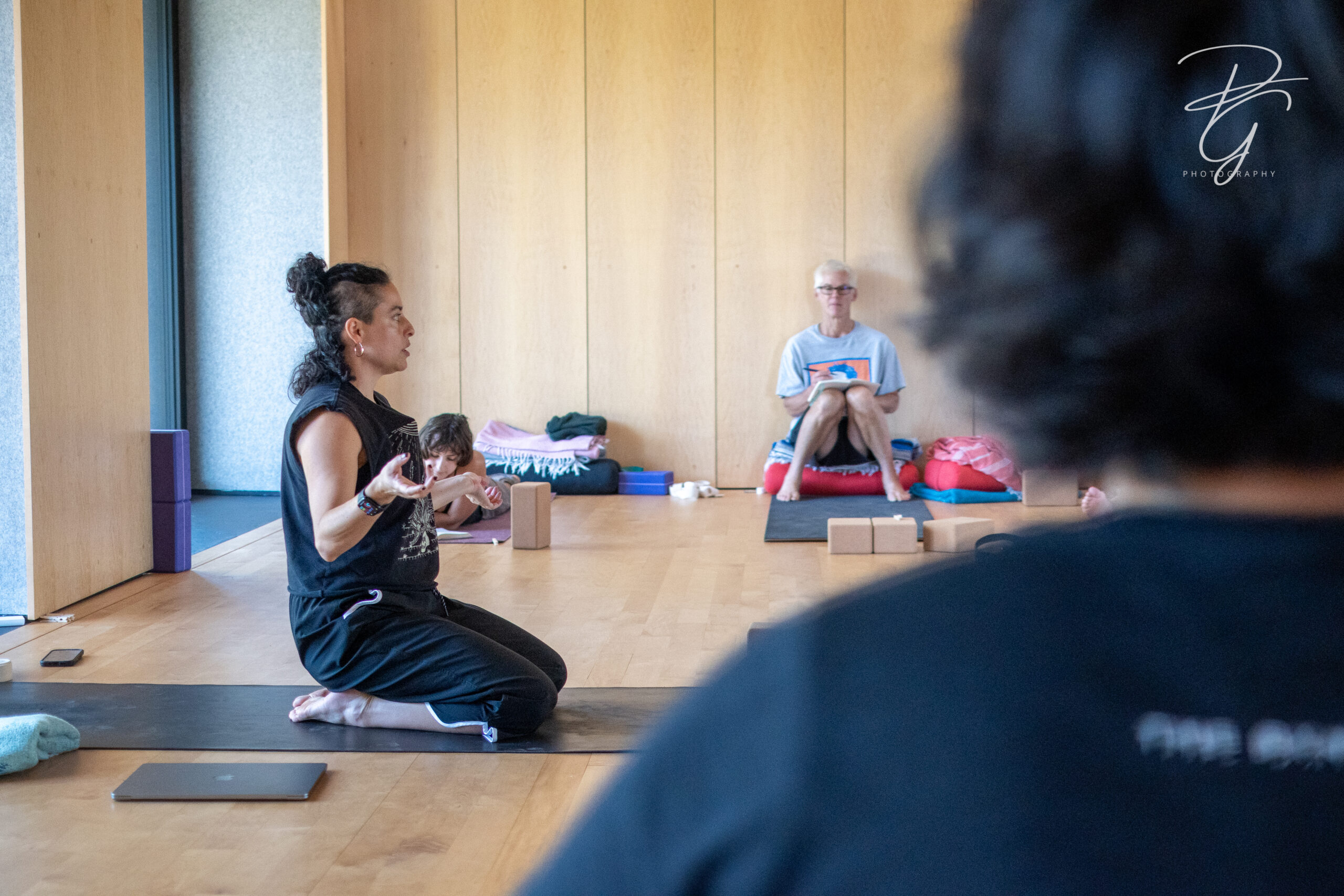
The second annual Pfff! is the Impermanent Society’s ninth event this year and features a series of workshops and panel discussions alongside three nights of performance. Just under half of the 28 curated performers are Philadelphia-based artists, the others ranging from Baltimore and New York to as far away as Seattle. I’ve shown up for one day of performance, a presentation of four sessions of group improv.
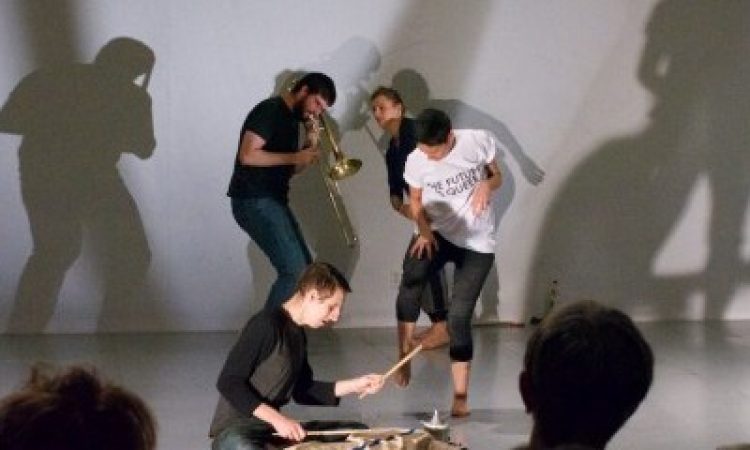
These group improvisations are inherently at least a bit wacky. A performance artist in a little nighty paints abstract art while two dancers spin one another around to the sound of a low-key violin, aping electronic music with short zaps of the string. Or a trombone player, blowing airy, unvoiced hums through his instrument while incessantly pumping the slide, scuttles along the floor, butt-to-butt with a dancer.
Curators have selected these artists to collaborate with a compositional eye—these two artists are similar, or these three contrast—but the results of improvisation are unpredictable. Many of these performers have not worked together in the past, but are navigating their jam for the first time, leaving open the question: what’s going to happen? Though some are billed as “dancers,” some as “violin” or “trombone” or simply “performance,” I quickly note that the musicians don’t always sit happily off-stage, and often take visual focus from movers. The beatboxer’s intensity and charisma are more engaging than the dancer’s performance; the percussionist is, visually and energetically, an inescapable whirlwind.
How to watch free-form improv? You can’t expect a perfect, tonally precise, adroitly assembled show, though sometimes the results might seem that way. But what are we watching for, really? Is it about virtuosity, like watching an improvised jazz performance? I watch directed, written theater with the intention of finding the guiding hand, the statement, the implied truth. In improv, do lucky accidents and the unintentional collapse reign? Or is it all about subverting expectation and doing what has not been done before—and won’t be, ever again?
A glimpse of session one. Shodokeh (“voice”) slouches in a “BLACK NERDS UNITE” hoodie under two microphones. Jung Woong Kim (“dance”) lies face-down on the floor, prone but tense. Gangly Ben Bennett (“percussion”) hunches on the ground amid drumheads, sticks, cans, rubber tubing. Who begins it? What’s the first impulse? It’s actually already begun with this moment, this attentive, shared question.
Shodokeh brings a mic to the side of his face and sends sharp ripply cracks through it. It’s unclear where in his body these sounds come from, but they remind me of treefrogs or the creaking of trees in the wind. He presses a mic to his neck and produces a deep, unvoiced growl.
While Shodokeh’s music seems to come from deep within his core, Bennett’s skin bursts with manic energy. Impulse originates at the top of his head and ripples down through his neck to shoulders, arms, and finally bony, ultra-flexible fingers. He blows air across the surface of drums, making a high-pitched whistle, but looking like he’s taking a bite out of them. He holds a garden spade against a drumhead with his foot, lifting it and slapping it back down, whacking the spade and the drum rapidly with the sticks.
They begin a long trade-off, call-and-response. As Shodokeh gazes laterally at Bennett, he sends his voice down through his arm and casts it like a spell, the arm rising up and bobbing around, his fingers tensed like claws. Suddenly these inexplicable, guttural sounds have a source, which weaves like a snake or a wizard’s controlling hand.
Is this a magician’s sleight-of-hand? A performer’s trick to engage audiences? This is the kind of focus required for collaborative public invention: momentary presence, control surrendered to emotion and instinct, drawing on all impulses for inspiration, direction, initiative.
Pfff!, Impermanent Society, Icebox Project Space, October 17-23, impermanentsociety.com.