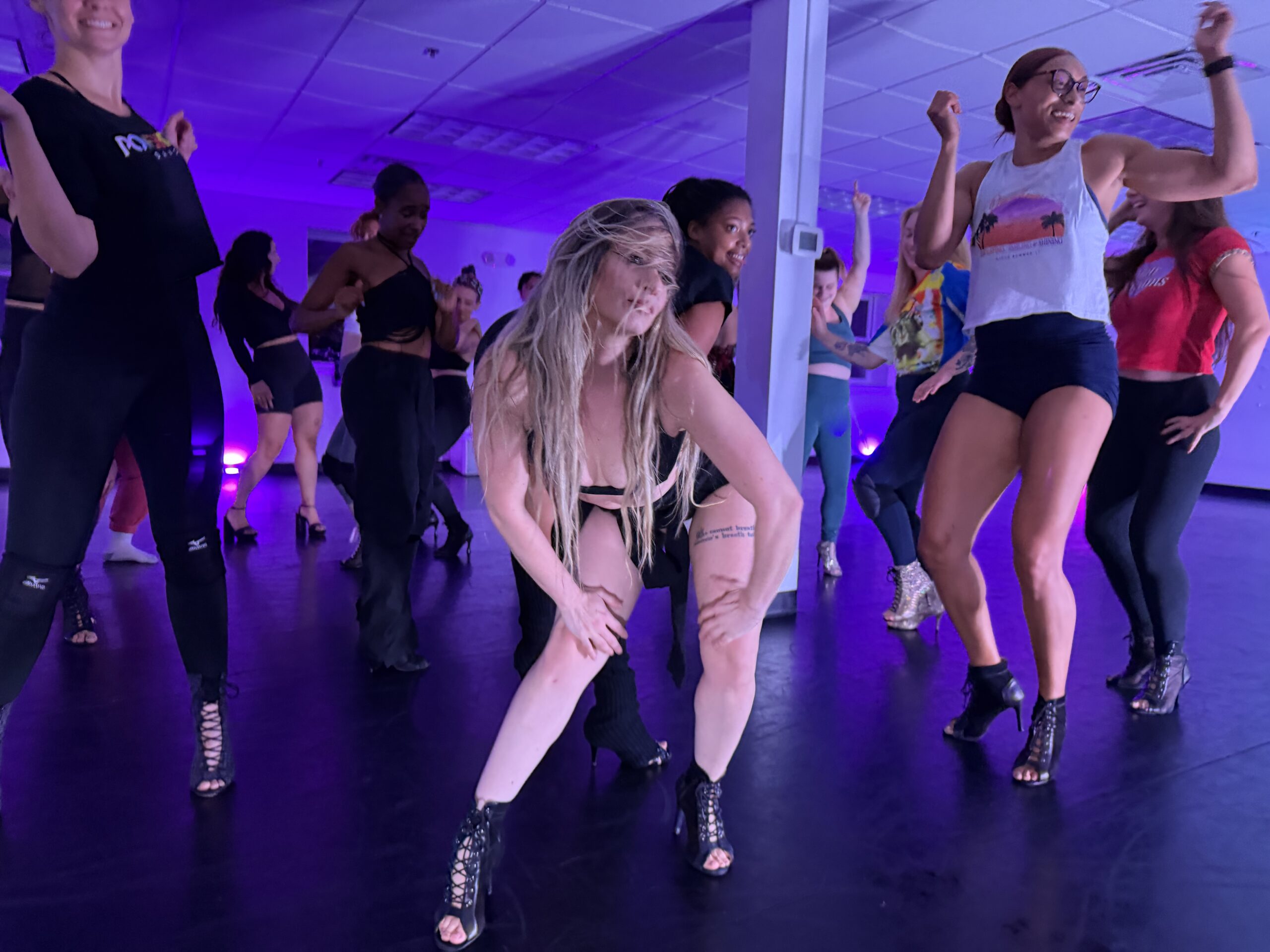
Beginning in 2013 as the All AmeROCKin Girls, the dancers of AmeROCKin Justice re-established themselves as Franky’s First Ladies in September 2016. The program notes described the members as “trying to make it in the dance world.” I’d say they are still navigating how to rise to recognition.
While most of the dancers demonstrated technical training, their performance lacked professionalism. Their expressions were timid, as if they had imposed themselves, uninvited, into Franky Bradley’s bar. The music overpowered the acts. They glanced uncertainly as they stumbled through steps, or missed them completely. Heads rolled, hips shook, and legs kicked at random, often out of time with the rhythm. Their faces confused and confusing, the dancers lacked the confidence that the space and choreography demanded, and left me feeling uneasy.
An electric guitar version of “The Star Spangled Banner” played as the girls marched in camouflage. One dancer awkwardly raised a crinkled flag, half way, onto what looked like a black stripper pole. Seconds later it fell to the floor. I recognize that her fumbling with our most prominent national symbol was unintentional, but it was difficult to overlook such a disrespectful gesture as an opener for a show supposedly built around American pride.
Later, a dancer emerged draped in an American flag. But what could have been a sexy number devolved into awkward posing as she tried not to drop the material.
The performers continued through a soundtrack of stereotypically “American” songs including “Boogie Woogie Bugle Boy,” “American Woman,” and “American Girl,” clad in American-themed colors and characters—red, white, and blue plaid, and the Statue of Liberty. As they shot celebratory confetti, I questioned their intention and could not derive any sense of cohesion or meaning from it all. They lacked the poise necessary for pure entertainment, yet the performance didn’t seem intended as spoof.
If the message is truly patriotic, the utmost respect should be accorded elements like flag etiquette. Instead of a refreshed sense of my own identity as an American, I left feeling my culture had been reduced to cowgirls and red booty shorts.
AmeROCKin Justice, Franky’s First Ladies, September 11, 13, 17, http://fringearts.com/event/amerockin-justice/