The FringeArts Festival, no matter your take on it, is a vital part of the seasonal flowing of performance arts in Philly. And September is Fringe season. That makes August the season for digging through the Fringe guide, scratching your head, and puzzling over what you’re going to see.
To help you make that decision, here are five of our writers with their passionate top picks in the upcoming Fest. To read more picks, click here.
Jenna Horton
Magda San Milan’s feral wild girl child is my absolute, unabashed, and biased top pick. Magda honors her experience working as an artist-in-residence with children and young adults in the oncology unit at Children’s Hospital of Philadelphia. Watching prior iterations of this piece, I’ve felt much of what I crave from art—an expression of personal and lived experience, bravery, (at times) discomfort, and deep empathy. At all stages, it’s been a gift to witness. As Magda says in her blurb: “Come doctors. Come nurses. Come mothers. Come doulas.”
Lynn Brooks
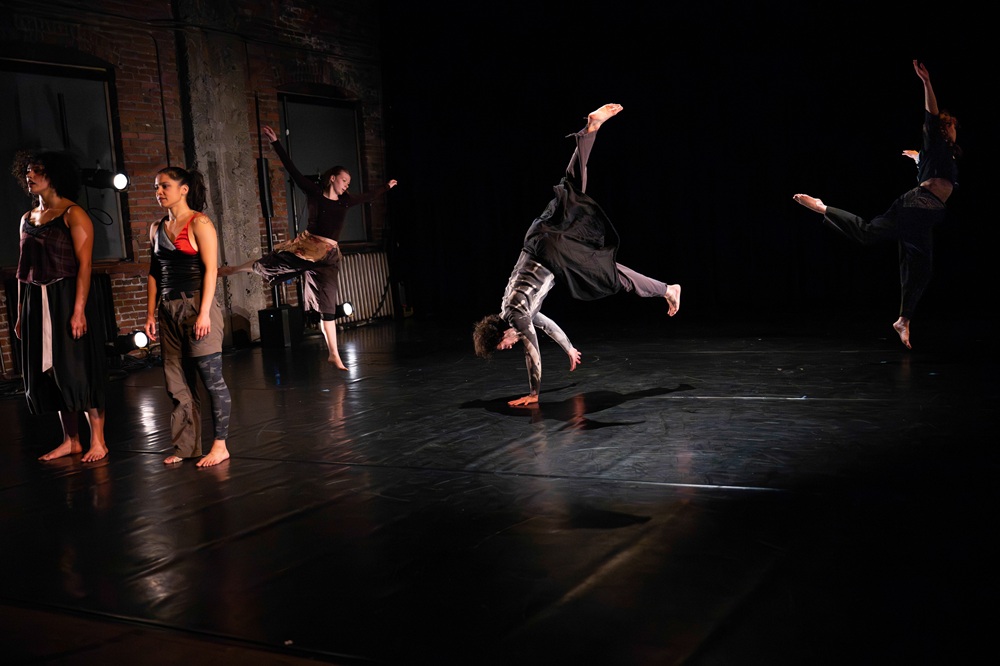
My preference is for work by skilled artists open to the moment—investigative, exploring, and finely crafted. I also care that works of dance’s history be sustained and seen. On the former track, I’d pick Monica Bill Barnes’ Museum Workout, a chance to see revered works of visual art from an active—huffing and puffing?—perspective, instead of my usual dazed stroll through the galleries. Humans by Circa promises the complex skills of circus applied to questions that, with increasing urgency, we encounter today. I’m eager to see DanceFusion’s Moving, as I admire Anna Sokolow’s groundbreaking and always-relevant choreography. Likewise, The Backyard, by thefidget space (with Megan Bridge and Beau Hancock—both former thINKingDANCErs), interests me by way of the mentors and mavericks whose work inspired and guided the piece. Finally, I dwell in nostalgia and relish touch, so I anticipate that The undergird by Meg Foley (also once a tD writer) would speak to me.
Rhonda Moore
Sylvain Émard’s Le Super Grand Continental, a half-hour-long eight-section dance work for 200 people of diverse ages, backgrounds, and abilities, is a monumental example of dance as barrier-breaker and catalyst for building community. Professionals, hobbyists, and earnest lovers of movement join together in a veritable dance love fest. Inspired by line and social dance and driven by a musical score spanning a variety of grooves (including Philly Soul, a section dedicated to the mythic TSOP), Le Super Grand Continental elicits a tangible, ineluctable aura of the 60s, 70s, and 80s. Although the piece isn’t overtly political, a work of 200 people gathered with a common purpose already speaks volumes. Delightful, also, is the magnificent setting of the Philadelphia Art Museum as backdrop, together with the high likelihood of spotting an acquaintance, friend, neighbor, or colleague (or me!) amongst the eclectic cast of Emard’s latest edition of sharing the love of dance.
Mira Treatman
I’m excited to see two contrasting site-specific works taking place outdoors: Rose Luardo and Kate Banford’s An Unofficial, Unauthorized Tour of LOVE Park and Leah Stein Dance Company’s Ground Works. In her recent solo, Relationship Fluids, Luardo blew me away with a delightfully oddball mix of comedy and dance. I can’t wait to see what she’ll do in the newly renovated Love Park, a public space that feels soulless with the loss of the fountain and skateboarding. In stark contrast, my biased pick is Leah Stein’s premiere at Woodmere Art Museum. As administrative manager for Leah’s company, I’ve watched the work come to life from the inklings of its germination. Leah’s work offers me a crucial chance to lose myself in the meditative flows she creates.
Thomas Choinacky
“Something old. Something new.” I like to shift between these when I choose among the latest experiments in the Philly Fringe. I am at the edge of my seat to see Lee Minora’s White Feminist. I saw her so-ridiculous-I-was-crying-from-laughing Cheeks a couple years back. For my “something new,” as an interdisciplinary artist, I am always curious to see how different artists intersect various forms in their performances. With this in mind, my eye has been caught by Metal & Kind’s Indestructible Flowers. Their collaboration intersects hip hop, dance theater, and folk dance styles. Sounds dreamy.
FringeArts Festival, September 6-24
By Lynn Matluck Brooks, Thomas Choinacky, Jenna Horton, Rhonda Moore, and Mira Treatman