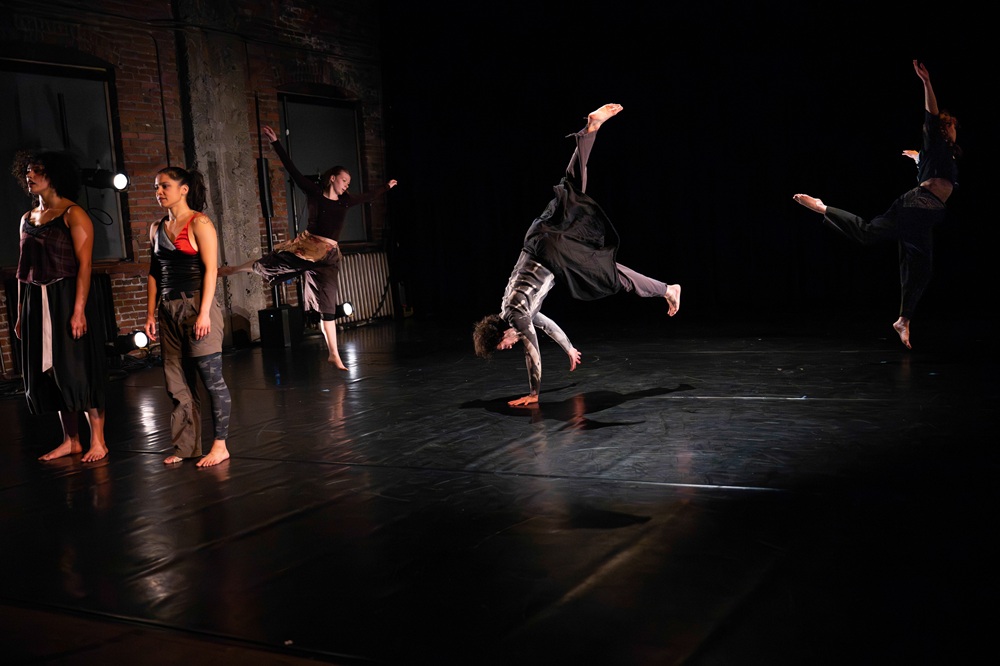
Just as Cat Ramirez begins introductions to the PAPA Mini-Residency Showcase, a few latecomers shuffle in, shy and cautious. Immediately Ramirez waves them toward the rest of the audience, proclaiming into the mic, “Yes, come on in! It’s cool!” The entire evening contains a similar flavor of invitation, with the works in progress presented by three artists of Philadelphia Asian Performing Artists (PAPA) digging into different but equally earnest explorations of identity, tradition, and the Asian American experience.
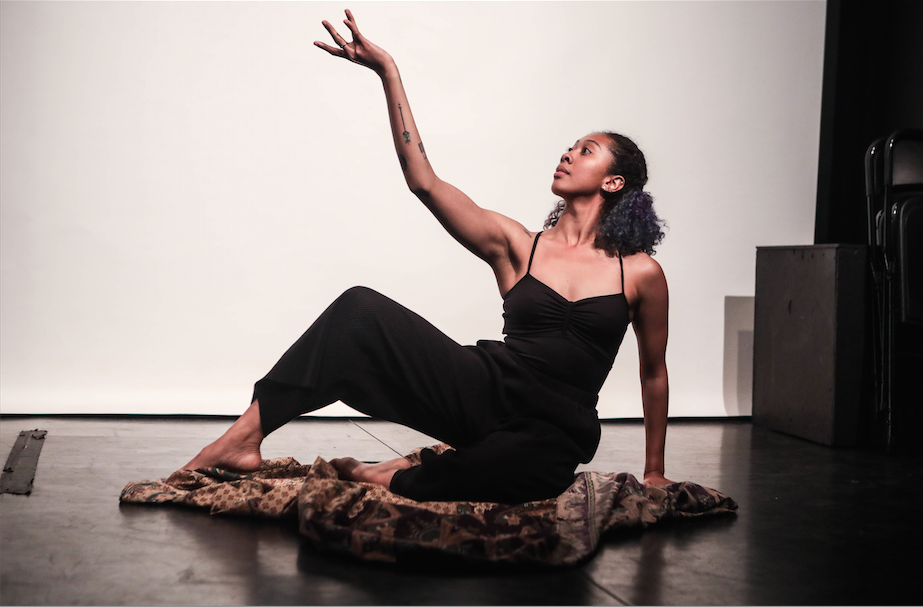
Annielille Gavino’s work Patawili showcases the traditional Filipino folk dance kappa malong (beautifully performed by Sevon Wright) in between two tender films, Iahi (Lineage in Tagalog) and Lipad o Langoy (Fly or Swim). In the first film, tranquil images drift across the screen: Gavino bathing in a river, a yellow dress, her arms dangling before branches, candles on water. The second and perhaps more intriguing features Gavino’s daughter appearing to wear the same dress, and, as suggested by a poem read beforehand, grapples with how immigrant parents can continue to keep tradition alive for their American children. I am haunted by repeating shots of what appears to be Gavino’s daughter falling in slow motion, and mouthing words which I, first assuming to be in Tagalog, later recognize as, “Who am I?” in English.
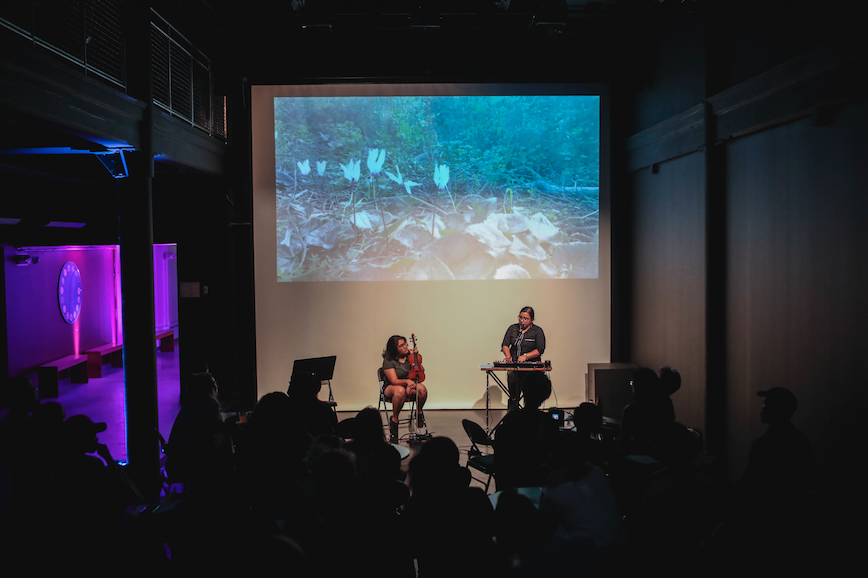
Afterwards, imprint, ember, hearth by Marina Murayama offers dreamy flute and synth beats layered over lyrics in both English and Japanese, as a video of various landscapes loops behind them. Murayama explains that the footage contains plants native to each of the places in which they have ancestors: Hawaii, occupied Palestine, land of the Lenape tribe. What if indigenousness, not colonization, were to rise to the forefront of our cultural consciousness? I accept the invitation to wonder.
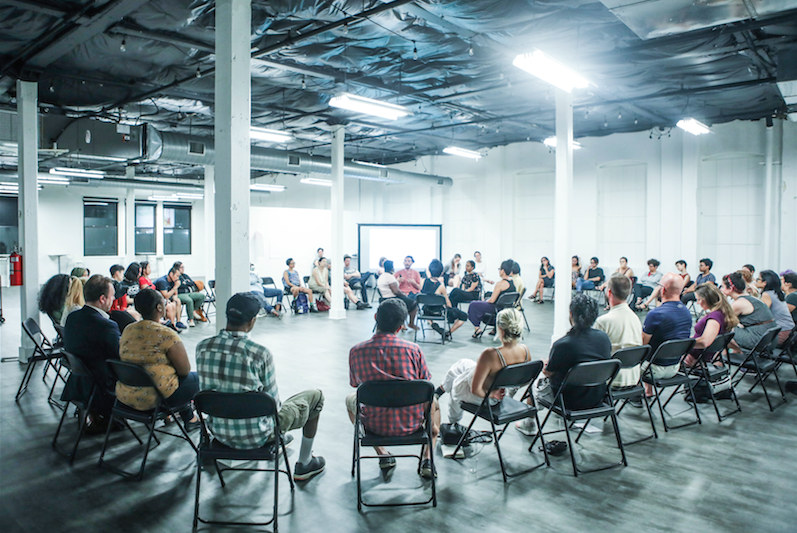
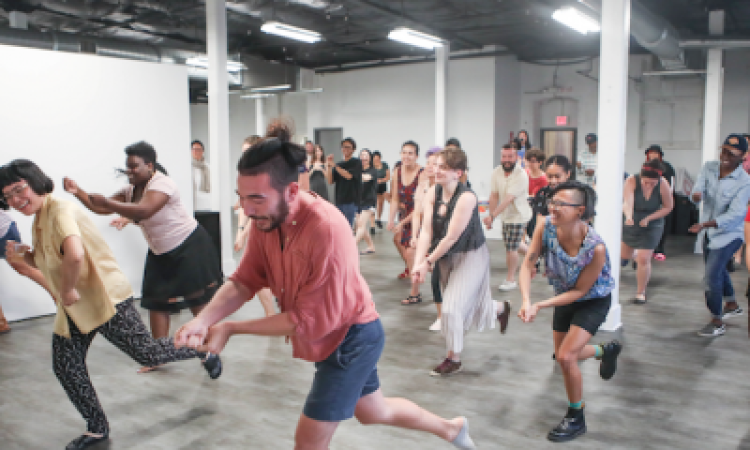
The longest and most daring piece is Daniel Park’s Emma Stone[1] (working title), a two-part participatory piece in which the audience gets on their feet to learn what Park jovially calls a “Collective Liberation Line Dance.” It includes moves like wielding an invisible hammer in order to “smash the patriarchy” and circling your hips to symbolize sexual revolution followed by a mini fishbowl conversation with questions centered on Asian American identity, social justice, and interracial reconstruction. Asking audience members to learn choreography or discuss personal issues of race in a semi-public space can easily create the potential for a volatile or at least tense experience, but the community of the AAI is willing and supportive, with four volunteers stepping into the “fishbowl” after only a few moments of hesitation.
Those in the “fishbowl” offer nuanced and thoughtful perspectives, from discussing what their Asian American identities are rooted in—food, school, parents, the gaze of others—or more complex questions about what Asian Americans can offer to social justice and interracial healing on a personal and community-based level. Particularly resonant with the AAI’s founding ethos[2] are discussions on how the Asian American community could lend support and solidarity to the African American community and its struggles. Those in the fishbowl even openly discuss and question terms Park offers like “interracial reconstruction” and “people of color,” which I take to be a sign of healthy dialogue. As a half-white, half-Asian American myself, I find it refreshing to witness such an open, intergenerational conversation among so many who have similar experiences of racial identity. When Cat announces that time is up and the piece is over, I and many others scoot our chairs in further, hungry to keep the conversation going.
PAPA Mini-Residency Showcase, Annielille Gavino, Marina Murayama Nir & Daniel Park, Asian Arts Initiative, July 15.
[1] The title is a reference to a movie in which Emma Stone, a white woman, plays a part-Chinese and part-Hawaiian role, Park later explains.
[2] From program: “The organization was founded in 1993 as a response to community concerns about growing racial tension between African American and Asian American communities […].”