The waters Philadelphians swim in today are varied and rapidly changing: COVID-19 continues to ravage our slowly reopening city, citizens in the streets call for the eradication of racism in all forms, and new encampments for the houseless shed intense light on gentrification and the Philadelphia housing crisis. Art-making of any kind in this landscape feels futile or even frivolous. But it is in this charged climate that I am further drawn to the work done through the Painted Bride’s “Building Bridges: On the Rise ” project, the goal of which is not to offer artistic escape from our current political state, but rather to look deeply at the issues facing our city.
According to the Bride’s website, “Building Bridges” offers a new residency model that distributes funds and resources to artists as “catalysts of creativity and growth in their own neighborhoods.” In doing so, the Bride endeavors to push back against gentrification and inequalities in arts funding in Philly. The first phase of the project was scheduled to run from February 2020 to June 2020; thus, it intersected with the ongoing crises and the beginning of the pandemic. Nevertheless, the residency continued, with its five incubated artists finding ways to focus on the local while also maintaining social distancing protocols. On July 8th, Building Bridges completed the first phase, which culminated in a showcase on Zoom (you can watch the recording here).
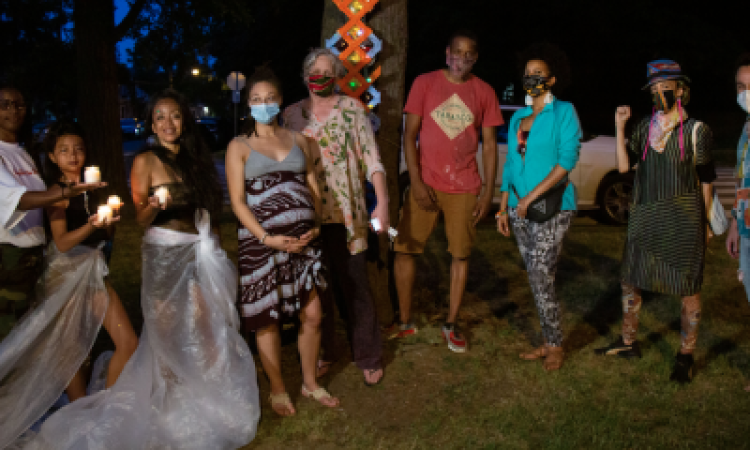
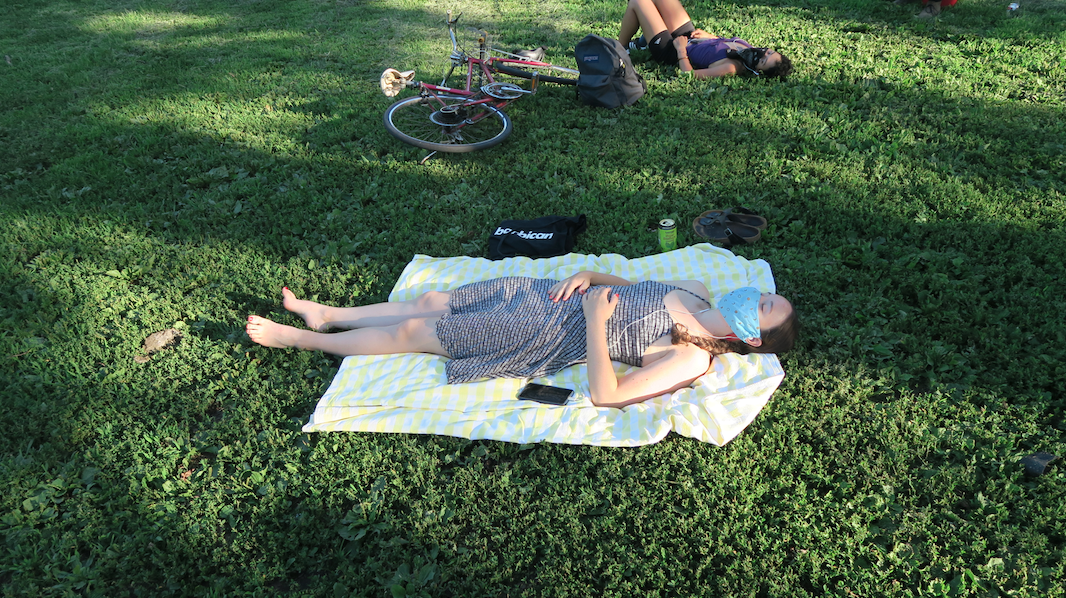
Lying on my floor and listening to James Allister Sprang’s The Aquifer of Rhythm, I felt like I was inside of the work, connected through headphones and laptop speakers to other Zoom attendees. I reflected on Sprang’s words about audio loops, which he utilized in the work; the political implications for Black people of looping back, returning to the same struggle time and again, the immense pain embedded within that cycle, and the hope. About a week later, Sprang hosted a socially distanced in-person listening event outdoors in Clark Park.
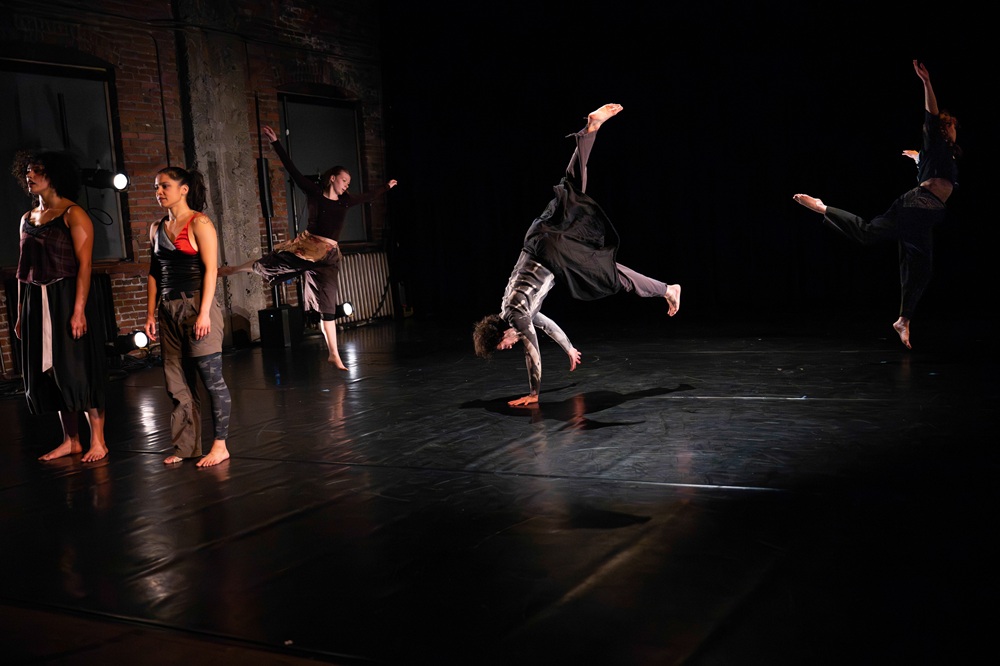
Both Ani Gavino and Caitlin Green presented movement works, Gavino showing her dance film Magunita and Green screening Hey Homebody. Gavino’s film took place exclusively outside in public space and centered on the physical relationship with her daughter Malaya. Together, they danced tenderly and powerfully, sometimes in unison, and sometimes overlapping each other as Malaya manipulated her mother’s face, long black hair, and hands. Green’s film, in contrast, explored the notion of home both literally and in the body, as dancers Tyra Jones-Blain and Sierra Cribb performed alone in each of their living rooms. The expanse and freedom in their dancing shocked me given the confined settings. At times it appeared that Jones-Blain and Cribb had been cut out of a vast stage and restitched into their homes.
Anthony Carlos Molden reported live, newscaster style, from the scene of his installation at Fernhill Park in Germantown. I immediately recognized his sculpture, made with found materials, from the background of Gavino’s video. He talked about the traffic surrounding the park on all three sides, referring to his work as “drive-by art.” Perhaps a new norm for the COVID world.
While each piece of the evening addressed the pandemic in some way, the refrain in Ursula Rucker’s song captured a pressing issue raised by the pandemic most directly: “What does it mean to build bridges on the inside when the outside is closed?” Her hip hop track featured her own voice, as well as the voices of her sons and his friends. Rucker’s passion for intergenerational engagement through the arts was strong, and her words echoed in my head after the Zoom call ended.
Following this showing and Rucker’s words in particular, I was left with many questions about our futures as humans, as artists, as Philadelphians: What of intergenerational sharing and collaboration will move us forward past this tumultuous moment? What of lifting up Black and Brown voices? What of accessibility in the arts, of bringing them into the neighborhoods and, eventually, off of screens? Many reading may remember the Bride’s hotly-debated 2017 plan to sell its Old City building in order to better fulfill its mission of providing programs for artists. Now, the pandemic has changed the landscape for all Philadelphia arts organizations looking to maintain a functioning presenting space. Are decentralized, virtual arts organizations the wave of the future? What do we stand to lose and gain by responding to the current landscape in this way? I believe Building Bridges has already begun the vital work of exploring these questions.
Building Bridges is supported by Pennsylvania Humanities Council’s Pop-Up Grants for Cultural Producers.
Painted Bride Arts Center presents Building Bridges Showcase, Annielille Gavino, Caitlin Green, Anthony Carlos Molden, Ursula Rucker, James Allister Sprang; Zoom, July 8.