“The character is time. Not displaying time nor depicting time, but abstractedly wearing time as skin.” I hold onto these opening words like an anchor as my body submerges in the waters of The Sis Uprising: A Critical Kiki.
The online event primarily showcases the film The Sis Uprising, created by performer Arien Wilkerson along with many collaborators including writer Ricardo A. Bracho, director David Norori, and costume designer Domsentformars. Reading a poem live before the film starts, Wilkerson continues, “When the lives of Dominique, George, and Breonna were taken it’s sad to say, I was restored. Every single fiber and muscle in my body, restored. […] I stayed black. […] I masked and marched and fucked. What is it to be crucified and born again?”
The film begins slowly, with shots of the summer protests in West Philly. As if pushing through water, Black bodies run from tear gas bombs, police helicopters slicing the air overhead. The visual field becomes more complex as multiple protest clips overlap, the simultaneous events from all angles. Overstimulation is an artistic interest of Wilkerson’s, and throughout the first long section, it shows: the various visual and auditory trails of 2020 are everywhere all at once.
News clips on topics ranging from police brutality to lantern flies to coronavirus flood the film; Instagram videos of cop cars burning, Black femmes twerking, videos marked with the hashtag #onlyinphilly intersperse and overlay. In one video, two white gay men kissing to the squealing shock and awe of a group of young Black girls, who watch holding their phones. Each clip warrants an hour-long discussion on its thematic significance as it relates to queerness, race, and so-called current events; yet, the work’s pace gives us no choice but to digest each quickly and often concurrently. A familiar, digital-media-era understanding of time.
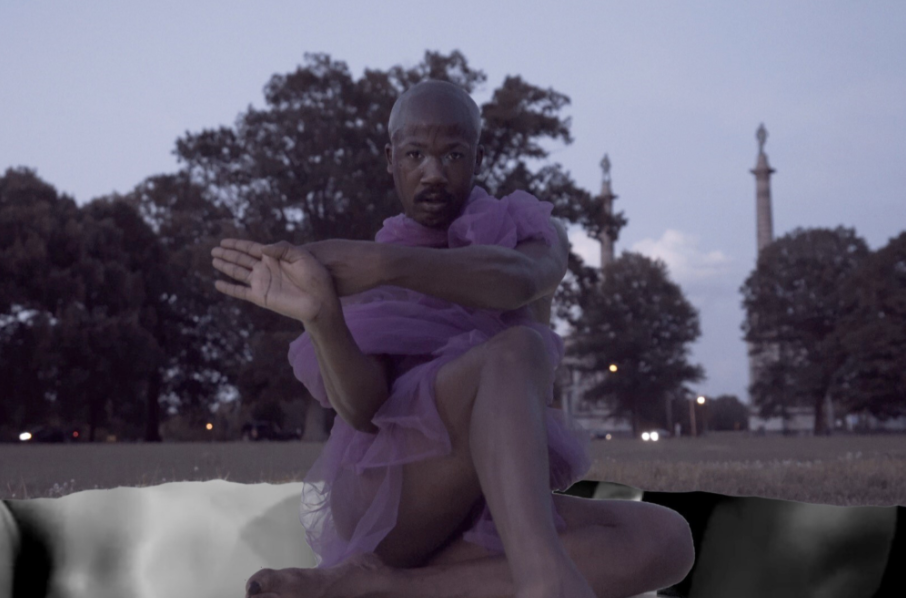
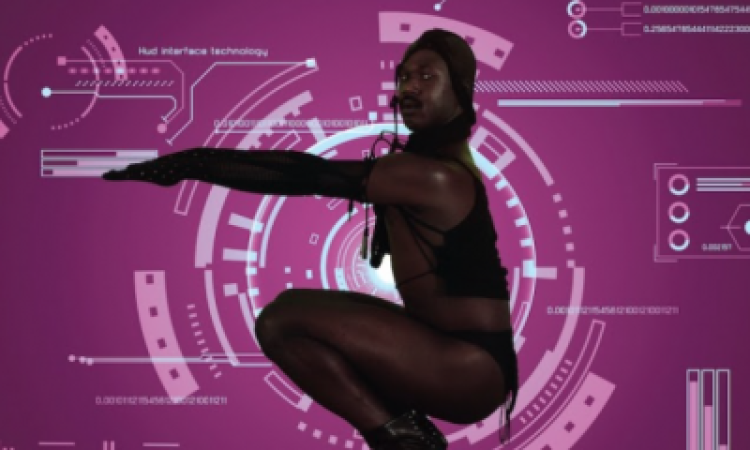
Throughout the chaos, I am allowed breath in the form of Wilkerson’s solo shots. In each, they dance alone, for what feels like a luxurious amount of time after the onslaught of 2020 footage. Throughout the various shots, they wear distinctive outfits, often evoking early 2000s fashion and playing with various degrees of femmehood. In a particularly powerful solo, Wilkerson struts, throws, and slinks, wearing a long black trench coat, heels, a red bra and blue panties. I am grounded in the film by these clips, entranced by their singular body in its power.
The final section of the film separates itself distinctly with the first fullscreen title we’ve seen: Revolution PT. II. The room on screen fills with red light, a mysterious fog. The music softens, haunts. Wilkerson extends their long arms, sequins dangling, dancing in grief, in process, and full clarity. I relish in the chance to witness their movement uninterrupted.
In the final moments of the film, they take graceful steps backward. Back, back, back. Restore, restore, restore. What is it to be crucified and born again? Is Wilkerson wearing time as skin? Is time returning, looping back on itself?
They throw their arms up in a final gesture. Pure agency as movement, slicing through the haze. Cut to black.
The Sis Uprising: A Critical Kiki, Arien Wilkerson, Gender, Sexuality, and Women’s Studies Program at the University of Pennsylvania; Online Event, October 8.