A relationship is going well. You envision the future and imagine the best is yet to come. And out of nowhere: the blindside. The breakup. The dump.
Then you’re standing in an empty apartment, filled with nothing but the terrifying, exciting possibility of starting over and time with yourself (and just yourself!) once more.
In Pig Iron Theatre Company’s Poor Judge, we encounter a deliciously nuanced examination of rejection. The show is set to the music of Aimee Mann, a prolific California-based singer/songwriter who is no stranger to reinvention and release (in Mann’s case, by a major record label).
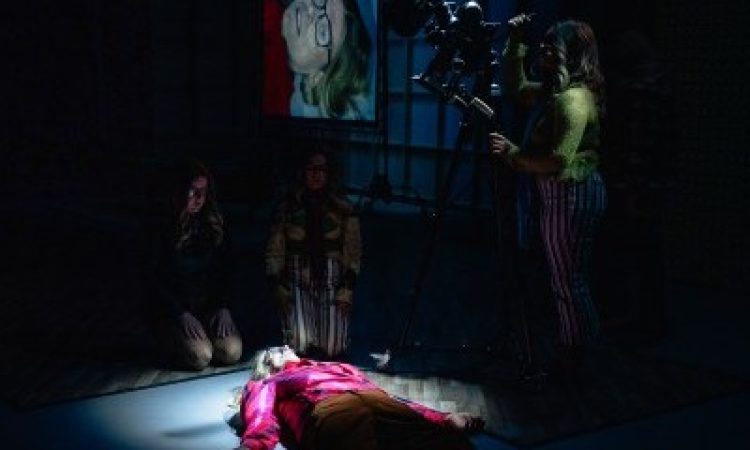
The cast of seven – all “Aimees,” with shoulder-length blonde wigs and thick-rimmed black glasses – provides steady, gorgeous live vocals and instrumentals. Each song is a different scene: from the nerve-wracking audition room to the impressive live camera work of a film noir set, to the hilariously miniature-rendered hills of the bygone era of Hollywood – whether fiction or real-life, none of us are immune to being “let go.”
Framed by Dito van Reigersber’s personal story of a post-breakup reflection, Poor Judge shines in vocals, instrumentals, and film work. Movements are aptly subtle, employing gestures (a unison hair swish, head nod, chin shake, and intentionally corny jazz hands). The most bone-trembling seconds follow the recap of the breakup – the ‘we need to talk’ moment that elicits a sting. Afterward, Dito shakes for what feels like minutes to an ominous popping sound. The theater fills with the unmistakable scent of popcorn, and the once-tense sounds are merely evening snacks, soon to be enjoyed with a feature film. The cast settles and chews.
We ingest it all. We know the sensation. We know the ground falling out, the smack of unexpected words.
Speaking of words: I’m hesitant to include Mann’s lyrics in this article. Instead, find it on your own. If you’ve never read or heard her haunting barrage of lyrics before, they’re worth a listen.
Rising to the top like cream, memories of being left out help us move on. Instead of heartbreak, Poor Judge is a “heartbuoy” – a shimmering sense of what’s next after rejection. In the vast “us” of the audience, the multitudes of Aimees, we’re in the apartment, figuring out what lies on the other side of the emptiness.
Poor Judge, Pig Iron Theatre Company, Presented by FringeArts in association with the Wilma Theatre, September 11-22
Homepage Image Description: Five people wearing blond wigs and dark-rimmed glasses stand around a couch, where another person lies, relaxed and singing. They’re on a brightly lit stage and wear loose, comfortable, bright clothing.
Article Image Description: On a dark stage, a person lies supine on the ground. Two people kneel near her head, looking down. Above them all, a camera is pointed down. Behind the people is a projection of it all, visible and blown up for the audience.