An intergenerational group of dancers takes the stage in Torrent: Dancing in the Churn, a mixed-bill movement response to the “pressures on artists to not only survive, but respond to our culture’s attempts to silence dissenting viewpoints.”
A standout piece of the night begins the program – Gush, by Seed II Crown. Three kids play with braided cloth, their joy and abandon running amok. Too soon, the kids and their joy run out, replaced by 2 adult dancers and parents – choreographer Evalina Wally Carbonell* and Brandi Ou. The rope once used for play now hangs from a window, attaching to Ou’s head, loosely resembling a noose. Ou slowly pulls this braided entrail down, only for tens more to erupt in its place. Anxious entanglements ominously bind Ou and Carbonell to obligation, until finally, they are left stranded, burdened by experience as their children spiral around them, careening towards change.
We then turn to Mijkalena Smith’s Today, Tomorrow, and the Next, featuring an all femme cast in baby blues and earthen browns. They walk straight toward the audience, strength multiplying between bodies until they reach a shared understanding of synchronicity and specificity. Education as protest.
The femme empowerment continues in My Story is Your Story. Two girls and their mom, alongside choreographer Karen Fox, cartwheel and fence playfully. Calls to “Rise up!” fill the space. Empowerment passes forward to future generations, as children learn the magnitude of their own abilities.
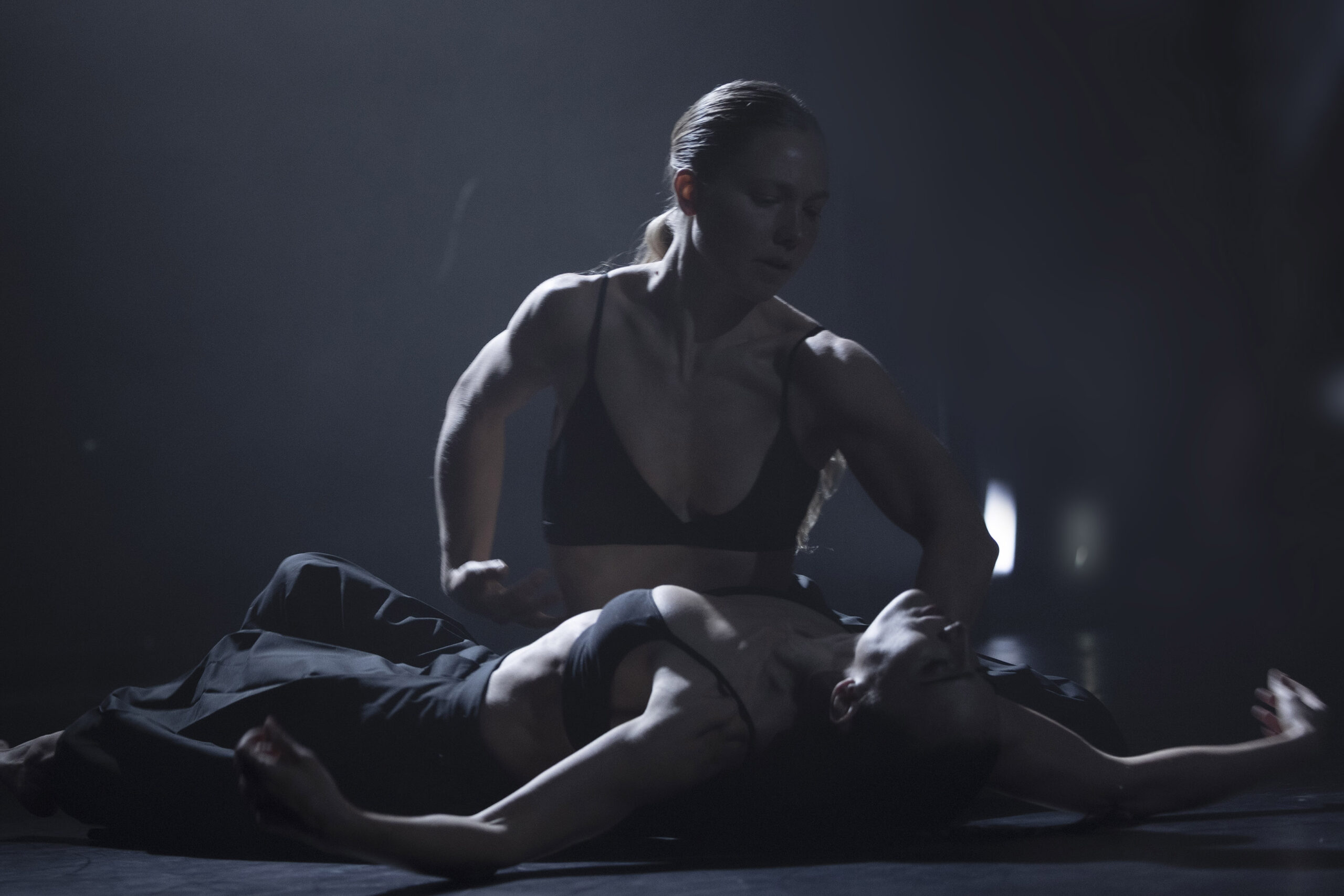
Empowerment comes in a different shade in Mourning Morning. A group dressed in black finds strength in collective healing. Flying through floorwork, pounding chests, torsos undulating – after grieving, the dancers find a new rhythm with the group. Artist Jessica Warchal-King lets each mover grieve out loud, so they can heal together.
The stage then quiets with a solo from Karen Fox. A Hero is Born recalls Fox’s explorations in My Story is Your Story. Now, her body reflects on time alone, finding play that illuminates the darkness of this moment, the challenges of this body.
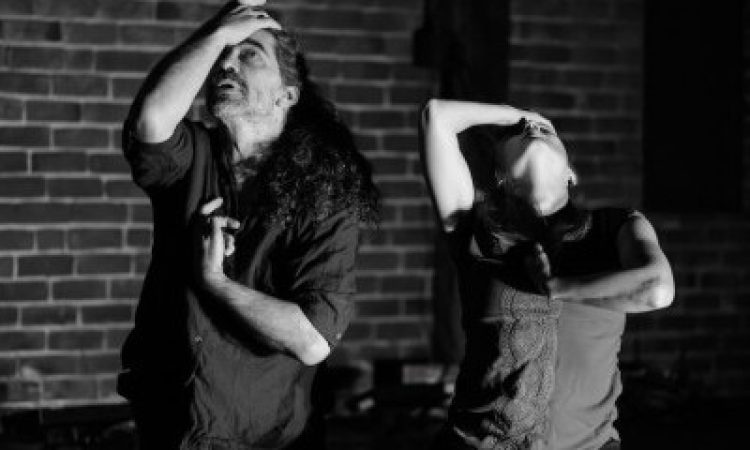
The night ends with Malcolm Shute’s contemplative Waiting Room. Four dancers orbit a bench, carrying each other’s weight, pulling bodies back to center. The final duet – Shute with Carrie Monger – leans precariously, testing the limits of hanging on while “waiting for the hammer to fall.”
The night gathers community to hold space for a future rooted in connection across generations, so when the hammer falls, we are there for one another.
*Evalina Wally Carbonell is a current writer with thINKing DANCE.
Torrent: Dancing in the Churn, Evalina Wally Carbonell, Mijkalena Smith, Jessica Warchal-King, Karen Fox, Malcolm Shute, Chi Movement Arts Center, September 28.