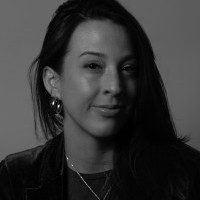
Naomi Goldberg Haas has spent a lifetime attending to bodies often overlooked. As the founder and artistic director of Dances For a Variable Population (DVP), she has shaped a vision of dance grounded in presence, access, and human connection.
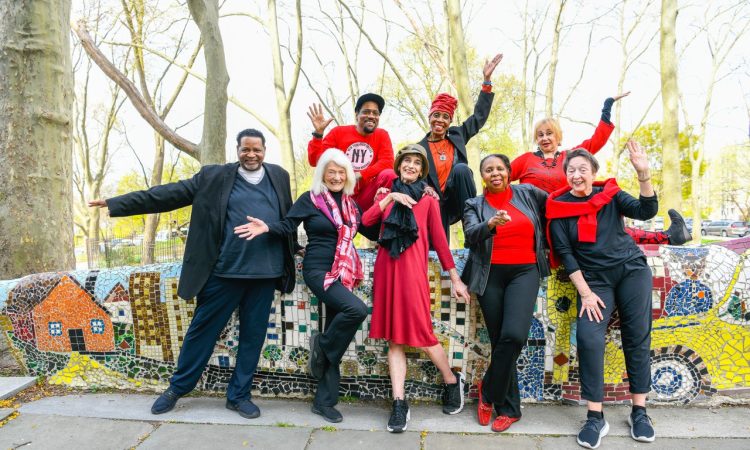
Founded in 2005, DVP is a multigenerational dance company and educational organization devoted to engaging older adults through movement. Each year, DVP serves more than 2,500 older adults across New York City through free classes, workshops, and performances. These offerings unfold not only in studios or theaters, but in parks, community centers, transportation hubs, and public spaces such as Washington Square Park, the High Line, Times Square, and the Whitehall Ferry Terminal. By bringing dance into public and communal spaces, DVP insists that movement belongs everywhere and to everyone.
Haas began her career dancing with Pacific Northwest Ballet. When she reflects on those years now, she does not speak in the language of achievement. Instead, she returns to what the work instilled in her. “The rigor of the work and the sense of body and mind relationship that ballet cultivated,” she writes, remain foundational.
“The discipline taught me that the body is not separate from thought or feeling. It is where they live and breathe together.” That understanding would quietly shape everything that followed.
Dance, as she understands it, is never solitary. Even solo movement exists in relationship to music, space, other bodies, and an audience. That sensibility became central to her leadership. Hard work and collaboration were not abstract ideals, but daily practices learned through dancing. Leadership, she came to see, means showing up alongside others, especially those society too easily marginalizes, and committing to move together toward a shared purpose.
Over the past two decades, Haas has witnessed the impact of this philosophy in deeply personal ways. She has watched people discover, often for the first time, that their bodies are worthy of attention. “All people deserve to be seen and are inherently interesting as movers,” she says. “There is no such thing as an uninteresting body in motion.” For many participants, dance becomes a place of return, a way back to the self after years of illness, aging, isolation, or quiet erasure. Creating space for that return has been one of the great rewards of her life’s work.
Some of the most profound moments were never meant for public view. Teaching in Bytom, Poland, to older adults with mental disabilities living in social care centers, Goldberg Haas encountered recognition that transcended language. In that space, she felt a shared understanding of exclusion and withdrawal from society, and a quiet reclamation of presence through movement.
Dance, there, was not about performance or skill. It was about dignity.
Now, as she steps down from her role as Artistic Director at DVP due to Fahr’s syndrome, Haas reflects from a place of honesty. Fahr’s syndrome is a rare neurological condition that affects movement and speech. Our dialogue took place via email, as the progression of the disease and its symptoms has significantly altered her ability to speak and move. She does not soften its reality. “This disease is a tragedy,” she writes. “For the first time, I cannot understand my actions or non-actions. My body, which has always been my instrument and my teacher, has become unpredictable.”
It is a cruel paradox that a life devoted to movement now unfolds within a body that has become unpredictable. Haas courageously admits that the experience has been “deeply humbling and profoundly disorienting.”
And still, Haas does not turn away from meaning, and even her understanding of strength has shifted: “Strength has become simply ‘standing tall’ in all efforts. It is no longer about virtuosity or endurance in the traditional sense. It is about presence, dignity, and the quiet courage it takes to continue showing up.”
Dance, Haas is careful to point out, does not fix everything. It does not promise healing or resolution. What it offers instead is presence, a way of inhabiting the body without judgment or demand. In moments of grief or despair, what has helped her is remembering that time is fluent, that nothing is permanent–not even suffering.
Surrender, rather than effort, has become essential.
This chapter has deepened her understanding of dance as a spiritual practice. Dance is not just movement, she says. It is prayer. It is communion. It is a way of making meaning in a world that often fragments bodies and lives. Sometimes the way forward is not to push, Haas points out– but to soften, to listen, to allow the body to speak on its own terms.
As she looks ahead, her hopes remain rooted in justice. She dreams that movement will be understood as a birthright, not a privilege. That no one will be told they are too old, too sick, too disabled, or too different to dance. For Dances For a Variable Population, she hopes that dancing will continue to offer embodied answers, the kind that come not from intellect alone, but from breathing, shifting, surrendering, and being together.
For anyone longing to return to their body after years of disconnection, her guidance is gentle and exact: Listen. Follow the impulse to move. Trust even the smallest gesture.
“Your body has wisdom that your mind may have forgotten,” she writes. “Even a shift of weight, a turn of the head, a breath– is a return home.”
Interview conducted via email with Naomi Goldberg Haas, January 29, 2026.
These ideas are examined more fully in her book, Moving Through Life: Essential Lessons of Dance (University of Florida Press), which draws on a lifetime of dancing and teaching.