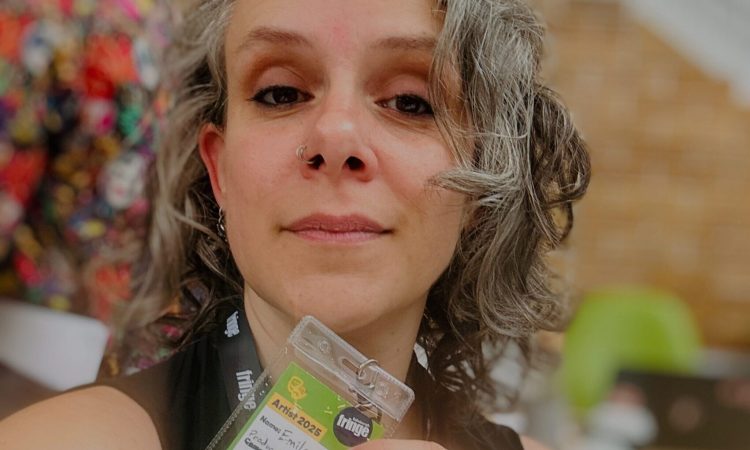
Last July, I boarded a plane from New York with a suitcase full of costumes, and my script and choreo notes stuffed into my carry-on. My co-creator/fellow performer and I were both elated, mostly ready, and overwhelmingly nervous about what it was really going to take for us to do 22 shows of our duet in 24 days at the Edinburgh Fringe Festival. We’d done long runs before, but nothing like this, not with the stakes this high, and we were feeling the pressure.
Now, more than a year later, still occasionally having to treat a flare up of a repetitive-use injury, with the friendship between myself and my co-creator complicated, I am only beginning to write out what I discovered are the key points to not losing one’s shit. By the end of August 2025, I’d navigated unexpected ups and downs, had the necessary meltdowns, wrestled with the work, and learned a lot. Sometimes I was exhausted, disappointed, and frustrated; but I also got to live and work in Scotland and perform at the world’s largest independent festival of live performance, which is something I am grateful for each day.
As we head into Philly Fringe season, I decided to share what I found to be the most useful parts of my own experience. Think of these as survival strategies, from one artist-warrior to another (or, if not that, then at least a cautionary tale filled with sardonic humor).
1 – No, the stakes are actually not that high.
Your work still matters, even without the Netflix deal.
We’ve all heard stories of the shows that sold out, won all the awards, got the big deals. We’ve seen the streaming result, from Richard Gadd to Phoebe Waller-Bridge. It might feel like the stakes are high. Ed Fringe was a big moment for us, and it was tempting to see it as the biggest moment, the most important, with all our efforts put in one place. An eggs and basket postulate. But if you count on some kind of major career breakthrough, making that the main reason you’re there, then it’s very likely that you will be severely disappointed. 9 times out of 10 (and sometimes more like 15/10), such stories of being “discovered” by some Big Producer With Money don’t happen. Not to worry! This won’t kill you, and you’re still an artist.
2 – No, you don’t need to go Salsa dancing.
aka Rest-Ice-Compression-Elevation
15 shows in, my right ankle and shin were on fire. Stretching made it worse, rest made it quieter, but there wasn’t much rest—did I mention we signed up for 22 shows in 24 days? The stairs all over Edinburgh were relentless. And then I met a fun human that invited me out salsa dancing (I’d like to honor the bravery of this person for asking a professional dancer out to dance. Especially as they did not know how to Salsa, which was slightly surprising given they said they always go to this event). I danced all night instead of R.I.C.E, and it didn’t help. So maybe do the right thing, the boring thing, when you need to. If you are actively in the middle of giving yourself a repetitive-use injury, I do not recommend late night dancing. Nor climbing the longest hill “just for fun.” Nor running up 17,592 stairs to get to a historical walking tour because you’re late.
3 – Something will break.
In fact, multiple things will break
Carry gaff tape, a jump drive, and a charging cable at all times. Something is not going to work when you really need it to. The thing you brought as a back up? That will break, too. The thing you own five of but forgot to bring? You’ll have to buy it again. And Press will definitely be there that night. It’ll be ok! Have at least three solutions for all failure points. The more you can plan and dream and improvise and McGuiver your way through this thing, the better. Let the work evolve with you. Maybe don’t hold too tight.
4- There’s an alley for that.
You’ve got to keep your shit together
Yes you’re an artist and performing non-stop, but you’re also communicating with your tech team, your collaborators (more on that later), your producer, your venue, and you’re flyering the streets to get people in seats. You’re front-facing all the time. So when you are about to lose it, take a quick walk, find an alley, crouch down against a wall with your hands on either side of your frazzled head, and whisper/yell things like: “Why am I doing this?! Who fucking why?!” It helps. I promise. (Oh, and pick a different alley for when you just want to lean against a wall and stare blankly at the opposite one for a while. The yell alley gets full of your outbursts, and you’ll want a quieter vibe).
5- There’s an alley for them, too.
Breathing is good for everyone on your creative team
If your collaborator looks like they’re gonna lose it, take them by the shoulders, shake them gently, make them look you in the eyes, and take 3 long deep breaths together. Otherwise you will kill each other (and that’s gross). Help them find an alley (not the one you’re currently using). You need them and they need you. Everyone needs to be grounded from time to time.
6- You’ll probably need to dig for better reasons to be doing this.
The power in the process got you to the festival. Don’t leave it behind!
My collaborator and I were so excited about our piece–a dance-drawing-video installation-theremin duet about the demands and expectations placed on women’s bodies, minds, and attention. We had profound things to say, admissions and interventions, rituals, and quiet offerings. And we had loops of interviews of other women-identified voices in the mix. If you had asked me before the festival if I thought the work would flatten out, I’d have been haughtily and mightily offended. But that is exactly what happened. Somewhere mid-run, we were on auto-pilot, and it didn’t feel right. That’s not what we set out to do. So we had a meeting one morning (we lay down on the floor of my apartment, moaning and cussing), and realized that we needed to add that sense of unknown back into the work. We workshopped it line by line like we had in the making and initial rehearsing of the piece, and fell back in love and in touch with the work.
7- What’s a show without an audience?
Food, water, photographs!
2 of our 22 days sold zero tickets. Instead of feeling defeated, use the down days like it’s a well deserved studio day. Eat food, drink water, and document your shit! You are not going to make money (or probably break even, let’s be real here), so you might as well use the time to make, dream, play, and relax into what the day hands you–even when it hurts.
8 -Take a look around you.
Go enjoy yourself. It’s not that serious.
The first 10 days were grueling but wonderful. We had the momentum of arrival on our side and the newness of everything. I had found a housing swap and was lucky enough to have my own place away from the constant hum of the festival. I settled into a routine, discovered my favorite walk home, and felt comfortable enough with the show that I began to venture out to explore the city and see other shows. Artists are living, breathing, loving, learning, flawed, multitudinous, surprising, curious, dense, and silly, to name a few attributes. We are all the things that make us human, even while we are performing at a Fringe Festival. You’re living what being an artist looks like right now.
9 – The end will be very anticlimactic.
Don’t worry about it. Eat seafood.
Your last day, and the days after, will be just like all of the other days of your life. That’s a good thing. We finished the show, had a drink, said a tearful goodbye on the Royal Mile, and I walked home to pack. The next morning I took a cab, and after one massive nap and a few chapters of a Murakami later, I was at Boston Logan drinking a Bloody Mary wondering what on earth just happened and if it was real. I ate a lobster roll. Then I flew home, kissed my pets, and immediately crawled into bed. The next day, as I sailed off the adrenaline cliff into the post-show blues, I did laundry and talked to my dad about bagpipes.
10 – And if you only remember one thing from all of this…
The work is important. The rest isn’t.
It may take a year to digest what happened and what it means for you and your work, and even then, you will try to make a joke out of it because you haven’t gone through the footage or the notes or the photos yet, and you haven’t fully understood why you did all that and you may never…or so I’ve heard. Keep Making.