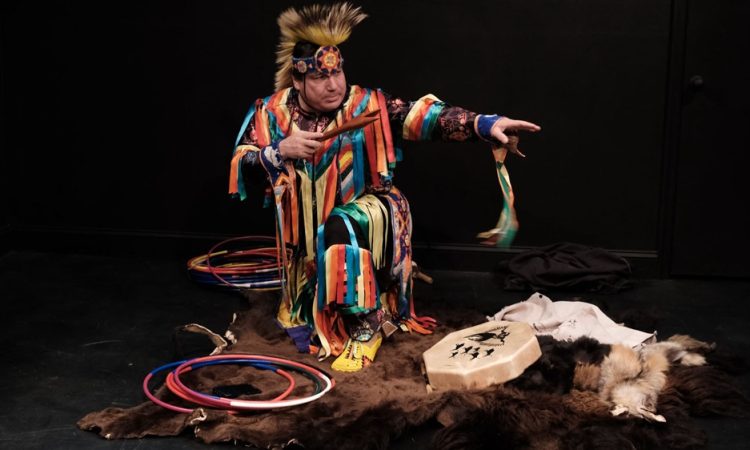
A steady, ongoing rhythm of bells rings from outside the black box at Yellow Bicycle Theater. A buffalo skull painted blue, yellow, and red rests center stage among a long feathered headdress, a small teepee, an animal hide, and a drum. The volume maximizes as Delwin Elk Bear Fiddler nears the stage. He arrives in colorful, lively attire – ankle bells, moccasins, and bright, swaying strips of fabric that animate his every movement. Greeting the audience in his native language, he sits comfortably on the animal hide alongside his things to tell the tale of the White Buffalo Calf Woman—a legend passed down through many generations of the Dakota, Lakota, and Nakota Native American peoples whose original mainlands ranged from present day North and South Dakota to parts of Montana, Nebraska and Wyoming.
Delwin Elk Bear Fiddler, member of the Cheyenne River Sioux Tribe, and world-renowned Native American Performing Artist is a competitive grass dancer and advocate for Native people. In recounting the legend of the White Buffalo Woman, Fiddler uses the items that adorn the stage to enliven the story along with song and dance. It is told that a White Buffalo calf arrived to the Lakota people before transforming into a serene woman. The chief called upon the grass dancers to purify the ground for her, and the White Buffalo Woman brought sacred rituals and blessings to the land and people:
“Spirit keeper, help me to have compassion for all people…help me to walk with honesty and dignity.”
“Mother Earth, remind me to never take more than I need and to give back more than I take.”
Fiddler accompanies each prayer with the sound of drums, a trill of a wooden flute, or his own voiced melody.
Bison are highly revered by the Lakota because they are known for filling the bellies of many with their meat, providing hide for clothing and teepee materials, and supplying bone for the creation of tools. Fiddler describes challenges adjusting to hunting under strict regulations enforced by the US government after the Wounded Knee Massacre (1890), and the ban placed on dancing that prohibited the Lakota from engaging in ceremonies as they were viewed as a threat to cultural assimilation and government obedience.
Fiddler keeps the tradition of Lakota native dances alive as an acclaimed competitive grass dancer (though after the show he tells me competitive grass dancing has adopted Eurocentric norms, therefore straying from its original sacred value and purpose). Through oral tradition, and now film (Without Arrows premiered on PBS last year), Fiddler continues to spread the stories and histories of Lakota.
Lakota Day, Delwin Elk Bear Fiddler, Yellow Bicycle Theater, Philadelphia Fringe Festival, September 27.