thINKpieces

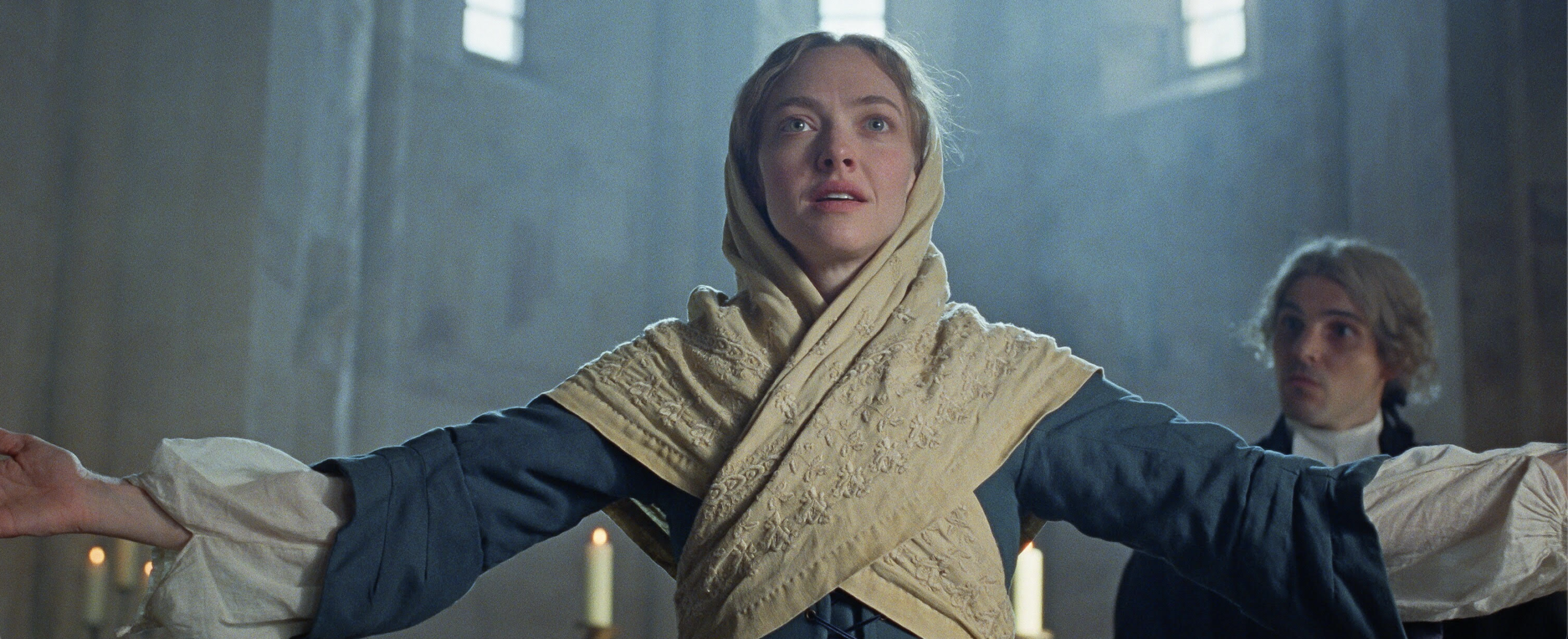
A scene from the 2025 film, The Testament of Ann Lee: Ann Lee (Amanda Seyfried) opens her arms wide and looks on a slight upward diagonal, lips gently parted, gaze forward, or perhaps “beyond.” The reverent gesture takes up the whole horizontal span of the image. Lee dresses modestly in a muted cerulean dress with long sleeves. A cream colored scarf covers her head and wraps around her bust in an X. The image cuts off just beneath the scarf.
Photo: Courtesy of Disney and Searchlight Pictures

Rave, or Revelation? Celibate Orgies & Mixed Messaging in The Testament of Ann Lee

Lauren Berlin

In this cinematic story of the Shakers, contradictory messages about the body compete with ecstatic movement sequences

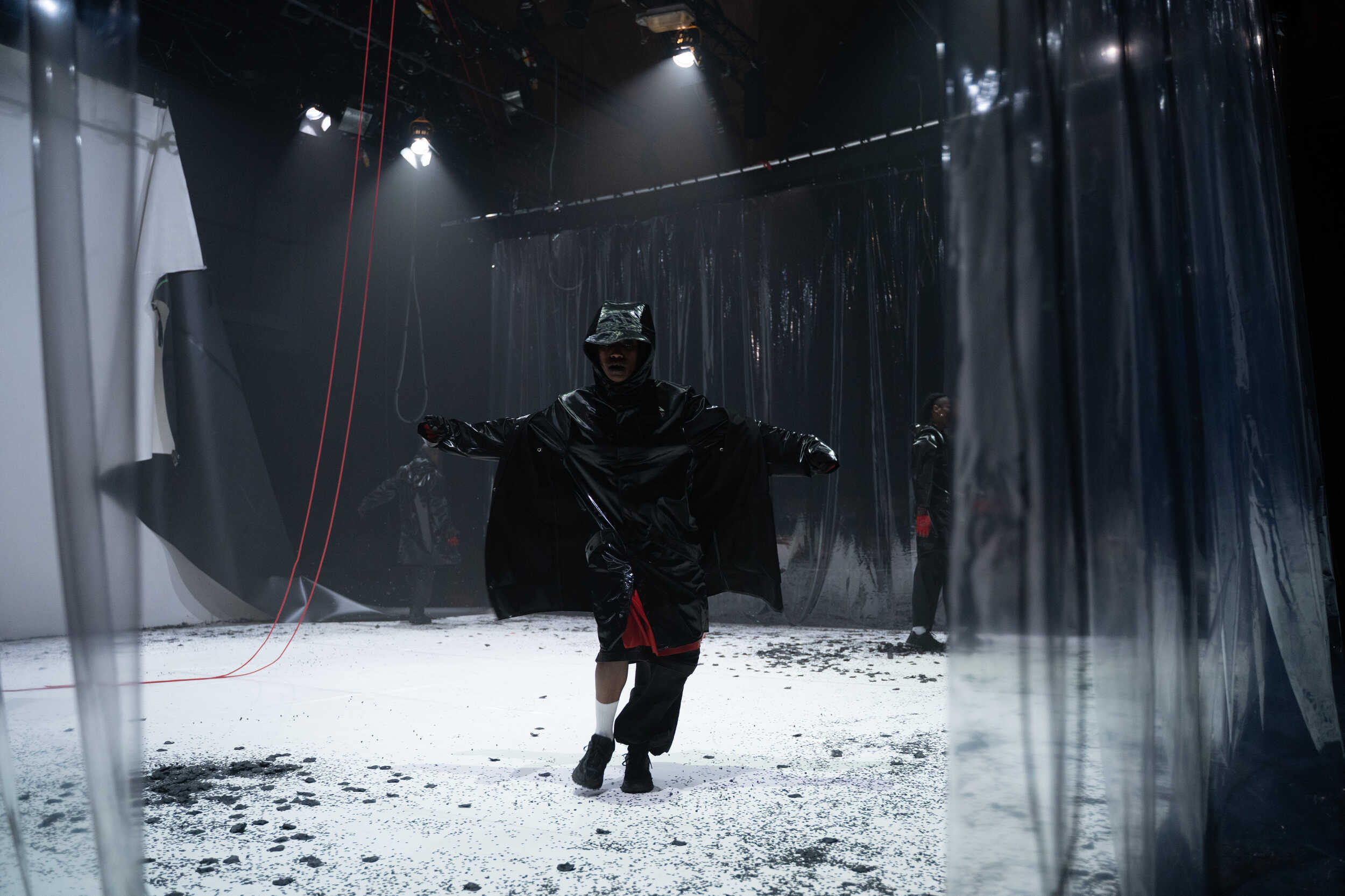
Mulunesh, a Black woman in a thick, hooded raincoat, stands crookedly with her weight shifted over one foot. Her arms are lifted out from her sides and her hands are in fists. She is lit with harsh, bright lights, and boxed in on three sides with heavy transparent plastic. Behind her, a sheet of white marley and two red cables dangle limply, as if caught mid collapse. The floor beneath her feet, made of the same white marley, is spotted with piles of black paper confetti.
Photo: Bas de Brouwer

Decomposing Mediation: On FRANK

Writings from tD's Emerging Writer's Fellowship

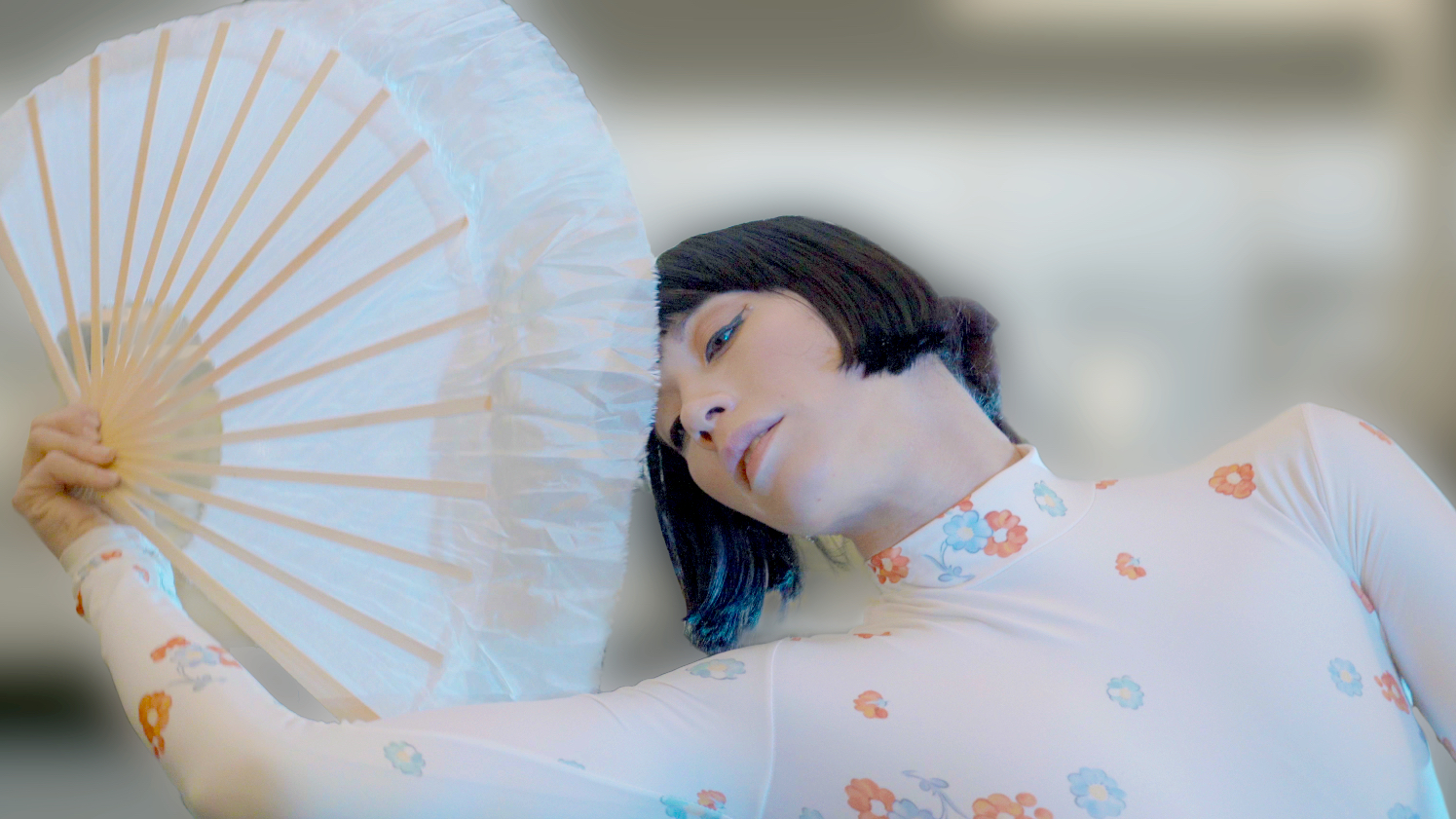
Georgina Pazcoguin, her short black bob framing her face, wears a white bodysuit decorated with blue and red flowers and holds a classical Chinese fan. Her eyes are defined with lined makeup as she extends into an elongated ballet pose.
Photo: Pentalina Productions LLC

About Face: Yellowface and the Cost of Looking Away

Lauren Berlin

To love ballet is to let it evolve

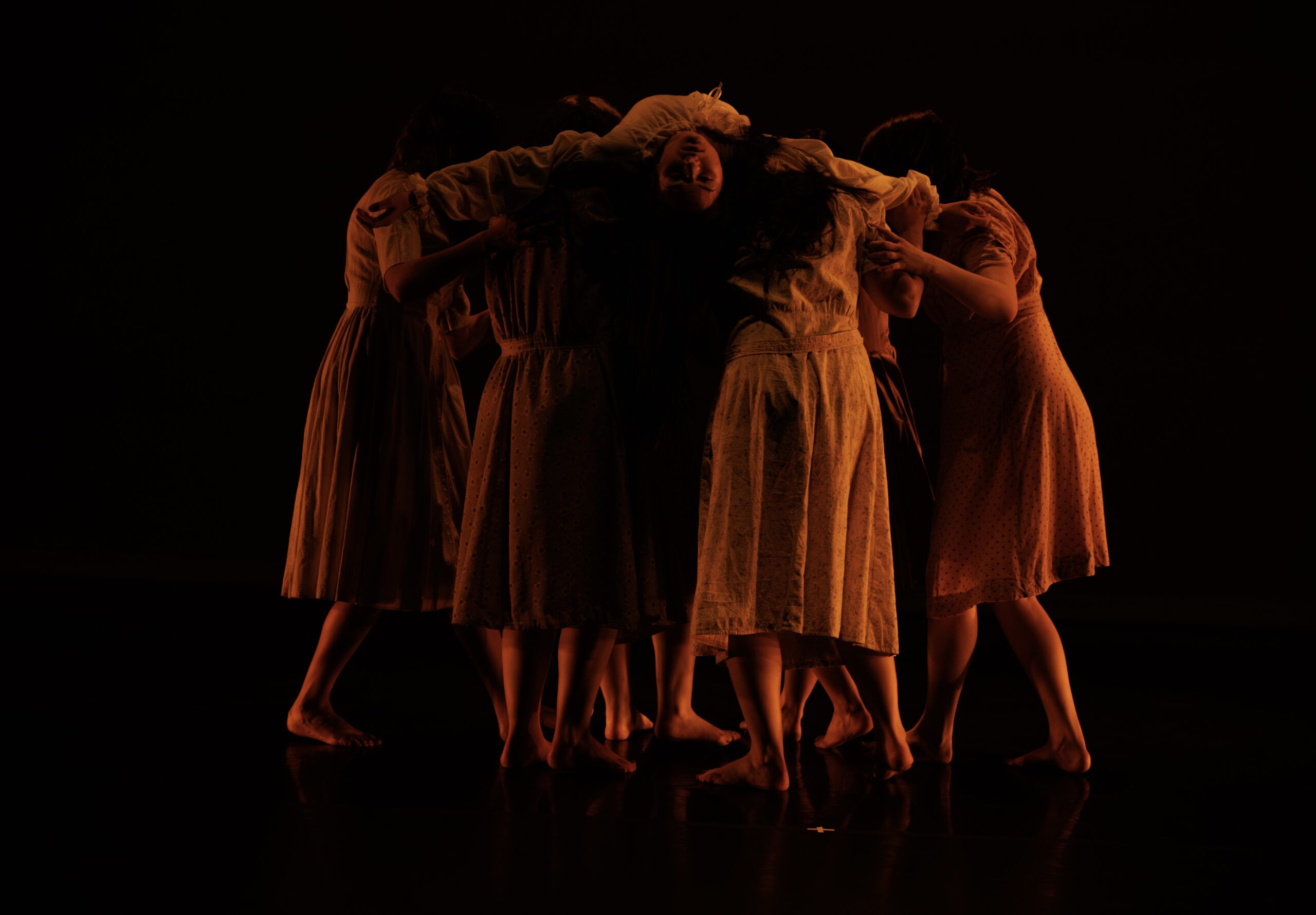
In a dark-lit space, a group of barefoot dancers huddle together. Someone lays on top of their shoulders, their face upside down to the audience.
Photo: Michael Tubbs

Ephemeral Patterns: Translating “The Yellow Wallpaper” into Movement

Writings from tD's Emerging Writer's Fellowship

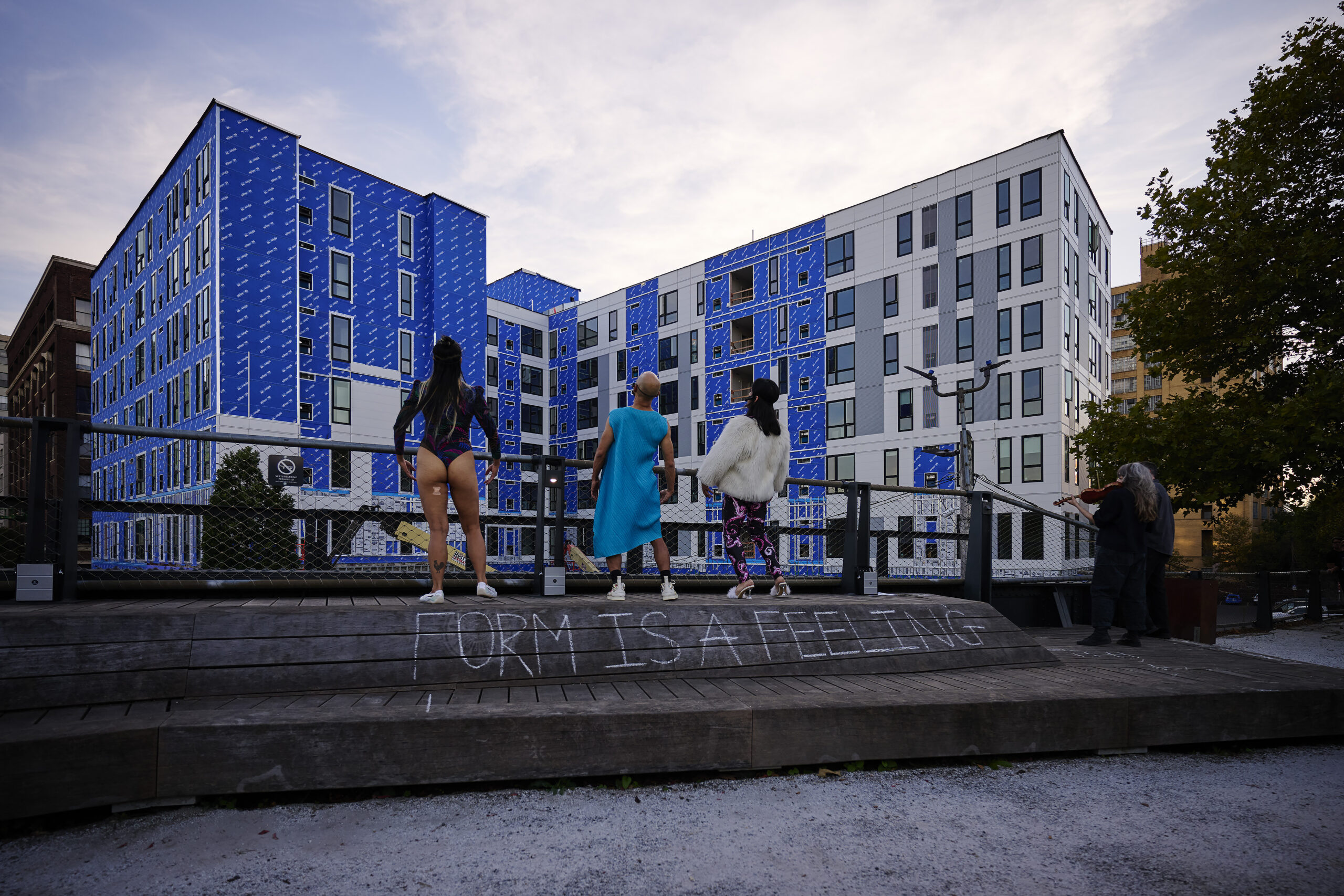
Anh Vo performing at The Rail Park, an outdoor space. Three dancers stand with their backs toward the observer, looking toward a blue and white modern-style building. They stand on a concrete edge, with the chalked words "FORM IS A FEELING" sketched across the platform.
Photo: Albert Yee, Courtesy of Asian Arts Initiative

The Assurance of the Ecstatic: On Anh Vo’s Three Performances

Mang Su

Being possessed is not a state but a devotion.

A group of five individuals, dressed in business attire, all gather together for a selfie in the velvet-carpeted lobby of the John F. Kennedy Center for the Performing Arts. Jane, at the front left, is a white, brunette woman with a medium pixie cut. Clad in a magenta blazer and black turtleneck, Jane dons a bright, bespectacled smile. Grinning behind Jane, Mallory, a white woman with dirty blonde hair, wears a black and white gingham dress and holds a silver clasp. Malik, a tawny-skinned Black man in a black button-down and trousers, stands beaming at Mallory’s left. Allison and Chloe, dressed in a white button-down and a floral dress respectively, lean into the photo, offering their smiles as well.
Photo courtesy of Ashayla Byrd

The Leaders Behind the Headlines: Conversations with the Kennedy Center’s [Terminated] Dance Programming Team

Ashayla Byrd

What happens when political agendas take precedence over a nation’s desire to feel seen and supported in artistic spaces?

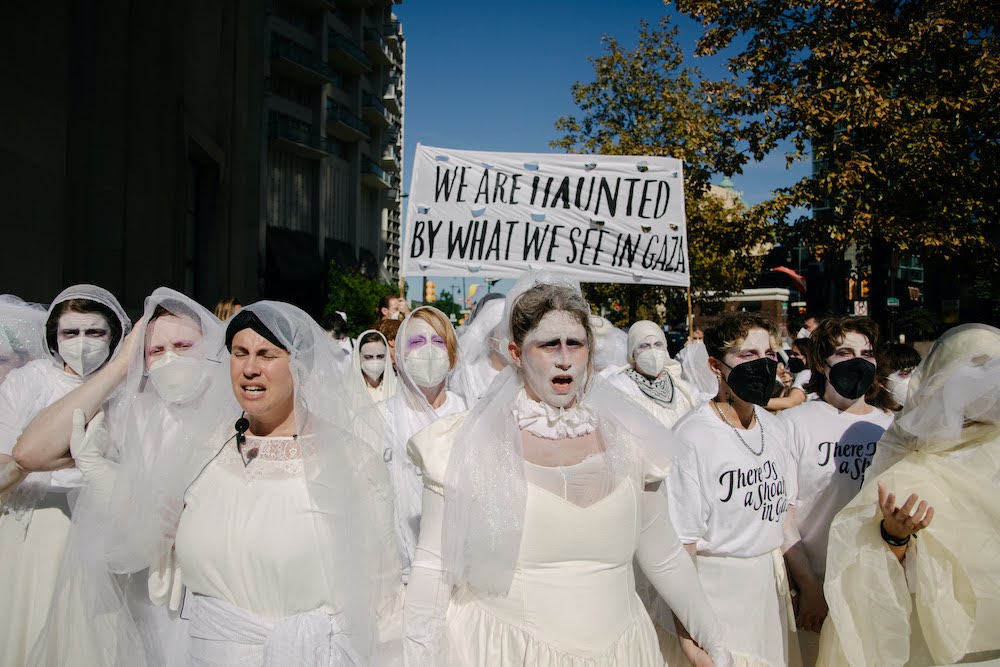
A crowd of predominantly white people wear white dresses, t-shirts, and gauze veils draped over their heads, faces visible. Most have painted their faces white with pink around their eyes and are wearing KN95 masks. They are walking forward toward the camera, a tall shadowed building, tree foliage, stop lights, and a square of blue sky behind them. Two people in the front open their mouths mid-song and scrunch their eyebrows together, maybe from the sun and maybe with concern. Deeper into the crowd, people hold a white banner with bold black letters, “WE ARE HAUNTED BY WHAT WE SEE IN GAZA.”
Photo: Rachael Warriner

There is a Shoah in Gaza

Xander Cobb

Philadelphian Jews dance and sing in protest of Mural Arts Holocaust Memorial Mural that excludes Arabic and Palestine.

Two thousand feet below rolling gray clouds, a woman walks away down the rock slab trail off the summit of Mount Moriah. She traipses between squat, sturdy, coniferous trees in her fluffy brown zip up, teal leggings, and worn hiking books. A water bottle threatens to tumble out the outer right pocket of her blue Kelty backpack. The backpack has seen some things; it is nearly 20 years old.
Photo: Allison Larme

Not a Dancer, If Only for a Little While

Jennifer Passios

And what if that isn’t a crisis?

A line of eleven people are holding hands in front of bright large windows, their legs lunging and their heads turned in different directions. They were sweat pants and t-shirts, shorts or tank tops, all of various colors. Some of them are looking to their right and down, others looking up and left.
Photo: Julie Lemberger

Approaching the End: Open Rehearsals with Stephen Petronio Company

Brendan McCall

Petronio Company's intimate and moving rehearsals during their final season.
Lakshmi Thiagarajan, author of the article, kneels gracefully on the ground in a covered walkway outdoors, lit by lanterns. One leg is forward, clad in yellow and red silk pants with a percussive bracelet on her ankle. Her clasped hands frame her face, adorned with a bindi and golden headband. She looks off to the side with a small smile.
Photo: Lakshmi Thiagarajan

Beyond Entertainment: Exploring Perspectives on the Purpose of Dance in South Indian History

Lakshmi Thiagarajan

Dance as an expression of political power, religious fervor, and of women’s sexualities.