Pennsylvania Ballet’s new artistic director Angel Corella has unapologetically placed his mark on the company’s 53rd season with an array of new company members and a stylized flair within the choreography. PAB’s fans have been everything from outraged to overjoyed, resisting or embracing adjustments which are alternately seen as modernizing the company or compromising the integrity of tradition.
As I considered these revisions during the 2016-2017 season’s opening performance, Cinderella, I took note of the environment around me, which had seemingly undergone some modifications as well, and I began to wonder. When did jeans and a t-shirt become acceptable dress for a Saturday night show? When did the request to turn off cell phones become disregarded? When did answering texts and using cell phone lights to read the program mid-show become condoned by fellow viewers? When did casually talking at an audible volume during a pas de deux become normalized?
What I anticipated as a magical night was diminished by what I experienced as disrespectful audience behavior. Turning to the stage for the dreamy escape that I can always find in classic fairy tales, my expectations were challenged again. At first sight, I was awed by technique and character development, but upon closer examination, found nothing but humor and tricks.
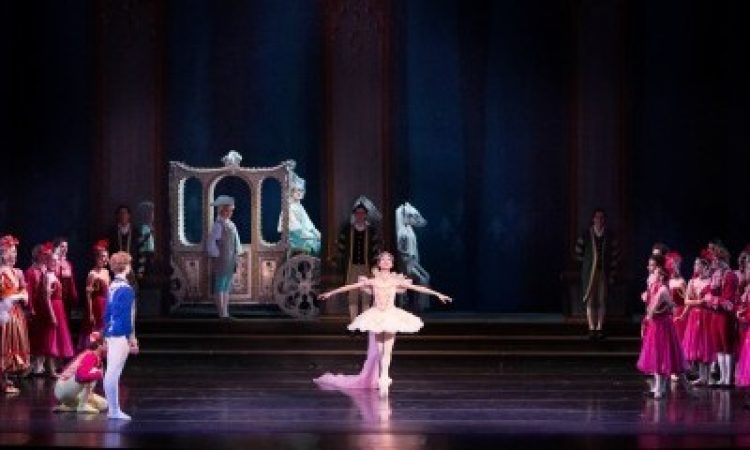
The stepsisters, played by Charles Askegard and Ian Hussey, were splendidly successful at making the audience laugh. Alexander Peters, the jester, performed countless turns and jumps that were nothing short of perfection. The gestures exchanged between Cinderella (Oksana Maslova) and her prince (Sterling Baca) flowed with grace and ease. But what was first impressive became monotonous, almost prosaic, and served as an invitation to zoom in on the details. This is when I began to notice the transitions between the fantastic feats performed. Sickled feet, pedestrian runs, and sloppy soutenus accompanied the dancers as they dropped character. With absent expressions, the adoring embraces between the new lovers emerged exclusively in their larger movement. The dancers appeared uninspired, almost bored.
The ensemble in the ballroom scene practically floated through the space, the women swirling their red dresses in hypnotic excellence. They waltzed in such impeccable unison for so long that it grew humdrum. Even the little ballerina sitting behind me began to yawn.
Once upon a time, the ballet was an enchanting place, where the illuminated stage engulfed me, transporting me into an alternate reality. The characters did not slip into their everyday identities and cell phone lights did not glare at me from the third row. In an arts culture where the fourth wall is crumbling, performer process is exposed, and audience interaction is encouraged, has the magic of the proscenium waned? I look forward to following PAB through this season of changes and observing the choices their audiences make about respecting the standards these artists deserve.
Pennsylvania Ballet, Cinderella, October 13-23, Academy of Music, https://paballet.org/cinderella