The FringeArts Festival, no matter your take on it, is a vital part of the seasonal flowing of performance arts in Philly. And September is Fringe season. That makes August the season for digging through the Fringe guide, scratching your head, and puzzling over what you’re going to see.
To help you make that decision, dancer artist, tD contributor, and chair of tD’s board Jonathan Stein gives us his picks for Fringe 2018. To see more picks by tD writers, click here.
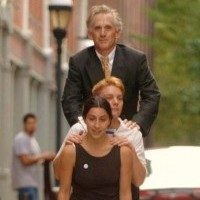
Focusing mostly on the Independently Produced (non-curated) Fringe, I start with Kill Move Paradise, the Philadelphia premiere of James Ijames’ latest play, directed by the Wilma Theater’s artistic director, Blanka Zizka. A work for our times, this should prove to be a powerful and original piece addressing racial violence and injustice, and the potential for transformation—“an expressionistic buzz saw through the contemporary myth that all lives matter,” in Ijames’ words. Set in the afterlife, and with a wall of metaphorical heft, the play will have strong elements of physical theater, a Wilma hallmark, as well as contributions from choreographer Silvana Cardell.
Meg Foley’s The undergird is the only dance work by a Philadelphia artist among the curated productions, and follows a seven-year development of a solo improvisational practice Foley has called “action is primary.” This promises to be an evocative exploration of how we embody and express memory and imagination through the body and ritual. tD writers found the 2016 iteration a source for rich commentary.
Perhaps the most unusual and evocative offering among the curated presentations of the Festival will be the five related, interactive performances and installations entitled ear-whispered: works by Tania El Khoury, co-presented with Bryn Mawr College. El Khoury works between Lebanon and the U.K., and seeks to produce heightened empathic experiences with refugees and civil war survivors through such pieces as the immersive sound installation Gardens Speak, and the one-on-one performance As Far As My Fingertips Take Me. ear-whispered stands out within Fringe’s programming, and promises to be truly memorable.
Gwendolyn Bye’s Dancefusion has, over the years, played a pivotal role in being Philly’s gateway to earlier classic modern dance. For Fringe this year she and the New York-based Sokolow Theater Dance Ensemble present Moving, a program of rarely seen works by Anna Sokolow (1910-2000). Sokolow’s abstract expressive style pioneered engagement with the social and political issues of her day and the human condition. Among three works presented is As I Remember, a suite based on three Sokolow solos from the ‘30s and ‘40s.
Almanac Dance Circus Theater has been on a roll since its 2013 founding with a consistent series of hits merging contemporary circus with physical theater and dance, including Exile 2588 and Leaps of Faith and Other Mistakes, both reviewed in tD. Jeanne/Jean/John/Jawn is their newest devised ensemble work, created site-specific, indoors/outdoors, for the Maas Building. Expect jaw-dropping acrobatics and belly-laugh clowning married to well-crafted narrative.
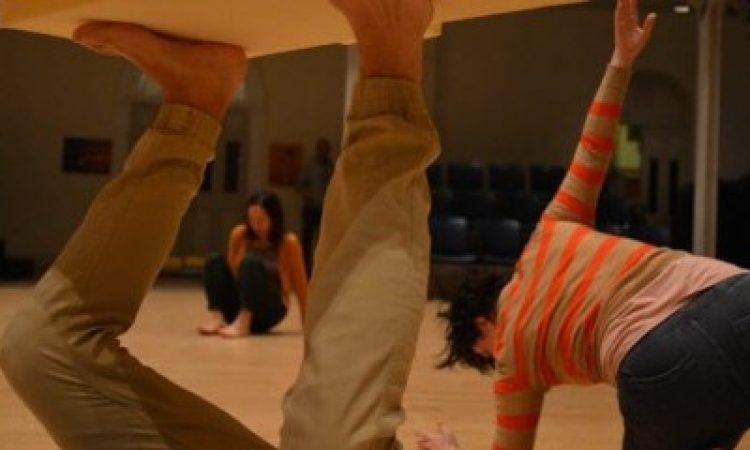
The Backyard, an improvised dance by Megan Bridge and Beau Hancock (both tD writers), was developed out of their research last summer with the legendary improvisation masters Steve Paxton and Lisa Nelson in their northern Vermont Mad Brook Farm studio. The new work, in Hancock’s words, will “bear traces of PA RT,” the Paxton/Nelson work (1978-2002) that Hancock and Bridge learned for their Vermont visit. The new work will be their own, perhaps embodying the elements Bridge recalls discussing in Vermont: “letting stillness resonate … letting each moment play out like ripples in a pond.” Tune in to the accompanying music of Robert Ashley, also the composer for PA RT. For background on the process read this piece by Bridge and Hancock.
Finally, check out new solo works from two outstanding artists, Lily Kind and Mark “Metal” Wong, in a program entitled Metal & Kind’s Indestructible Flowers. Kind’s genre-bending list of talents make her more of a performing artist than a dancer/choreographer, and Wong, best known in Philadelphia as a hip-hop and breakdance artist, also has broad performing chops (as shown in his role in Almanac’s Exile 2588 in 2016).
* Update, Wednesday, August 22, 10:35 am: The original piece did not include the paragraph about ear-whispered: works by Tania El Khoury. This paragraph was added at the author’s request.