According to program notes, Marie Chouinard’s work “reflects her deepest concerns as an artist…each new work must invent and explore a whole new universe.” The two works on view at the Annenberg Center on December 9 definitely hailed from the same planet.
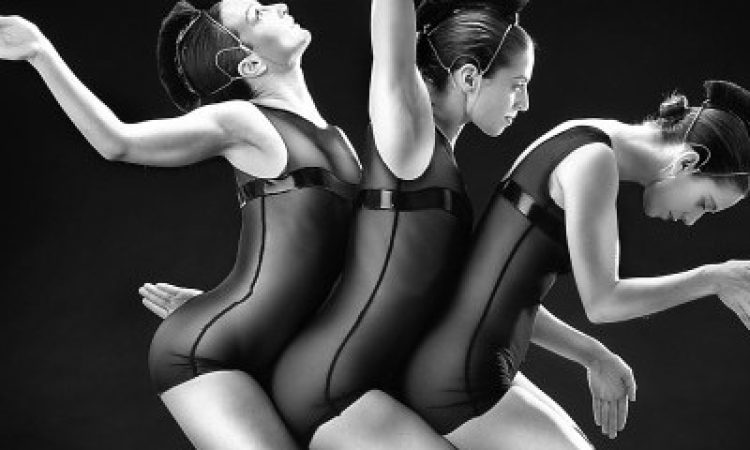
24 Preludes by Chopin introduced us to a strange and exotic society. With braids, mohawks, and makeup that evoked warpaint, the look of the company brought to mind an ancient civilization. Their plumage and posturing with flat palms, bent wrists, and curved spines styled their agile bodies as grotesque peacocks. The costumes illustrated the alien species as a strongly gendered one: the men were shirtless and the women wore tiny, sheer suits; both had black tape covering genitalia, bringing to mind the hand of a censor. The movement reinforced the sexual dimorphism of this society; at one point a man partnered a woman by her loose hair. Later, a woman was caught by the wrists, spooked and snorting like a prized mare trying to escape her master.
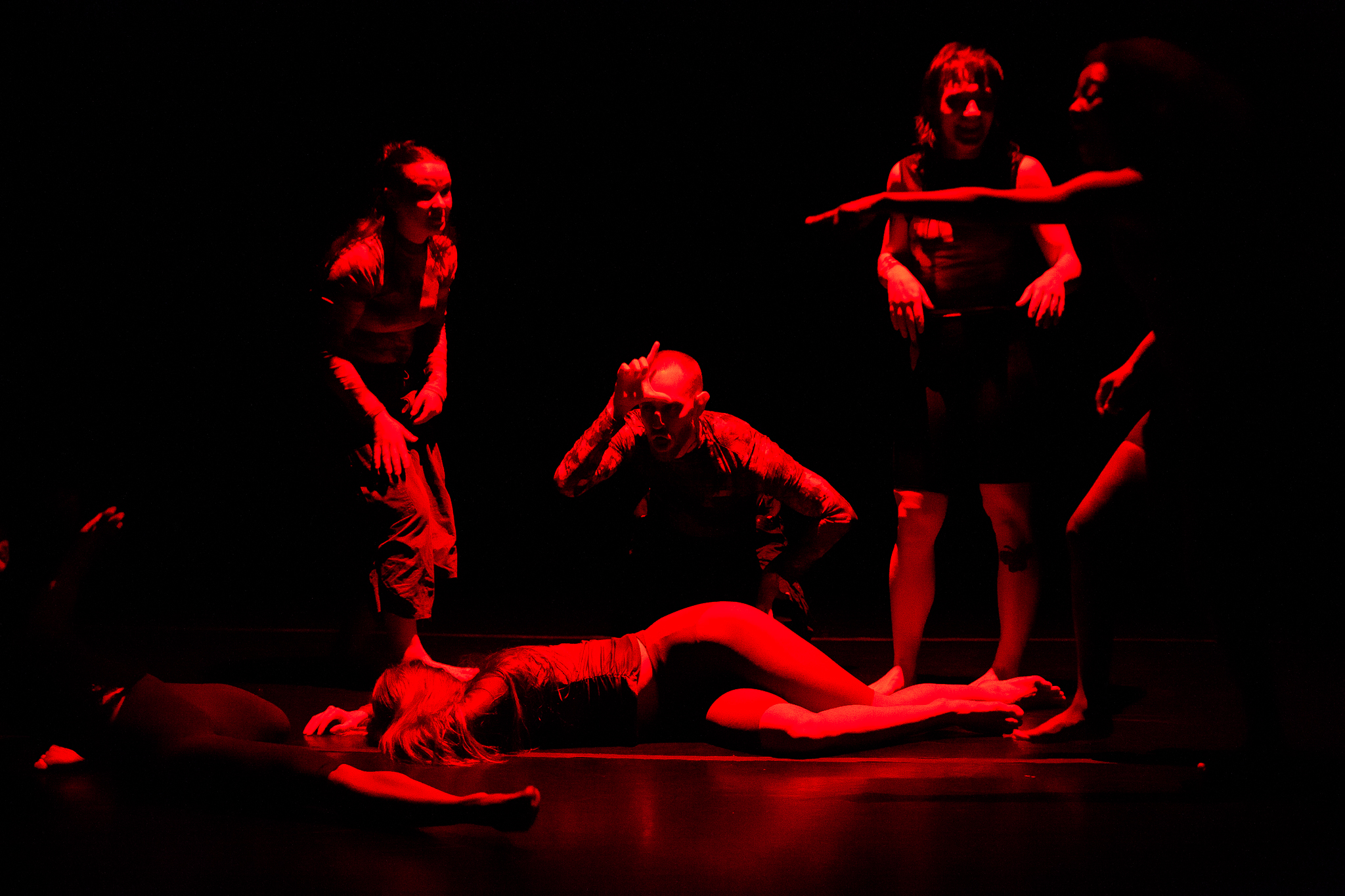
Second on the program was Chouinard’s version of The Rite of Spring to Stravinsky’s driving score. Bare-chested alongside their male counterparts, women regained their power. Here again, hands and wrists were held with such tension that they became hooves. Rolling spines, darting heads, and the costume embellishment of foot-long talons brought back the avian imagery, but an approach to movement characterized by violent attack, deadly precision, and wild abandon this time elevated the dancers to birds of prey.
I was confused why the movements and visual appearance of the dancers in these two works were so similar (the program notes credited Vandal as costume designer and Jacques-Lee Pelletier for both works). The sharp angles and dark styling of the first work felt incongruent with the romanticism of Chopin’s piano score; watching the dancers claw their way through the meaty Stravinsky piece made more sense. Many would chalk it up to Chouinard’s style or movement aesthetics, but I wanted more differentiation between the two works. Although Chouinard’s universe was idiosyncratic and compelling, I found myself contained within one cosmos all night.