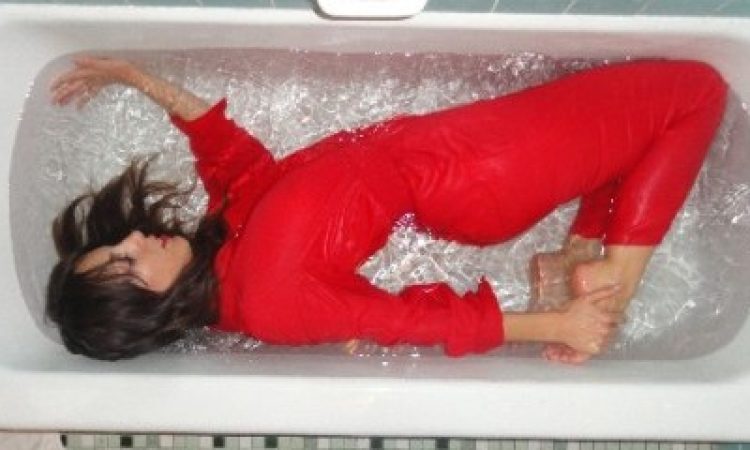
Independent artists Kate Watson-Wallace and Jaamil Kosoko are known for distinct, yet equally boundary-pushing contributions to dance in Philadelphia. After several years of “artistic dating” they’re committing to a new working model that will allow them to keep making art on their own terms, and with each other’s support.
Q: How did the two of you meet?
JK: I went to see Kate’s piece The Mentalist in 2005. It was like a site-specific work, but in a theater, which I thought was really interesting. The cast was amazing. I was young, and in awe of movement, and it felt like a crew I could be a part of. Shortly after, I remember walking past her on the street, and said, “I’d like to rock out with you,” and she said, “I’m making this thing called House.”
KW: And I had just seen Jaamil’s Wet Purple Love Affair at the CEC, and was like, “who is this amazing freak show?” It was messy and unedited, but brilliant, quirky, freaky, and sexy. And it referenced pop-culture in a way that I loved.
Q: What does anonymous bodies (formerly used to refer to Kate’s solo work, and now your collaboration) mean?
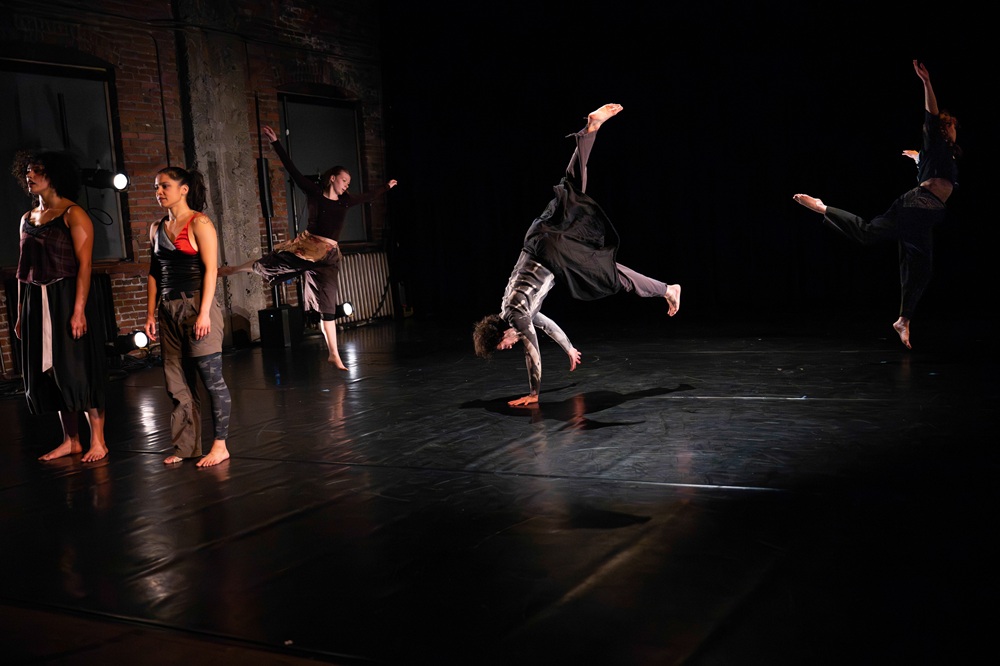
KW: When an audience member comes to a performance there are all these assumptions they have around what they’re seeing on stage. The idea behind anonymous bodies is that these bodies actually are anonymous. At first they’re just projections of the viewer’s assumptions, and their history, and what they’ve seen, and then it’s about what we’re putting forth, and for us it’s about acknowledging that and playing with that. Its almost like the way that a good comedian deals with issues of race and sex and class, where you’re laughing your ass off, and simultaneously you’re thinking about these things and you’re questioning if you should be laughing.
JK: I’m always sharing with Kate my feelings about what it means to be a performer of color—a black man—and what kind of invisibility, anonymity, ways of seeing and being that automatically entails. It’s consistently on my mind, to the extent where now, our inaugural piece together will also be called anonymous bodies. Something I’m really interested in is irony—putting out stereotypical situations in front of people, maybe letting them buy into a notion about who I am and what I’m going to do, and then completely flipping that on it’s head in the work so the viewer starts to think, ”What just happened to me? Can I laugh? This isn’t as funny as I thought it was. There’s a lot happening here.” To see something that Jaamil Kosoko is up to, I think means you’re taking some risk, because it’s gonna be in your face. But it’s also gonna be funny, and hopefully it’s through using that humor you activate those tragic places more deeply. It’s exciting to pull this together with Kate’s work, which pushes against technique, site specificity, quirkiness, and fashion.
Q: How do you define the audience for your work?
KW: This has to do with where the work is being presented. For a while my work was presented by the Live Arts Festival, so it was a Live Arts audience: people that were already buying tickets, already in that loop. But then there are other shows I’ve done in nightclubs, when I was self-producing, and the audience was mostly club kids, and then the occasional “performance person” here and there.
JK: If you’re being presented by the “mother ship of Philadelphia”, which is Live Arts, of course you’re gonna do well. I know that the work I make is not for everybody. It brushes up against you in a way that’s uncomfortable. There are a small handful of people who will get it. And usually those people come back, but it’s been difficult creating new audiences. I don’t have a huge marketing budget— another reason why joining forces with Kate makes so much sense. We have similar esthetics, but different takes on subject matter and different ways of making.
Q: That’s a great segue for the question “Why collaborate now?”
KW: Running your own company is a really solitary practice. You’re in the studio and in your own head a lot before you get the dancers in. I really don’t want to become an artist who is making the same dance over and over again. I want to be someone who stays connected to what’s happening currently in the world, and in culture. I want to be an artist who shifts and responds to “the now” in whatever form that takes, and for me that actually has to do, on a process level, with collaboration and inspiration. Jaamil is one of the few people I know and have worked with who I really trust and with whom I really don’t feel any barrier. I really feel like I can say anything or do anything or try anything and there will be a critical dialogue happening and a critical response happening…
JK: and vice versa…
KW: …so there’s that regular practice in the studio with a collaborator and there’s also this perpetual feeling that I’m in this hamster wheel as a one-person organization. Last year I reached a point of burn out. I thought, “I did this to practice art, and I’m an administrator.” So that was another part of it. I want to keep making art. I want to keep being in a practice, but with support, and with dialogue.
JK: I second everything that Kate just said. I was going through the same thing.
Q: Have you had to make any personal sacrifices to keep your work afloat?
JK: A good portion of the artistic life is sacrifice. But by the time you’ve realized it, it’s infected you to a degree where it is your life. And to other people, it’s become your identity. So how do you begin to re-imagine that in a different way?
KW: You can get smart about that, based on questions like, “Are you making enough to be able to eat and pay your bills? To be comfortable (comfortable being a relative word), and also be fulfilled artistically?” But the bottom line is we live in a country that doesn’t actually support the arts much, and we’re in a recession. I mean that’s the reality, I think, for everybody. There’s just a shift in consciousness and a shift in practice around how we keep being artists. Really. How are we gonna do this? Individually, collectively, collaboratively? How are we going to sustain?
JK: If we’re going to continue to thrive and make work, we have to join forces.
The new anonymous bodies website will be unveiled in February 2012.