Wim Wenders isn’t the first great director to fall in love with Pina Bausch. Pedro Almodovar pays court to her in Talk to Her, beginning the film with a sequence from Bausch’s Café Muller which becomes a touchstone throughout. In Pina, Wenders marries his art with hers to give us flashes of her dances that read even more vividly — closer and with more detail — than when seen live and in real time. He also dilutes her art, intercutting her dances with less forceful imagery and using musical selections that fit his own aesthetic far more than hers. Still, Pina being Pina, we wouldn’t want to miss it.
This love letter of a film, developed partially with Bausch’s participation and completed in the aftermath of her sudden death at the age of 68, is nothing if not a pure, exhilarating outpouring of devotion and wonder. Given the largely seminal works captured —Rite of Spring, Café Muller, Kontakthof and then the more recent and uneven Vollmond — Pina leaves no doubt as to her theatrical genius, her robust and impassioned use of the body and her ability to coax her performers into soul-baring extremes.
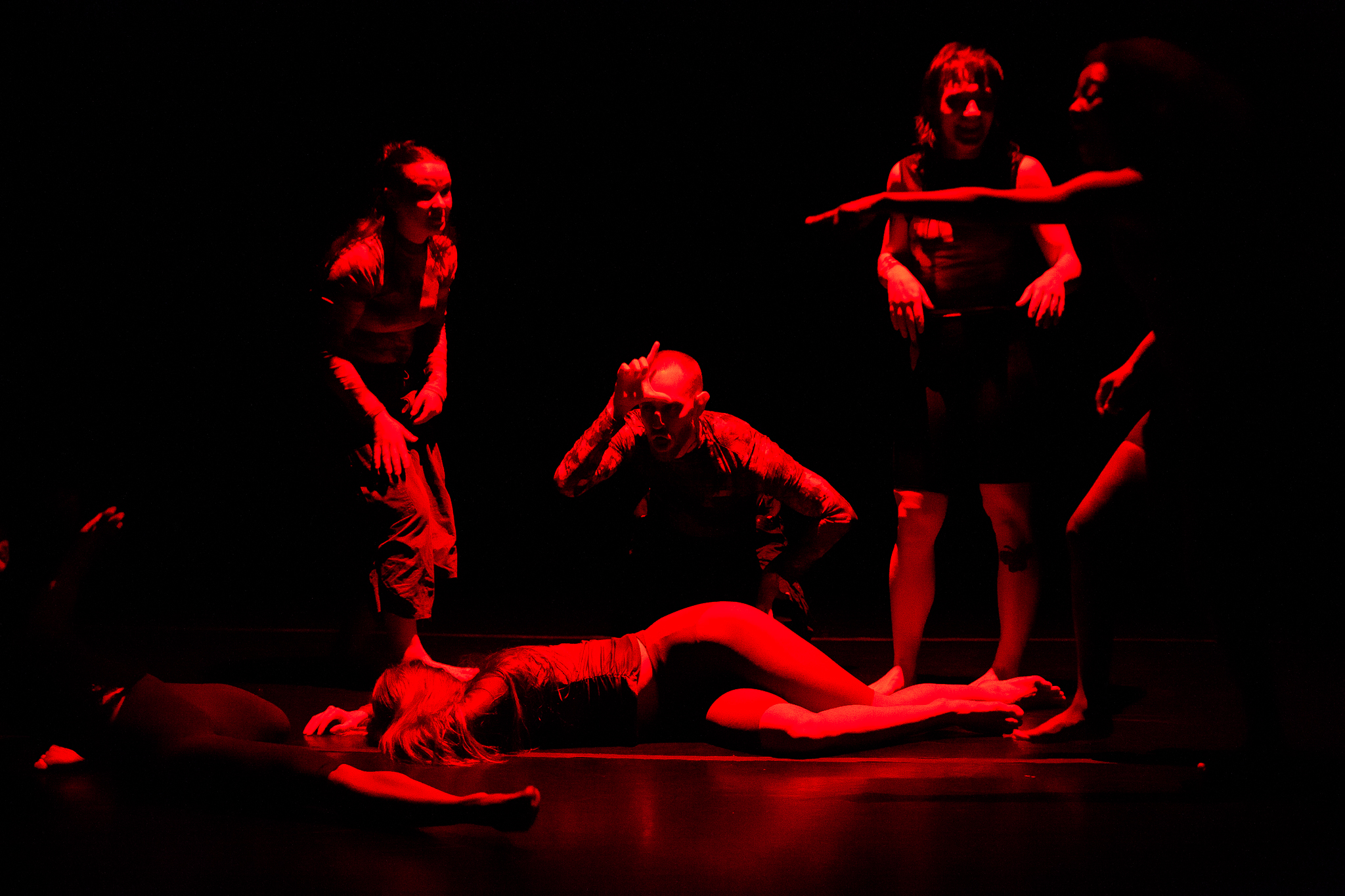
Kontakthof’s stately procession of alternating men and women in formal wear, repeating a gestural cycle–sweep forearm across forehead, beat wrists together, all with a smile– weaves through the film as it did in her life. She revisited this work repeatedly, transposing it from her own company to a cast ages 65 and up and finally to an ensemble of teenagers. Recurring throughout the film, its stripped down portrayal of the vulnerability we have in social situations and in meeting the opposite sex (for those of us so inclined, her work is pretty universally heterosexual) reminds us that much of Bausch’s work evokes an impossible longing to be truly united with another. And with that, the fragility, beauty and terror of love, and the barbarism, violence and occasionally humor it engenders. Cases in point: Café Muller with its desolate late night barroom chairs and slumping waifs in silken night-gown-like shifts. Rite of Spring with its group-speak unison hordes – primal men’s and women’s groups in thrashing, thumping frenetics. And in Vollmond, a group rite of water and stone, the stage fills with “rain” cascading from above and the giant boulder onstage glistens, wet. Her dancers are solitary, in perpetual longing for togetherness.
Wenders solicited danced portraits from the company members who so dedicated themselves to Bausch and her work, and interspersed them with the monumental choreographies. The cameos fascinate at first, with the subjects peering into the camera and their words heard as recorded voice-overs. The dancers read as vulnerable, playful, coy, all the things that Bausch brought out of them. In their danced homages, seemingly improvised, they draw on her work and physical approach. The ballgowns are all there, the whipping hair, the cadences of reaching and folding like a dagger’s thrust, but each is placed in a non-theater environment: on an escalator, in a stream, a quarry, a busy intersection or monorail car, all around the German city of Wuppertal which for so long supported Bausch’s international cast of characters and their creations. The cumulative effect of having umpteen dancers each present their own expression of gratitude to Bausch is weighty. Rather than amplifying the force of the theatrical works, they borrow pieces and aspects, weakening them, making this viewer tired and longing for a moment when a dancer would be less angst-ridden or violently convulsive in her movement.
Bausch’s own work was built up of brilliant contrasts. Like Shakespeare, who knew to follow a devastating scene with a splash of humor, she knew how to pace her work’s intensity so we could stay with her. Wenders’ cut and paste largely does away with that. His passion for her communicates best when the marriage of his art with hers is most straightforward: when he sends his camera in close to film Rite from foot (and dirt) level, or when the camera swings along a hairpin turn trajectory around the onstage dancers. And two recurring metaphorical devices are true cinematic strokes of genius: a stage that populates and empties and a virtual screening room in which are projected clips of Bausch in rehearsal, dancing solo with aching beauty, or leading the charge. These provide the most touching moments of all
Art as homage is among the most purely driven forms, whether it be Bach’s musical devotion to his God, or Wim Wenders’ to Pina Bausch. Here it’s true, deep, nourishing, and unlike its subject and all the rest of us mortals, everlasting.
PINA in 3D screened for one night during the Philadelphia Film Festival, and screens Wednesday, January 18, 7:30pm at the Rave University City, 40th and Walnut. Pina opens its Philadelphia run on January 27th. Check movie listings for location in the week prior. Read more about the film and a special ticket giveaway on the Dance Journal. See also this BBC clip on Kontakthof.