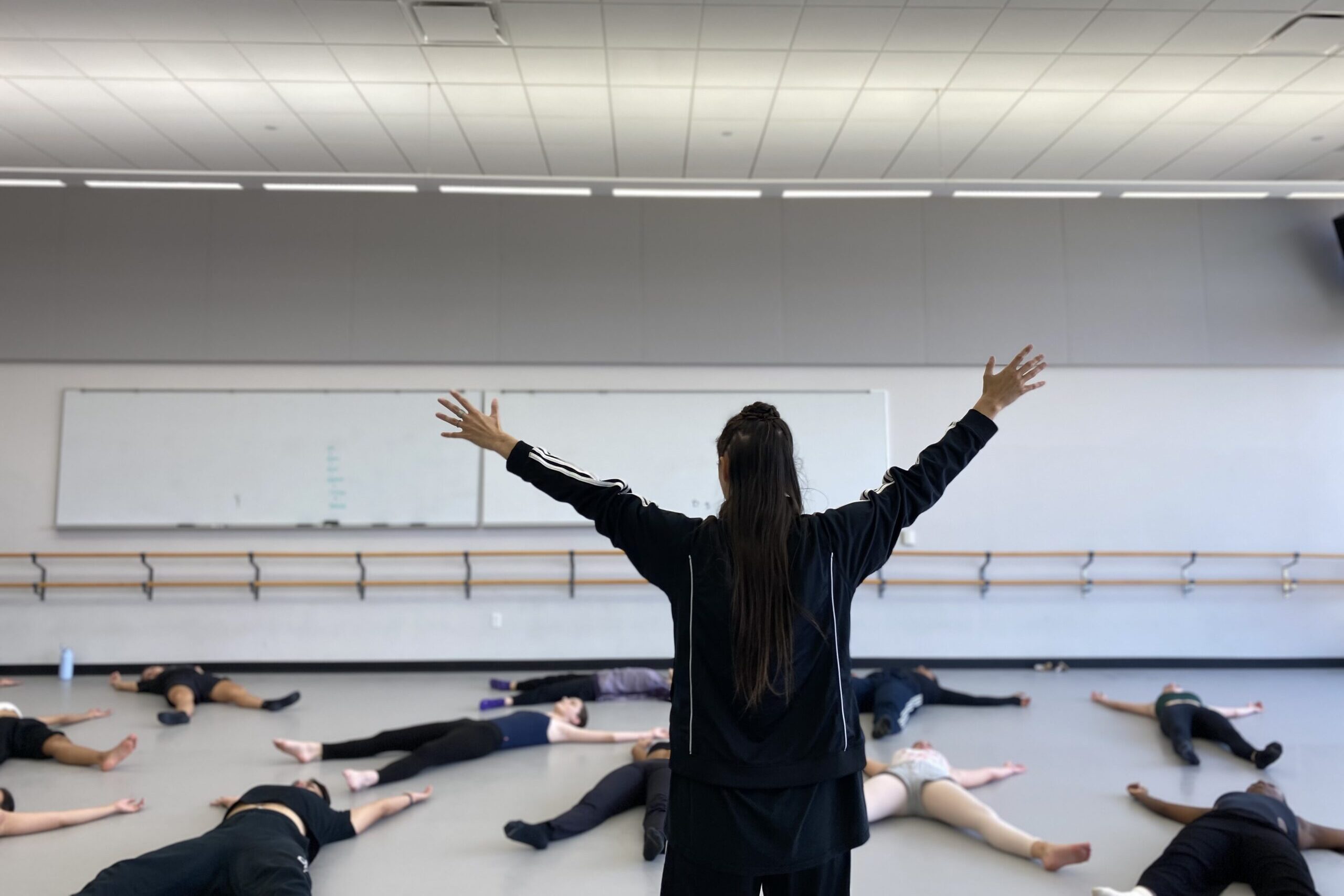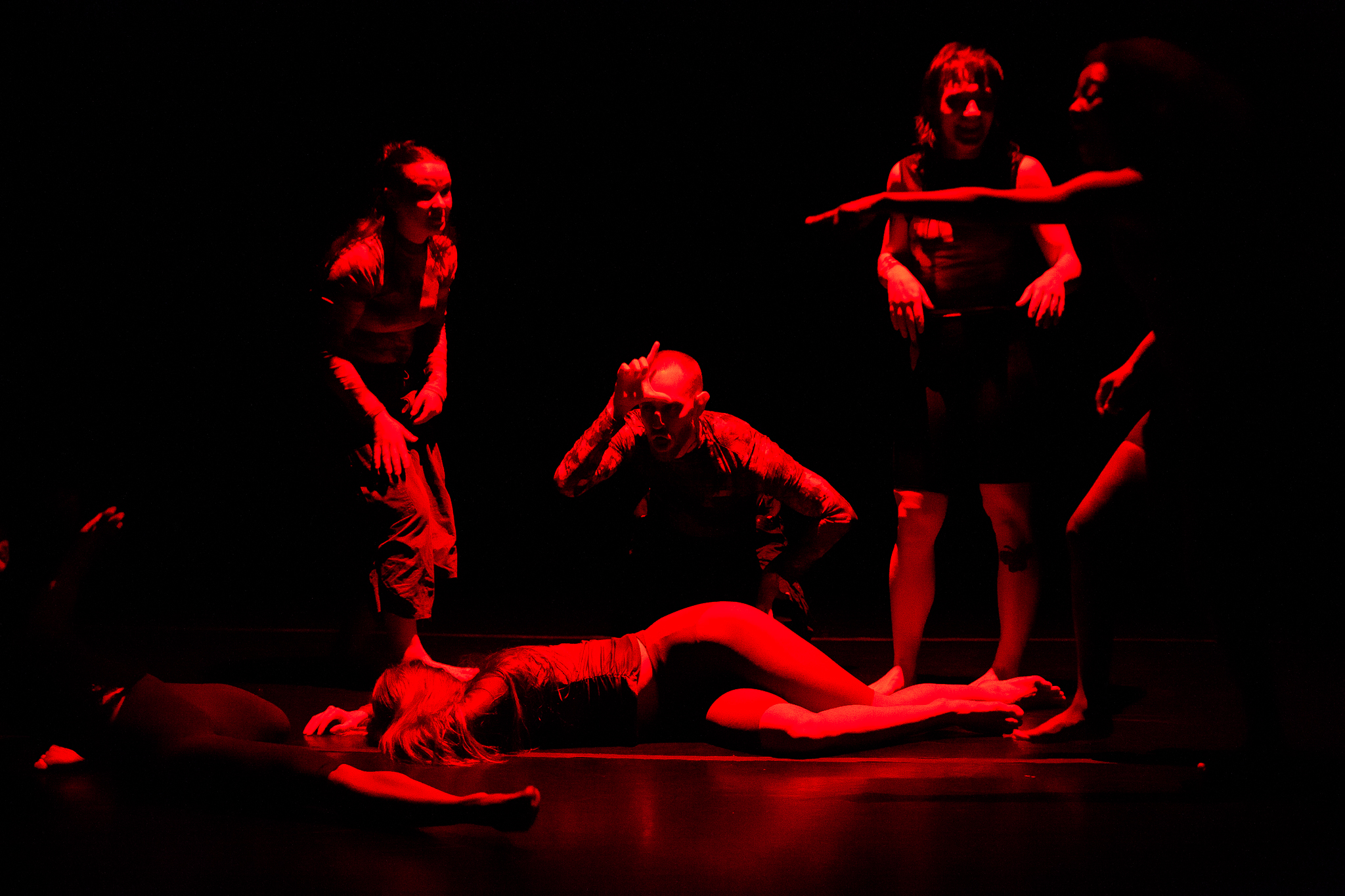
John Jasperse Company’s Fort Blossom revisited (2000/2012) this weekend at Bryn Mawr College is certain to give the Philadelphia dance-going community something to talk about. In it, all the female dancers are clothed, but all the men naked. Jasperse wrote “In Fort Blossom, through a very personal look at the body (alternately medical, eroticized and/or aestheticized), the audience is invited to examine contemporary notions of how we experience the body as both owners and spectators.” Supported by The Pew Center for Arts & Heritage through Dance Advance, this thoughtful choreographer has been sharing his perspective and process through talks, master classes, and open rehearsals all week at Bryn Mawr and beyond. Last weekend I attended a symposium as part of the John Jasperse Company residency entitled The Contemporary Performance of Sex, Gender and Embodiment. A small audience of attentive dance performers and theorists listened and dialogued about too often neglected topics in dance. These are my notes:
Dance Audience Gaze:
-phenomenological gaze on a naked body: the audience member’s body physically and emotionally reacts to the presence of another human body
-the contemporary dance audience is expected by the choreographer to be non-judgmental, generous, and patient when confronted with a naked body on-stage
– pornographic gaze of dance, audience excitement to observe hot, muscular bodies is ‘legitimized’ through dance being framed as art
-choreographers lack control of how audiences perceive gender and sex in their work
Men in Dance:
–Fort Blossom is an exposure of male fragility, unsettling notions of masculinity
-the simultaneous attraction and repulsion of Black male bodies in American culture affects how a dance audience views Black male dancing bodies
– the common fascination with and sexual reading of male-male duets as opposed to female-female duets where sexual reading is not as automatic for audience
– choreographers’ casting reifies the gender binary in dance when based on narrow expectations of the physique of male dancers
Naked Dancing:
–Fort Blossom’s nudity as non-intimate, as non-sexual, as non-heteronormative
–Fort Blossom as an engagement in the ambiguity of dance, embracing dance as poetic
-‘nudity’ versus ‘nakedness,’ one as an ‘artful’ distanced presentation, the other as sexual
-whose bodies (young, old, toned, soft) are displayed in dance?
-reaction to nakedness and the exposure of sexual organs as culturally relative and dependent on context
The presenting scholars and artists were Ann Cooper Albright, Mark Broomfield, Linda Caruso-Haviland, Gregory Holt, John Jasperse, and RoseAnne Spradlin. Links to bios of Symposium Participants, a review by Deborah Jowitt and an essay by Suzanne Carbonneau are here.
Full information on the John Jasperse Company Residency and February 24-26 performances is here.