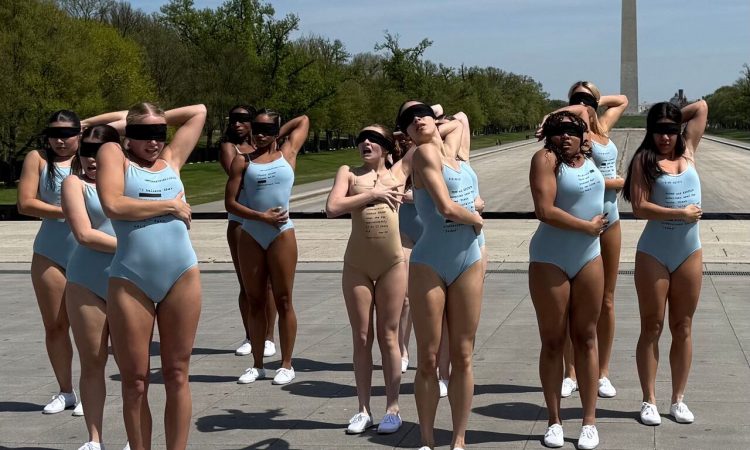
On April 9, ResistDance vs. Redaction premiered in front of the Lincoln Memorial in Washington, DC. This two-minute dance, performed by a dozen young women to the recorded music of Beacon Street Studio and lead vocalist Kassia Conway, was widely-shared in social and print media and garnered robust online discussion and reactions. I spoke via Zoom with the New York-based choreographer, Matthew Steffens. He was six hours ahead of me, choreographing in London. We discussed the role dance can play in exploring social activism and politics while honoring survivors of abuse, as well as research preceding rehearsals, sharing the dance in a public space, and post-performance reactions and reflections.
Before the Dance
Megan Mizanty: When did you first get the idea to create a dance generated by the redacted Epstein files?
Matthew Steffens: It was a quick process—around mid-March, and we shared the dance for the first time on April 9 at the Lincoln Memorial, with approximately 22 hours of rehearsal time in between. I worked with director Bryan Buckley and his The First Amendment Troop to bring the idea to fruition.
MM: How did you go about planning for the dance and researching the Epstein files before rehearsals began?
MS: I thought about the dance non-stop. I could only read about one page of the Epstein files at a time. It was tremendously difficult subject matter to go through. I thought a lot about the failure of the systems—and the adults—meant to protect these girls, and how we could shed more awareness of the ongoing investigations in a public space, reaching a wide audience in-person and online. The only factor I knew with certainty was using black blindfolds and including sections of the redacted files on their costumes, designed by Jill Arnold Pallad.
MM: Why did you definitely want black blindfolds?
MS: I kept coming back to the redacted aspect of the files. Names involved in the events were redacted, and names of survivors that were supposed to be redacted were RELEASED! We needed to represent that in some way, and so we explored the idea of blindfolds. We also wanted to communicate the gravity of the events that transpired during the survivors’ childhoods. By adding blindfolds, it added risk and danger to the movement, while creating a unifying aspect for the dancers to connect through. Lastly, the blindfolds represent our government and parts of the public not wanting to see these events and take action. We must take our blindfolds off and work for justice.
MM: How did you gather an ensemble, and how much information did you share about the dance beforehand?
MS: We held a national search to cast Jane Doe #4, the lead soloist, who was played by 15-year-old Devyn Sherff. [Trump has been alleged to have sexually abused the woman described as Jane Doe #4 in the files.] The 12-person ensemble was a mix of dancers I’ve never worked with before, and some I have. I wanted the group to have both strength and athleticism. It was also beneficial to have a mix of dancers I knew and trusted, along with energy and focus on this new project.
From the beginning, we were clear about the sensitive subject matter. I wanted Devyn, her parents, the other parents/guardians, and everyone in the ensemble to have a thorough understanding of our rehearsal process and focus.
MM: When dealing with disturbing topics, how do choreographers uphold the responsibility to keep the dancers safe and supported in the rehearsal process?
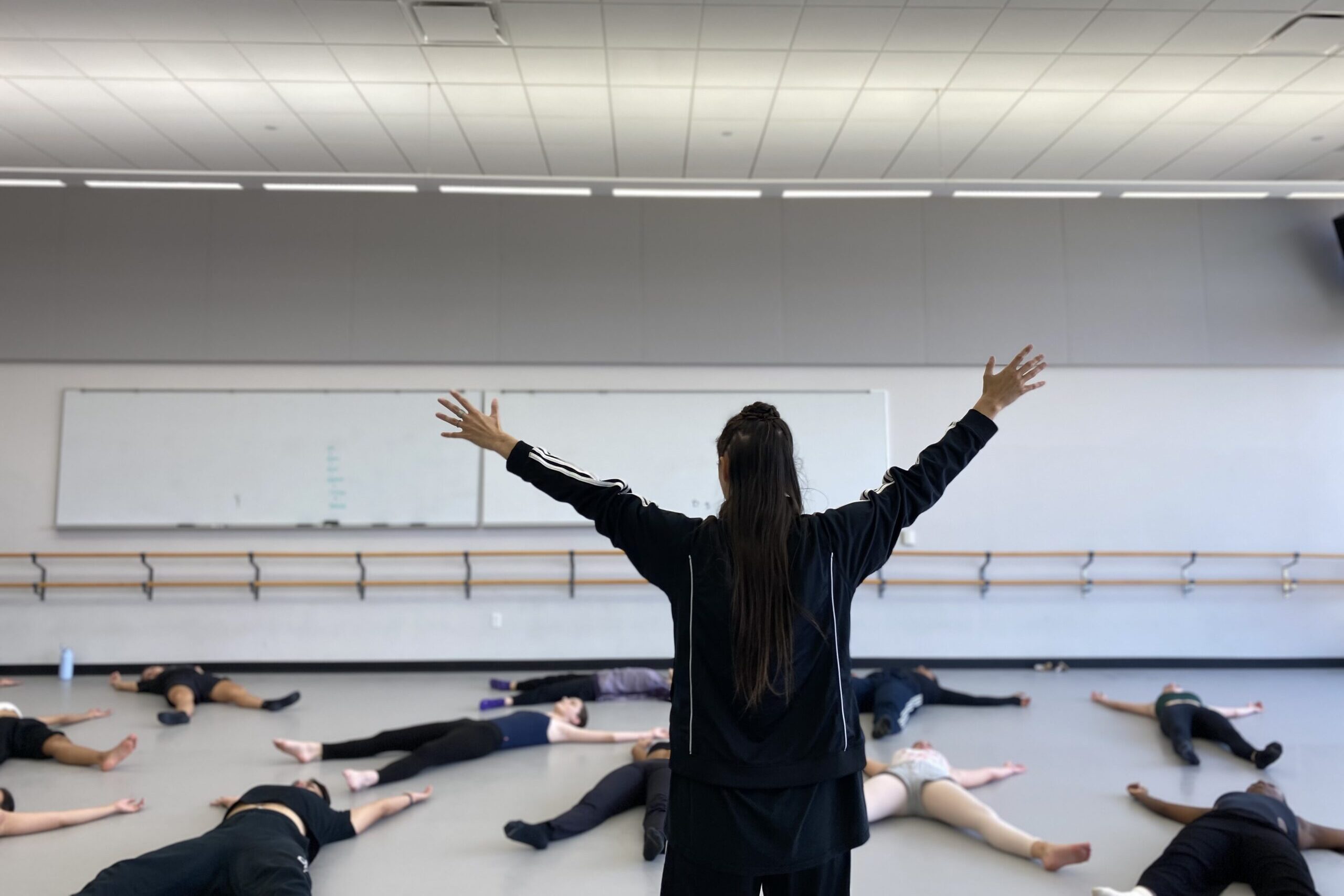
MS: Creating community, ensemble, and trust is integral. The first day of rehearsal included a ‘big talk,’ where we were all on the same page about intention and process. We frequently had check-ins with one another, and ended each rehearsal taking three deep breaths together. I did not share, verbatim, any contextualized language from the files to influence the creative process. Verbs like “caress, kick, roll, slap, and stand” helped with movement generation, but I tried to keep a distance between the actual files and using words for movement generation. The dancers were collaborators, and the piece was heavily influenced by their feedback along the way. This dance would not be what it is without the collaborative input from the dancers.
I also made sure the ensemble had time together, without me. I recognized my role as a sole male person in the rehearsal space influenced dynamics. They needed time just with one another as well.
During the dance
MM: Much of the dance is abstract/interpretative, exploring strength, resilience, community, bravery, and support. What was your primary focus in movement?
MS: I wanted the dance to feel impactful, engendering discussions with audiences, no matter their political affiliations. Everyone should have a visceral reaction to these files, accompanied by an emotional one that the full files have not been released yet.
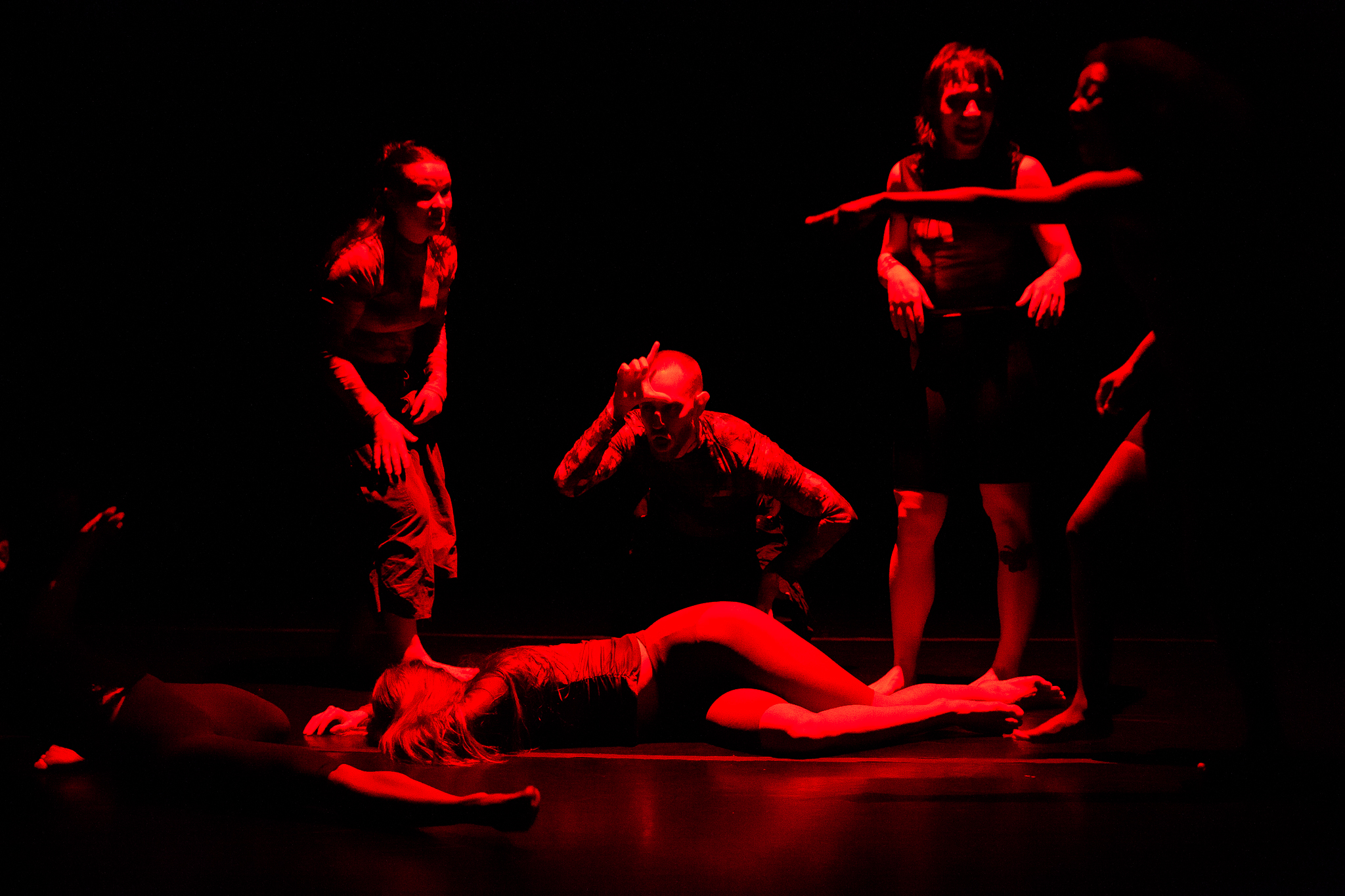
When making a dance about something heinous like this, there’s a fine line between impact and ‘cringe.’ I didn’t want to make a contemporary or competitive-style dance; I wanted the main focus, always, to be on the experiences of Jane Doe #4. Much of the language in the files is repetitive (Visitation #1, Visitation #2, and so on), so we utilized lots of fast, sharp repetitions in the movement.
MM: Was it only performed once?
MS: The dance was performed first at the Lincoln Memorial for pedestrians and passerbys. We applied for a permit preceding this. Since the dance is short (one minute and 44 seconds), the length was intentional for social media and sharing online. It quickly spread with helpful coverage by the Washington Post.
We attempted to share it at the [rebranded] Trump Kennedy Center, but 24 security guards stopped us. We were escorted off the premises. We were told our permits would be denied, so we did not try again.
After the footage was shared online, Virginia Guiffre’s family invited us to attend and perform the dance at her Butterfly Vigil, an event honoring her life and legacy as an Epstein survivor who bravely advocated for others, along with a posthumous memoir sharing her painful past. The cast was able to meet some of the survivors and Virginia’s family; it was an incredibly emotional and meaningful evening.
After the dance
MM: For the dancers, do you think creating, rehearsing, and performing this dance led to more growth of their own choreographic voices? If so, how?
MS: I hope so. If we perform the dance again, it should be for honoring the survivors and keeping the pulse on releasing the files. The other goals: audience awareness and promoting social change, whether it be on a local or national level. This dance was for the survivors, highlighting the continued injustice and lack of transparency.
MM: Has there been any response from politicians?
MS: The White House commented on our first dance [repeating the claim that Trump has been exonerated by the release of the files, as reported by the Washington Post], but ResistDance V. Redactions has not had a direct response from politicians except Rep. Jamie Raskin (D-MD), who attended Virginia Giuffre’s Butterfly Vigil; he was the only politician who attended. This should not be a ‘red’ or ‘blue’ issue; it’s about justice and transparency.
As of May 2026, the full Epstein files have not been released. The Epstein Files Transparency Act of Congress had set a 30-day deadline for the Department of Justice to release the files which was purportedly done on Jan. 30, 2026. In late April the U.S. Justice Department’s Inspector General announced a review into how the Department complied with the law, citing criticism regarding how records were redacted and released.
Matthew Steffens in conversation with Megan Mizanty, May 5, 2026, Zoom.