The straightforward title of the show, The Ladies of RHPM was indicative of what to expect from the evening — an introduction to the aesthetic and goals of Rennie Harris Puremovement and a presentation of its female dancers. Harris’ mission, as is stated in his biography, is to present “a sincere view of the essence and sprit of hip-hop rather than the commercially exploited stereotypes portrayed by the media.”
I arrived at the gothic Goodhart mainstage at the all-women’s Bryn Mawr College Friday evening with a degree of trepidation to review a dance form that I know little about. I was curious how the evening would differ from other portrayals of hip-hop I have seen. I took my seat, and observed (scattered about the audience, diverse in age and race) several white, middle-aged women timidly bopping their heads and hands along to the laidback beat of the pre-show hip-hop music. The performance had already begun.
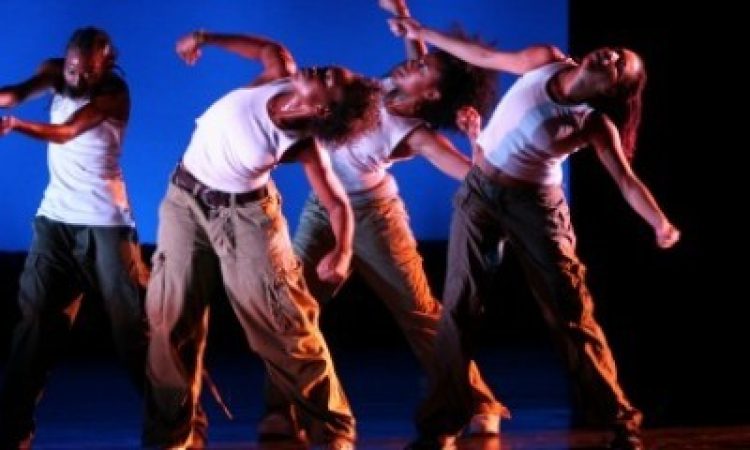
The five-part Something to do With Love (volume 1), comprised the bulk of the evening. Theatricalized, mimed conversation interrupted long swaths of locking, b-girling, and waaking to complex percussive rhythms. In simple spatial formations, in duets, trios, and so forth, the women danced onstage, largely in unison, taking occasional solos. Audience members near the stage offered occasional whoops or cheers after particularly impressive steps. Not only were the dancers in unison with each other most of the time, but Harris’ crafted his choreography in synch with the music, beat for beat. This choreography contrasted with the first piece by Crystal Frazier, during which the sweeps of the dancers’ arms lagged behind the slow beat only to catch up with it in a quick series of pops and locks.
In many works that I see, the use of unison as a choreographic tool implies the subsumption of the individual into the group. The precisely coordinated movement of the corps de ballet in SwanLake makes my skin crawl. And when I saw so much unison onstage last Friday, I initially resisted. But then I focused on Fyness Mason, snapping her arms back and forth around her head with speed and precision. I watched Samantha Schneider grab her breasts the way a man might grab his crotch in a display of power and potency. Neka Chantol French articulated her ribcage with such dexterity I became transfixed. Even in tightly choreographed phrases, each woman played with the choreography in her own way. One hit a beat a little sooner, or added an extra shoulder roll when it felt necessary (to the increasing vocal delight of the audience). Eventually I realized the plethora of unison actually supported the individuality of each dancer to shine through.
Presenting dance that originated in a social, club atmosphere on the proscenium stage demands that Harris engage with multiple aesthetics. In Something to do With Love (volume 1), he weaves between the two worlds. In one moment, all the performers coordinated through canon or counterpoint, creating a unified “picture” before breaking apart to dance in unison. This allowed each audience member to watch who they want, when they want, the way you would in the club. I thought of my hero choreographers, such as Jerome Bel, whose series of biographical pieces, particularly VeroniqueDoisneau, seeks to recover the individual from the homogenization of Western proscenium dance.
The audience greeted the close of the show by leaping out of their seats to cheer for the cast of ten. As the lights came up the woman next to me said with that particular breathiness that only awe can inspire, “I had no idea this hip-hop stuff could be so emotional. I always thought that it was superficial, show-offy stuff.” The evening appeared to be designed to introduce incredibly talented female hip-hop dancers to women not immersed in that culture. The thornier questions of how women fit into hip-hop culture took a backseat to demonstrating the fact that they are even a part of it.
The Ladies of RHPM, Rennie Harris Puremovement, Bryn Mawr College, March 16. No further performances.