Blazing searchlights trip pounding drum and bass. A gaggle of white-smocked kids chase white balloons and streamers. White-uniformed nurses bounce to the beat. In the background, a woman in an evening gown and a general wave to their admirers, arm in arm, stiff and regal, reaching out yet distant. He tries to prop her up, but she keeps faltering – her body has failed her.
The woman is Evita, María Eva Duarte de Perón, Argentina’s (in)famous former first lady – saint and tireless advocate of the poor to supporters, whore and tyrant to detractors. The man is Juan Domingo Perón, thrice-elected Argentine President whose untimely death precipitated a military coup and the ensuing “Dirty War” that introduced the word desaparecido to the world, and whose aftermath plagues the country to this day. The year is 1952, when Evita succumbed to cancer at the age of 33. The children are Argentina’s youth, their class differences momentarily leveled under their tiny lab coats. The fiesta is both reality and façade, for behind the Peróns’ nation-changing social welfare programs lay a repressive regime. As imagined in Ciudad Evita (2004) by choreographer Silvana Cardell, this festering repression takes hold of Evita’s body, foreshadowing decades of chaos to come.
Portrayed by Olive Prince and Bethany Formica, Evita is split in two before our eyes. As Prince lays dead, nurses (Mina Estrada and Shavon Norris) prepare Formica’s body for burial, and Estrada narrates slides of Argentina projected behind. Seated calmly, eyes closed, like a sleepwalker at the manicurist, Formica jolts upright at the word “mummified” (the fate of her body) and again at an image of violent riots following the 2001 economic crisis (the fate of her country), both beyond her control. A duet between the two Evitas evolves from her renowned gesture – arm extended, forearm turned in, evincing equal parts strength and sacrifice – into a struggle to escape her body, as each extends beyond and collapses under the restraint of the other. A brutal tango with Perón (Jumatatu Poe) suggests a parasitic relationship and Evita’s prescient understanding of its costs in her famed slogan, ¡Vida por Perón! (Life for Perón!). Launching ganchos (leg hooks) and ochos (figure eights) against his unyielding embrace, Prince flops and falls every which way, but Poe drags her up time and again.
Ciudad Evita takes inspiration from Argentine artist Daniel Santoro’s paintings, but it is Cardell’s knack for crafting a story and the dancers’ commitment to their characters that bring these images to life. Set to a musical collage that includes trip-hop, Arvo Pärt, and recordings of Evita’s speeches, the work explores the woman and the myth through her body – an uncanny harbinger of Argentine history and potent symbol of the public/ private divide.
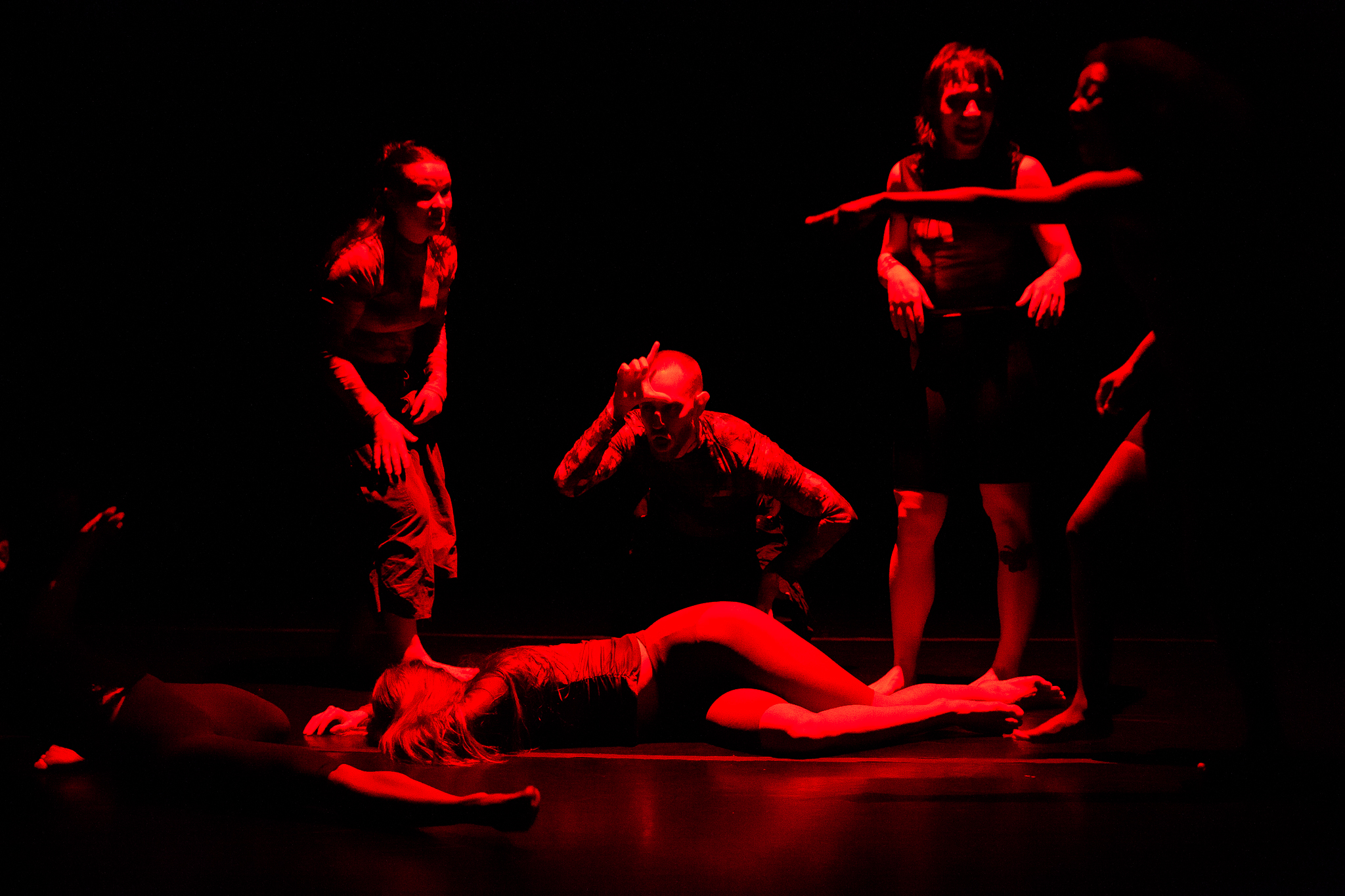
Double Vision (2011), inspired by Cardell’s daughter’s drawing, Doppelganger, examines the post-operative body in a duet that is less narrative than indelible imagery. Maria Urrutia shimmies laboriously to center stage, shifting and readjusting a rippled floor-length skirt, until Formica emerges from underneath in matching skirt and makeshift bandage bustier. Pedestrian noises and repeated doctor’s orders blend in a soundscape, evoking tunnel vision, the reverberating effect of jarring news, and the confusion of feeling a stranger in one’s own body. Holding hands, they fold into and out of one another, flip upside down and back, multiply and dissolve. Bathed in deep red and warm white lights, their bodies transform – shadows loom large then shrink, threatening to swallow but then collapse under their presence.
Also on the program was Solas (work-in-progress 2012), a whimsical fantasy world inspired by Amy Cutler’s illustrations in Turtle’s Fur, featuring the always stunning Formica and impressive performances by up-and-comers Leanne Grieger, Sinead O’Neill, and Zachary Svoboda.
Excerpts explores the potential of visual art as source material for choreography in works created between 2004-2012, however the real showcase is Cardell’s artistry. From two-dimensional images, she builds worlds that move before us, thanks, in no small part, to a cast of formidable dancers who surrender entirely to her vision. Like words that jump from the page, the movement leaps from the performers’ bodies into ours, and we cannot help but be changed in the process.
Cardell Dance Theater: Excerpts. Group Motion Spring Fest. Christ Church Neighborhood House, March 14 & 16. No further performances.