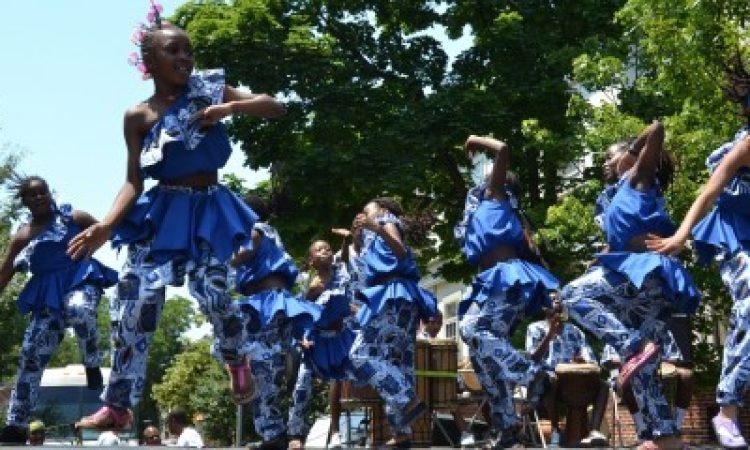
You hear ODUNDE before you get there. People are gathering and everyone seems to be going in the same direction. The sounds of drums call out to everyone and you are drawn into the festival by the rhythms, aromas and colors of the surroundings. Kùlú Mèléis onstage, weaving song, rhythm and movements effortlessly on a hot Sunday afternoon. Arms swing back and wrists flex while quick and intricate foot movements keep pace with polyrhythmic drumbeats.
The ODUNDE festival is a celebration of all things African: Africa, the Caribbean and the Diaspora are honored in music, song, dance and food. This year, ODUNDE celebrated its 37th anniversary on June 10. Oshunbumi Fernandez directs ODUNDE, an organization that was started by her mother, Lois Fernandez. In addition to the festival, ODUNDE offers events and classes all year. It is one of the nation’s largest and oldest street festivals, drawing 500,000 people to the event. The Sunday culmination of a full week’s activities covers 12 city blocks in the South Philly area.
ODUNDE means “Happy New Year” in Yoruba, a language spoken in Nigeria. For many African Americans, ODUNDE represents a renewal and rebirth. Here in the States, many of the celebrants wear white clothing and once they arrive at the Schuylkill River, they offer flowers and fruit in honor of the river goddess Oshun. This year’s festival was dedicated to Brazil, which has the largest population of Yoruba people outside the African continent.
It goes without saying that where there is an African festival there is dance! ODUNDE is no exception. The drum rhythms initiate the last day of the festival, with drummers from all over the Northeast joining in, using their talents as an offering. Immediately after the procession to the river, the ceremony ends with Kùlú Mèlé performing the dance Oshun. Kùlú Mèlé, The Universal African Dance and Drum Ensemble, The ODUNDE365 Children Performance, and The African Heritage Dancers from Washington DC, are among the professional companies who perform alongside amateur dancers, many of them children. Words of encouragement are shouted as the audience responds appreciatively to the sight of so many children performing.
Kùlú Mèlé dances Koma with dignity, grace and elegance. Kùlú Mèlé’s children’s company performs Triba. Kùlú Mèlé, under the direction of Dorothy Wilkie (Mama Dottie) has danced at ODUNDE since the beginning of the festival.
Like many audience members, I love the family atmosphere of The Universal African Dance and Drum Ensemble, directed by husband and wife team Roland and Wanda Dickerson, and ODUNDE365, created by Oshunbumi Fernandez. The children in both companies embody a premise of African dance – that is, everyone should dance! ODUNDE365 performs sections of Soli, Sofa and Sinte in a combined work called Weaves of Gold. Many of the children in both companies are accomplished dancers. The drummers, some of them as young as eleven or twelve, play and dance, demonstrating their virtuosity on the djembe with choreographed solos and nods to the audience. The African Heritage Dancers, headed by Melvin Deal, performs Linjin, a social dance from the Senegambia area of West Africa and a staple in the repertory of many neo-traditional African dance companies in the US.
The atmosphere of ODUNDE is fluid: audience members shout out appreciative expressions, and the companies on stage reinforce this vibrant and dynamic feedback. Along with many of the celebrants dressed in white, the streets are abloom in the luscious colors and textures of summer. The crowds mingle and meander in the hot sun, admiring and partaking in the African and Caribbean crafts and foods on display and for sale. A positive vibe fills the air as smells familiar and exotic lace the day, wafting over the dances and dancers.
The beauty of African Dance as it is performed in America is that African dance is a cultural phenomenon as well as an art form. Its ancestral connections hold a special place in the hearts and imagination of many Americans, especially, African Americans. The dynamic presentation of African dance is a powerful draw to the festival. ODUNDE functions as a bridge between African and American culture because many people of all hues are introduced to African culture and dance for the first time by attending the festival. The performances, in particular, embody the rich and living interchange between Africa and North America, and serve a symbolic function that leaves many crowd-goers a feeling of having “traveled home.” African dance belongs to everyone and the ODUNDE festival plays a major part in bringing that message home.
ODUNDE is held every year on the second Sunday in June. The ODUNDE festival is an opportunity for participants and audiences to make personal and aesthetic connections with African culture. For more information about activities and events at ODUNDE, contact www.ODUNDEfestival.org.