As I entered the Painted Bride Theatre, I could see that this was going to be an immersive experience. Colorful scarves and jewelry were on display in the vestibule of the theatre where the predominantly African American audience members gathered prior to the performance. These were old friends with long ties to the community – and to the Kùlú Mèlé dance company. When the doors opened to the theatre, my heart quickened, as I looked forward to more than an entertaining afternoon. I was not disappointed. In this first-ever collaboration between Kùlú Mèlé, an established professional dance company, and The Requisite Movers, a new ensemble, the audience was treated to a rich cultural experience, from the beginning libation to the final invitation to join the dancers on stage.
The first part of the concert included traditional and contemporary dance. “Oya,” choreographed by Dorothy Wilkie, evoked the mood changes of a festival. The dancing began slowly and progressed to a dizzying pace. Colorful flowing dresses and hand-held feathers enhanced the dancers’ Afro-Cuban isolations and leaps through the space. The high point arrived when the “queen” entered, drawing all eyes. This wise elder swayed and undulated, first with the group and then solo. Finally, three of the dancers circled and swept her away. The dance celebrated life, love, and adoration of our elders.
This dance was immediately followed by something new – “Hip Hop,” choreographed by dancers Bryant Lee, Edward Smallwood, and Ali Wilkie. The performers demonstrated the link of African dance to the hip-hop genre through their movements, their clothing, and the incessant beat of the African drum. The three dancers, dressed in African garb, popped, locked and breaked, competing with each other and inviting the audience to join by clapping out rhythms.
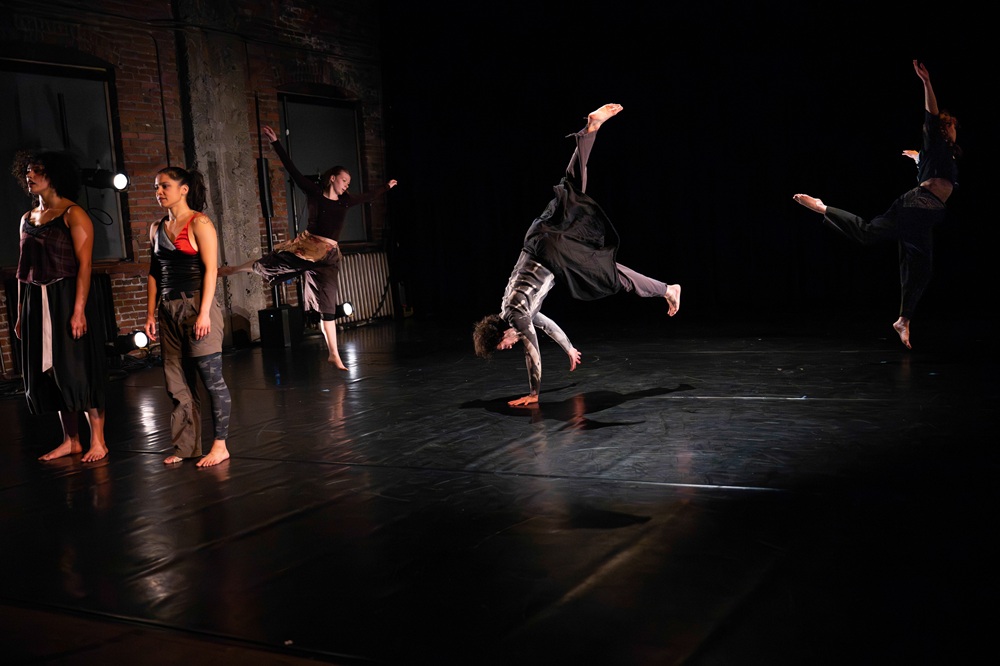
A noose hanging above center stage signaled a change in mood and content. An excerpt from “Native Portals of Lynching and Love,”choreographed by Lela Aisha Jones, began with spoken words about the horrors of lynching. Dressed in wrap skirts, the women expressed the theme through reaching, arching swinging, and contracting movements close to the ground, supported by African and African American music. A soloist danced, followed by a group dressed in hoodies, evoking images of vigilante violence without trial (I thought of Trayvon Martin). Finally, a dancer returned to the noose as the dance ended. Even in this excerpt from a larger work, I felt the power of this choreography and await more from this new company.
In the second part of the concert, the two companies shared a dance. “Gathering,” choreographed by Lela Aisha Jones of The Requisite Movers with dancers from Kùlú Mèlé, began with a lighter mood: dancers dressed in white, off shoulder tunic and pants moved with controlled abandonment. The unison movement conjured images of community, caring, and support. The program notes ask the question, “How do we, women of African descent traversing blackness, gather through affection and rhythm?” Each dancer moved in synchrony through patterns and rhythmic changes, always attuned to the tempo of the dancer by her side.
The dance concert ended as it began, with a look to African roots. “Wassolonka Suite” (Mali), choreographed by Cachet Ivey, invigorated the crowd. Abstracting the movements of gazelles, snakes, tigers, and antelopes, the dance used masks to show the connection between human and animal: the dancer-animals leaped, jumped, slithered, and stalked. In the midst of these varied energies, a soloist sang sweetly and reverently.
At the conclusion of the concert, artistic director Dorothy Wilkie invited audience members on stage to dance. Children and adults took this opportunity to connect to the drums, the space, and the performers. Leaving the theater, I felt a connection to my community—a feeling I rarely experience today.
The sharing of African and African American-themed choreography created a space for celebration, family reunion and honoring of the past with Kùlú Mèlé Kulu Mele, a long time Philadelphia ensemble. Showcasing the work of the relative newcomers, The Requisite Movers, honored the future.
Let the Roots Show, Kùlú Mèlé and The Requisite Movers. The Painted Bride, November 24 and 25, 2012.