“Sometimes art really imitates life,” said Ronen “Roni” Koresh, as he introduced his evening-length work, Trust, at its premiere. He choked on his words as he explained that dancer Shannon Bramham would not be performing because of the death of a loved one. He told us that he learned how much he could trust his dancers as they quickly worked to stage the show without her.
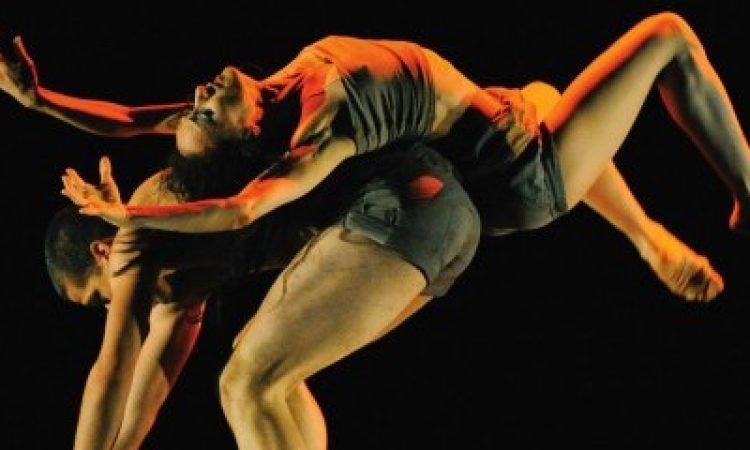
The first three segments of the evening, “Space,” “Fire,” and “Trust” were performed by the full company and blended together with no transitions signifying that one section had ended and the next begun. These segments contained elements portraying trust: call and response choreography as well as falls and lifts requiring the dancers’ mutual reliance. A series of repeated “trust” falls—a dancer collapsing blindly backward into another’s arms—forced each dancer to rely completely on a partner. During one section, the men took turns in amazing lifts with one another: their sheer strength was breathtaking. These elements were repeated in different sections, which helped to draw the whole evening together.
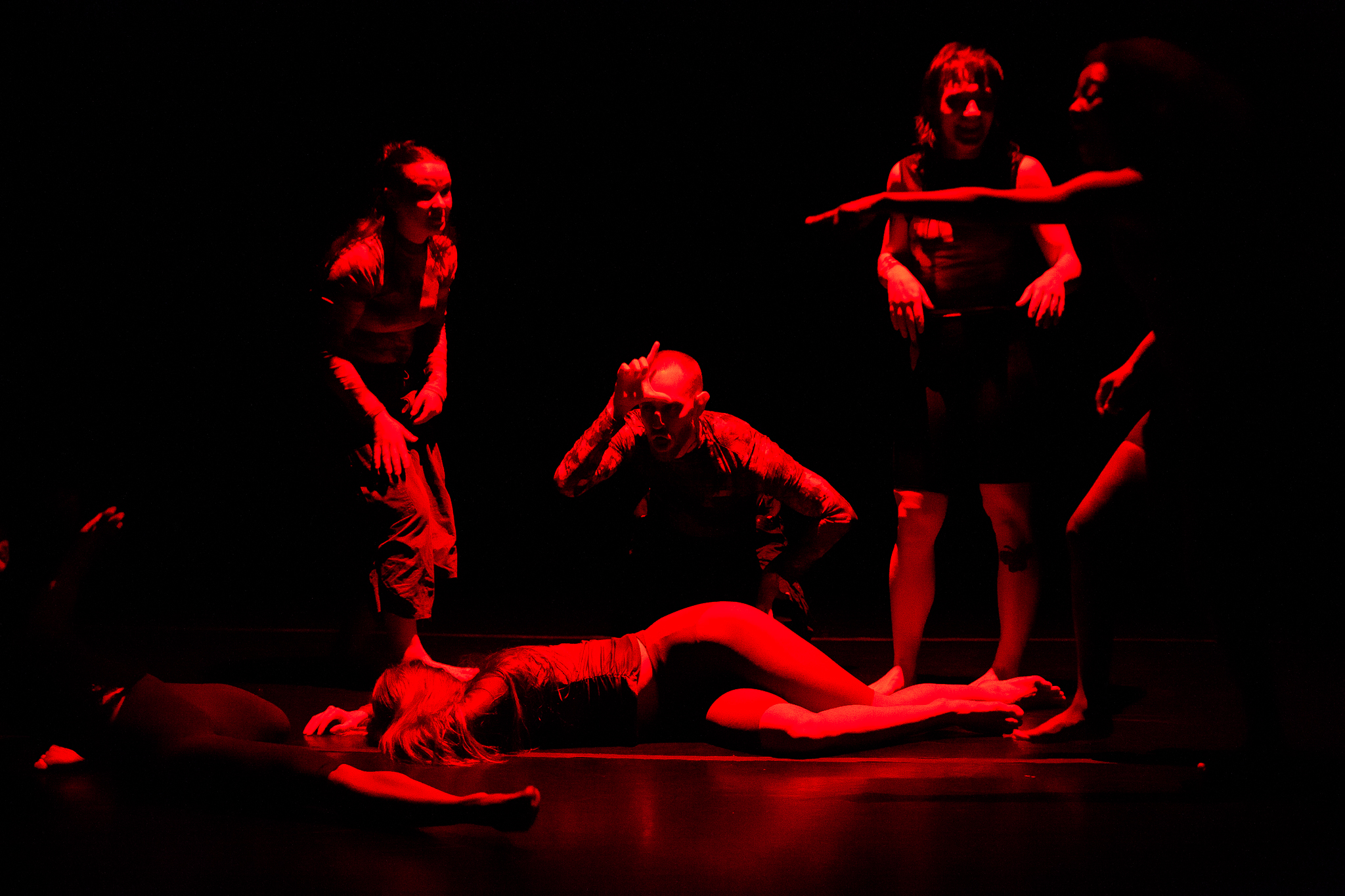
While the rest of Koresh’s work featured the cooperative nature of the company, “Reason”was the one section in Trust that provided a contrast as the dancers portrayed anger and distrust in relationships. The dance began with company members shouting, “He pushed me” and, “You said you’d never lie to me.” The dancers’ violent moves, such as stomping their feet and flailing their arms, never allowed them to establish trust in this section.
At the end of the first half of Trust, in the section titled “Connect,”each dancer entered to the recorded sound of his or her voice thundering through the auditorium. Notably, Fang-Ju Chou Gant spoke about how, growing up in Asia, children were forced very early to decide what they wanted to do with their lives. She implied that her parents responded with “no” to her choice of dance, but here she communicated her trust in her own vision for life.
In the second half of the evening, “Waltz” communicated the trust partners share while dancing. Joseph Cotler and Alexis Viator began the dance as if they were an elderly couple waltzing slowly at a ball, in close embrace. The meandering opening quickly transformed into a flashy dance; at one point, as Viator performed a turn around Cotler, she suddenly jumped on to his thigh, gripping her legs around him as he carried her across the stage. As the section ended, the two collapsed back together. Throughout, their poise and grace were beautiful.
Peter Jakubowski’s lighting played a supportive role in expressing the evening’s theme through the tranquil blues bathing the stage. In several sections of Trust, a down light created a circle that the company danced around and through. A single dancer in the light’s center never seemed alone, as those surrounding him echoed his motions. It was as if the dancers were supporting him, despite their separation, displaying Koresh’s theme: trust.
Trust, Koresh, Suzanne Roberts Theater. November 29-December 2.