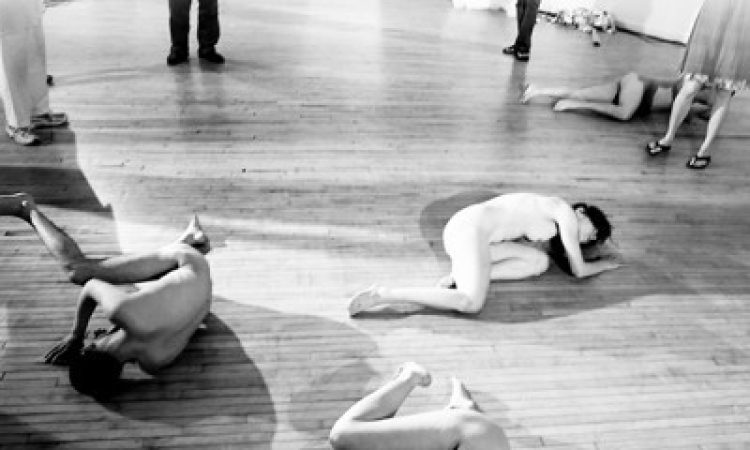
The small audience was abuzz in the lobby before the work even began. Excited banter, nervous giggles about “seeing all of my friends naked,” and assertions of being “totally fine with that” gave away the attendees’ underlying attitudes toward the upcoming nudity in the piece. With this fore-knowledge (and subsequent dis/comfort that arose) I realized the machinations of the work were already in operation, asking us to confront and question our individual assumptions about viewing the nude body in performance.
When it was time to begin, the performers asked for a volunteer to be led in first. Some attendees expressed concern about being singled out—this early on the individuality of the experience was apparent. We were led one by one, eyes closed, through heavy curtains into a dark space thick with incense. Standing there, our guides spoke in low tones to us individually, suggesting images for meditation. They then left us to lead other audience members in. We were instructed to leave our eyes closed until a loud ding sounded, at which point the five performers, standing nude amongst the scattered audience, were revealed.
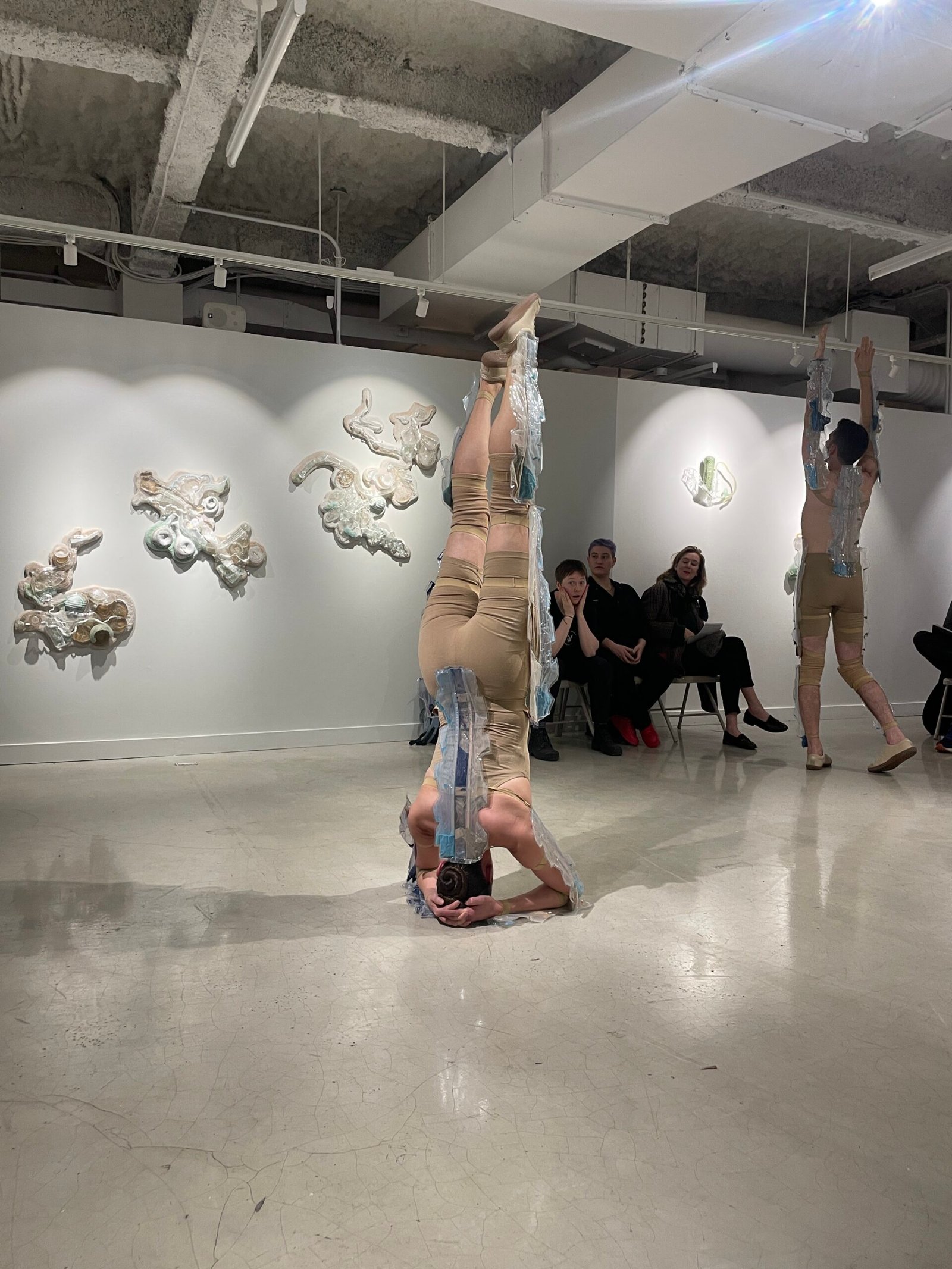
As they stood still, the audience milled about and took in the installation: the room was filled with not only nude bodies, but also light beams scattered from huge silver mylar sculptures, and white crepe paper clumps. The audience had agency; this was an immersive experimental work, not a sit-quietly-in-a-dark-theatre performance. Spectators chose where to be, what to see, for how long. It was like a museum. Nude dancers, all thin and pale-skinned, replaced Greek sculptures. That is, until they became activated.
The tone of the room palpably changed. As the dancers walked circles around us, the audience enlivened and began shifting as well. Suddenly the performers formed a line and I perceived that we were behind a “fourth wall.” Their subtle differences in posture slowly transformed into grotesque affectations. This was no longer a pretty spectacle.
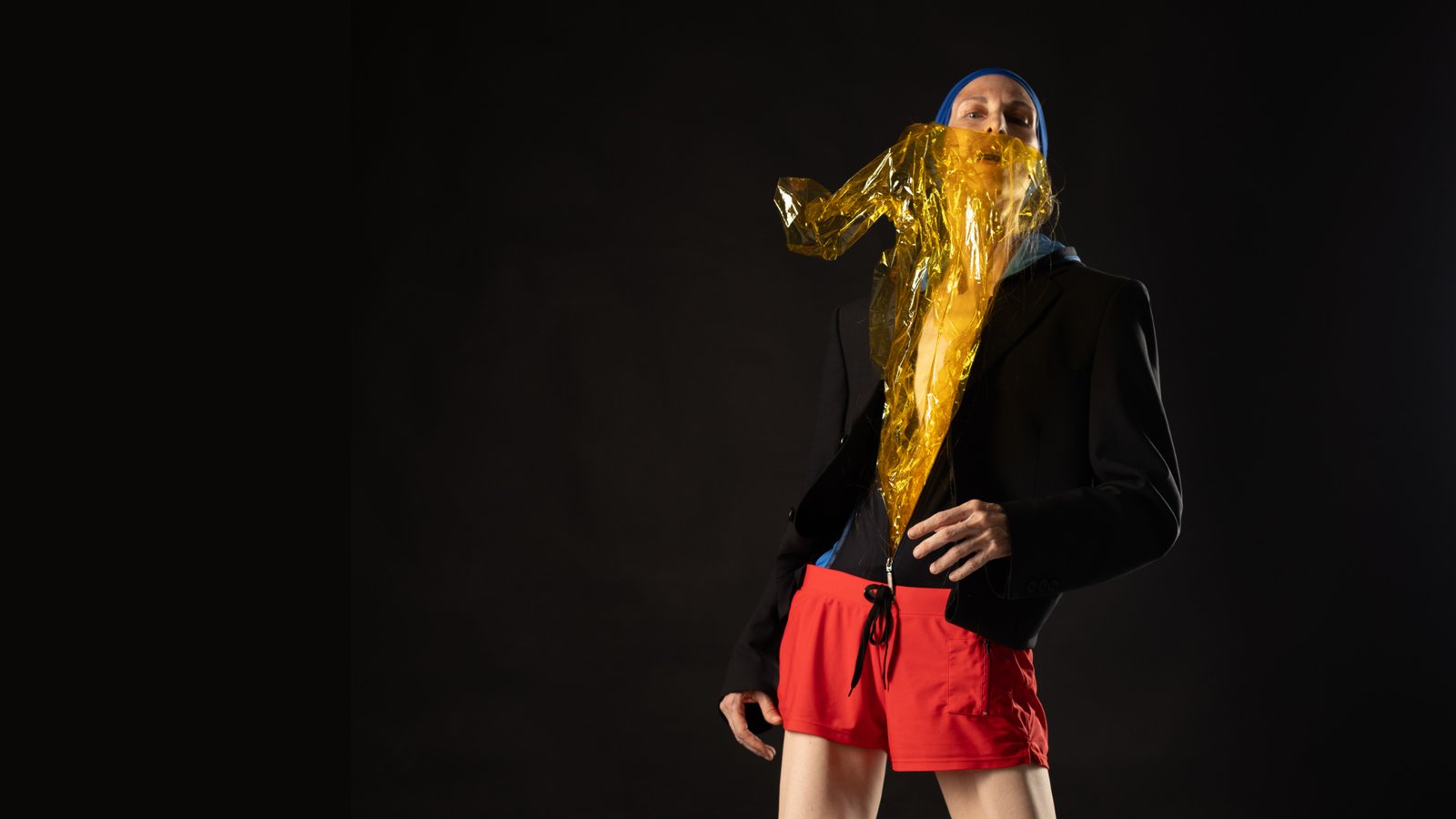
The work featured a plethora of such shifts. One moment the dancers were still, drawing attention to their wry facial expressions. In another they were confrontational examiners of a single audience member before collapsing away in a pile of limbs. Later, they donned costumes—asymmetrical scraps of white fabric that revealed a limb, a belly, a buttock. The fabric bunched and shifted as the dancers moved and never fully covered their breasts or genitals. Even my perception of the costumes morphed. At varying times they seemed high-class regalia, contemporary urban clothing, the “in” outfits at a dance club, or tattered remnants of a straight jacket.
“Clothed,” the dancers returned to their opening positions—a contrast (or not so much?) with their earlier nude state. How does the presence of these scraps change our perception of them? It was up to us to interpret, to observe our own shifts in understanding.
The dancers used hand signals to herd the audience into the middle of the room, into elbow-rubbing close quarters, and then they scattered, one by one, into positions throughout the space. They began making abstract gestures that evolved into overblown notes of familiarity: waving, hugging, air-kisses. Just as it seemed as exaggerated as it gets, it grew bigger, more farcical. Non-sequiturs were blurted, yelled, screamed. Explosive movement, as though each of the five-member cast was going insane while vying for our attention, lacked any connection to what was said. Several audience members, who initially giggled embarrassedly, full-on guffawed at the absurdity of the performers, who were fully committed to the farce. Dancers flung their bodies through the spaces between audience members; bruises on hips, shins, and shoulders were explained as they thudded and thunked onto the hardwood floor.
The piece closed with a live-feed video projected on a wall behind the performers. It depicted the dancers mirror-imaged as they piled scraps of mylar on each other, took off their costume tops, pulled on each others’ limbs, and scattered small LED lights. The ending was abrupt. As the lights and projection went out, all of the shifting tensions hanging in the air slowly evaporated. A few tentative claps trickled into full applause as our individual experiences slowly sunk in.
shatter ::: dawn, Here[begin] Dance, Crane Arts White Space, May 22-29.