Six kick-ass Philadelphia dancers take on the challenge of Lucinda Childs’ be-in-the-moment-or-lose-your-place-forever dances, filling the new FringeArts performance space with exhilaration. They follow with another show in an intimate University of the Arts studio, where they perform solos, group pieces and a sidewalk dance we watch from a window onto Broad Street. Childs’ formulaic/geometric approach to choreography might seem to live in the world of the mind, but her explorations of simple concepts push the dancers to their limits of memory and endurance, and draw us is into a finely etched world. For the most part, they are performed without added music or accompaniment, just the sounds the dancers make. I find these pieces from 1963-78 strikingly fresh.
In a post-show dialogue with writer Suzanne Carbonneau, Childs relates her primary aesthetic investigation from this time period, as seeking how many possibilities she could discover working with a limited number of ideas. The Pew Center for Arts & Heritage worked with Childs to reconstruct and present these pieces, bringing to light an important link in the development of postmodern dance.
In Melody Excerpt, the dancers repeat three 10-count phrases, divided into 20 sections. No pattern is repeated in exactly the same way and the dancers make 166 passes during the dance, each one different. The vocabulary includes a lofting chassé that repeats with arms floating out in space, giving the illusion of light ease despite the punishing pace. I see the dancers sussing out the distances between them on the passes, taking risks and adding a thrill by cutting it close. The specificity of each dancer shines in the context of simple repetitions. As in other group pieces, what start as simple movement—walks, pivots, glides—becomes a virtuosic challenge for the dancers through Childs’ manipulations. Megan Bridge describes the experience from the inside in her article. Along with Bridge, the other dancers are Nora Gibson, Janet Pilla, Michele Tantoco and Annie Wilson, with Gabrielle Revlock in other pieces.
The solos are riveting as well; Museum Piece deconstructs and examines the painting Cirque by Georges Seurat, using text and a mirror as guides, literally moving the dancer backwards through a field of Seurats‘ circles of color laid out in the space. The text is yogurt-cool and witty but the final image demonstrates the magic of perception as we take in the gently funny flying figure perched on a stool and re-integrate the information.
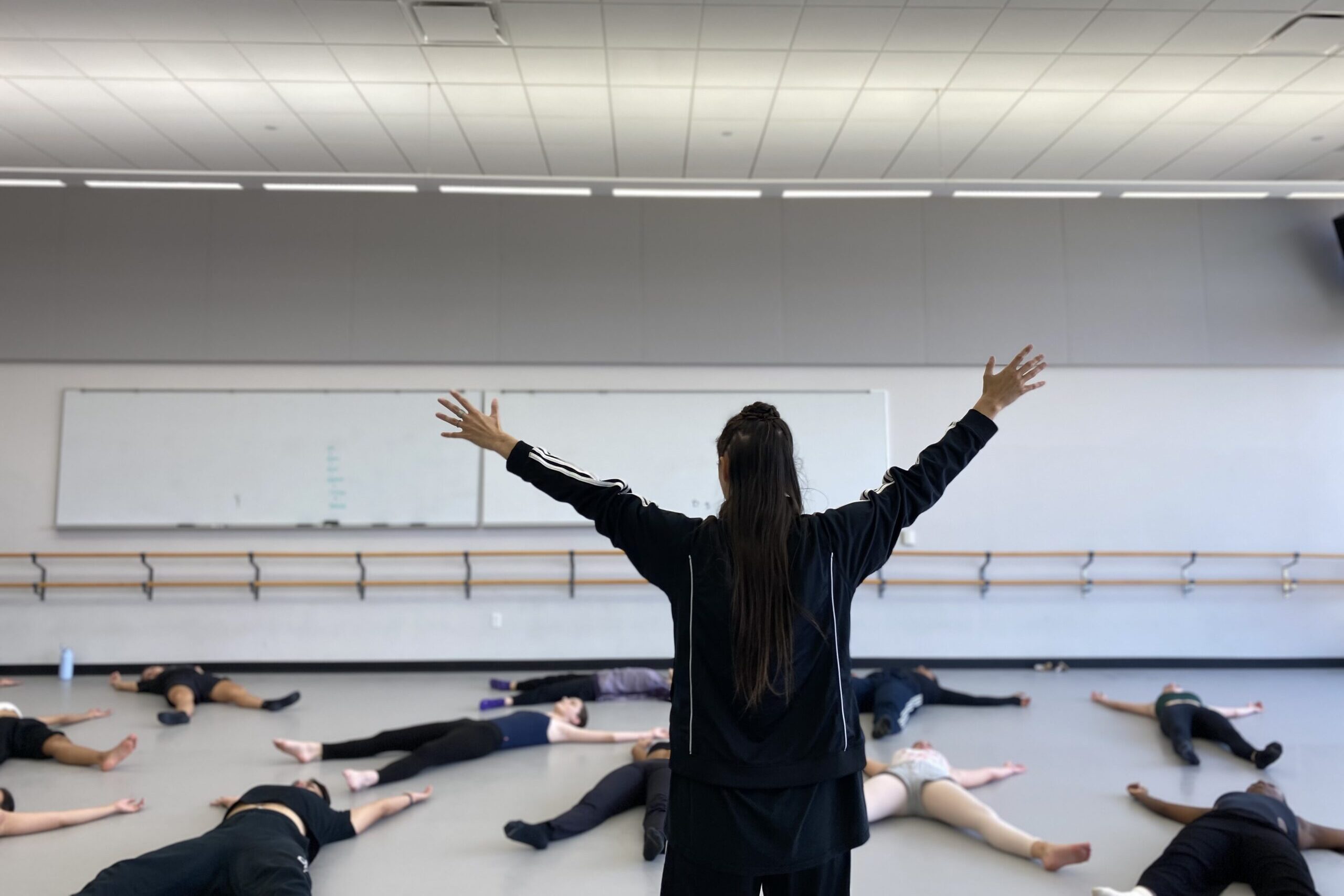
Setting does have an effect in these two days of viewing. The beauty of the choreography and performances is amplified by the proportions of the LiveArts space space—epic high ceilings and generously sized stage. The compressed sightlines of the U of A studio make some viewing more difficult, especially from the back row, but it also scrambles my perceptions of the trio Reclining Rondo in a good way.
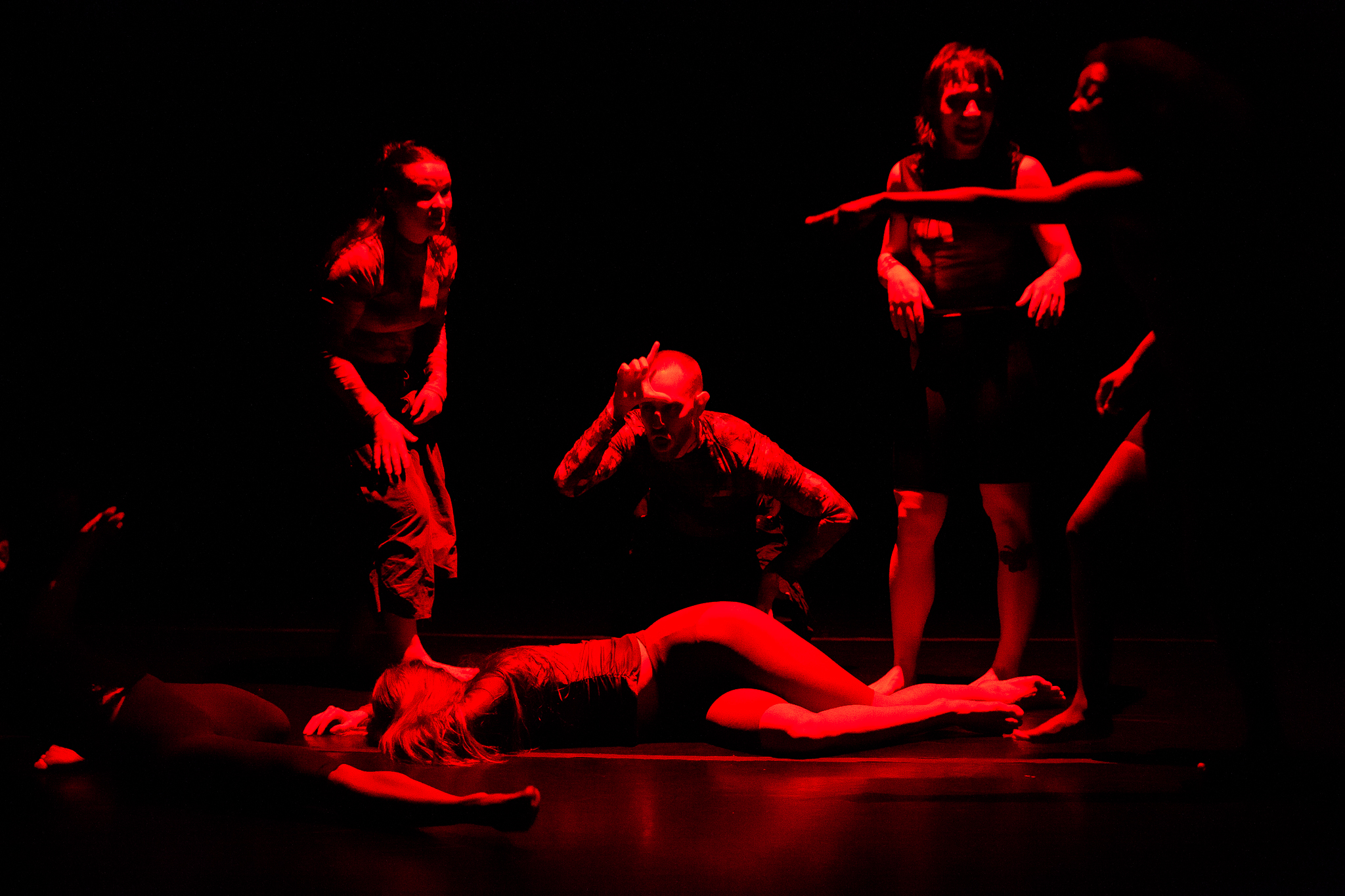
Three women move in a slow, even rhythm—move, pause, move, pause—floor bound, repeating a yoga-influenced sequence of 18 deliberate movements. Closer and lower in this space, I can perceive both the ever evolving graphic relationships of the three lines they create on the floor as well as the shifting topography of side hips and shoulder mountain ranges, not to mention the performers’ gazes—another layer of spatial contact. Gorgeous! Trying to memorize its visual shifts, I have the impression that the stage space itself is revolving. Of her inspiration for this piece, Robert Morris’s sculpture Untitled (I beams), Childs remarks in the program notes, “This is a perfect example of the Cage/Duchamp philosophy that content is not in and of itself as important as the mental process that the observer is put through in observing the work.”
This seems to me the essence running through the dances. As a viewer I am actively pulled into dialogue with the work, my awareness of space heightened, my consciousness deeply affected. Childs works the paradox, strictly limiting her choices, finding infinite possibilities.
Lucinda Childs: Selected Works, 1963-78, FringeArts Performing Center, Friday, October 4; Universtiy of the Arts, Sunday October 6. www.pcah.us/dance/newsroom/whos-at-the-center-lucinda-childs