Maybe Larry Keigwin needs lots of love from audiences. Maybe he needs his first Broadway dance hit (and it may be coming). He certainly brings dance-making expertise, theatricality and athleticism to his work but he left me unengaged and bored in his recent Annenberg Center appearance of his dances of the last decade.
To be honest, I was also a bit angry having opted to see this work over a Bryn Mawr College performance of Tibetan sacred dance and music by the monks of Drepung Loseling Monastery. Is it too wild to foresee a day when Annenberg’s Dance Celebration might celebrate the dance of Tibet, and not just the dance of Manhattan?
I really wanted to like the opening Love Songs (2006). What can go wrong with iconic songs from Roy Orbison, Aretha Franklin and Nina Simone? But the romantic dances of four couples here were trite with the stylized movement of love pursued, rejected and scorned.
Mattress Suite, comprising six short dances created over a number of years (2001-04), appealed with occasional frolicsome humor as dancers employed a bare mattress prop as the trampoline site for foreplay and other couplings. But the mattress acrobatics could not sustain the work’s relationship narrative, and the underwear worn in all the pieces reminded me of what a rejected Calvin Klein ad might look like (think adult diapers). Somehow lost in this suite was a moving bluesy solo by Matthew Baker to Bill Withers’ “Ain’t No Sunshine,” where the dancer fully embodied the sadness of rejection.
The star of Keigwin’s latest, Girls (2013), seemed to be the glistening, glimmering curtain reflecting for each of four songs, blue, purple, red and gold light. Three women darted through the sparkle, revealing body parts but offering up little dance in front of the fringe curtains. This was not scenic glam but a gender slam, reinforcing the gender stereotypes of the evening’s prior works.
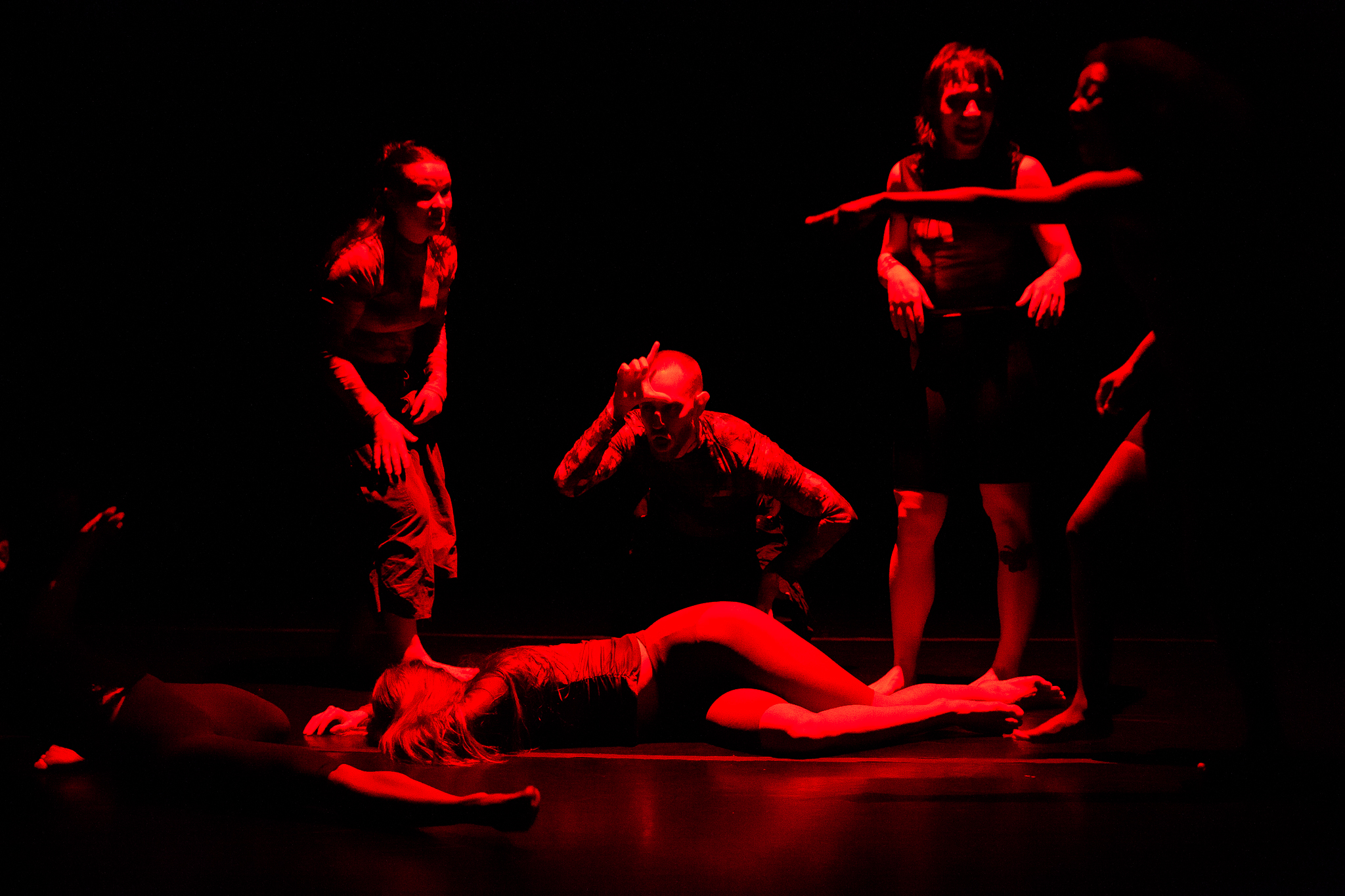
And perhaps to show that Keigwin is not solely Broadway-bound but can address societal or political issues like alienation, the program concluded with Triptych (2009), a dark work with fast changing groupings of the six dancers up, down and across the stage. Clad in glossy black tight-fitting costumes and dancing to a percussive sound-score, the performers’ regimented, elongated walks with a fluttering extended arm made them look like goose-stepping commuters offering up a fascist salute for a bus that would never come. If there were an idea here of a routinized or alienated urban life, it was one undeveloped and rendered cartoonish.
I’ll be waiting for the Tibetan monks to return to our area.
Keigwin + Company, Dance Celebration presented by Dance Affiliates and the Annenberg Center, Nov. 21-23.