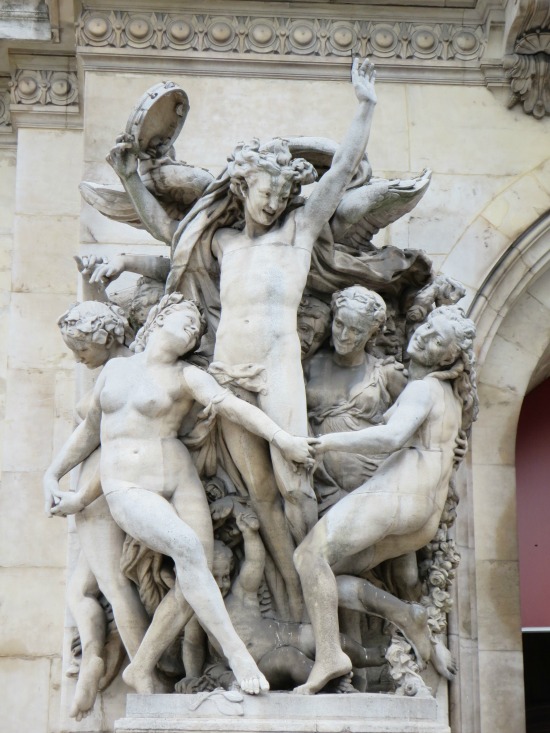
My first day in Paris I walked to the Opera and homed in on Carpeaux’s The Dance stationed just to the right of its monumental entrance. I remembered the sculpture to be an apt symbol of Paris Opera Ballet. The beings in it—I would say people except that one has wings and we’re not sure if the others are quite human—are possessed by a particular bliss. A ravishment. In a city where you can melt from pleasure from the taste and texture of an ethereally light lardon swimming in a pea soup tangy with crème fraiche, dance is, logically, offered a temple.
That can flip to the dark side. Paris Opera has functioned as a glorified bordello (witness Degas’ literally poor subjects and their reliance on “patrons”). But quite a ways on, my experience there was sublime—working with people who began with exceptional talent and then have dedicated their lives to dance with hard-working pragmatism, and who are mostly open and energized.
.jpg)
The “Foyer” behind the stage was where gentlemen would encounter the young dancers.
A single shadow lingers—I may never know if our message got across. As we were departing I sensed that our insistence on clean delivery, that is, without emotional overlay or push, to possibly be doomed. For some dancers, steeped in romantic roles and a particular idea about projection, just to drop all that is hard. Maybe it’s like something that you trim that insistently grows back. A deeper, more fundamental and lasting change might not take hold. That’s connected to what Steve Paxton called “the new body” in his essay on Trisha in Dance and Art in Dialogue. Among other things, it’s a body that releases in order to find new pathways and pleasure in simply showing its discoveries.
* * * * *
Following Lou Reed’s recent death, I watched a documentary where he spoke about geniuses in his life, Warhol above all, who was an engine for incessant surprising ideas. It was like that in the studio making Glacial Decoy too, and the thrill of that is present for me when I dance or teach any part of it.
Is there a way to tie up, in a neat package, the experience of working for five weeks with Paris Opera Ballet on a Trisha Brown dance I consider brilliant and ravishingly beautiful? It’s doubtful. So, to put a period on it, here are some scrapbook-type photos plus some random beauty.
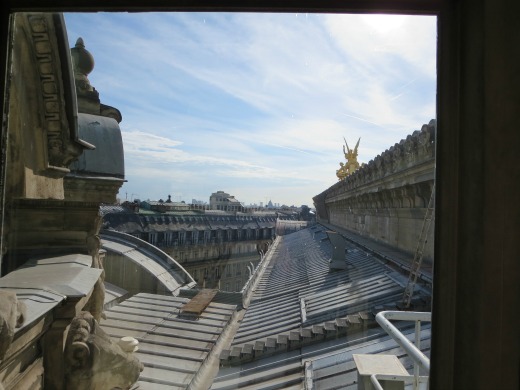
The view en route to Chauvire studio.
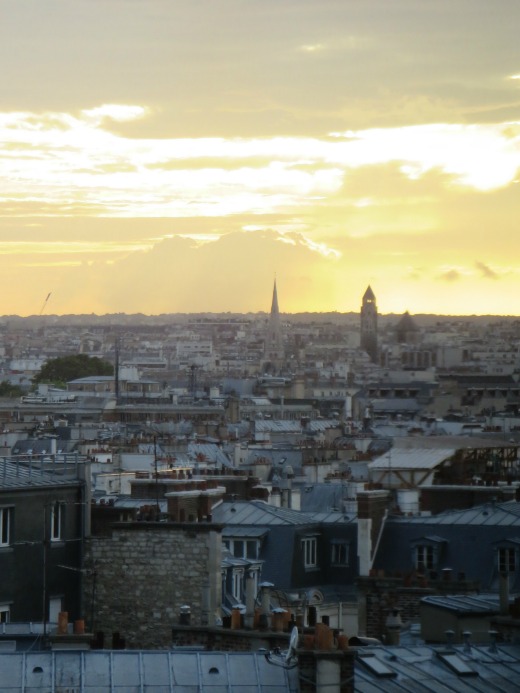
The view en route to Noureev studio (extreme close up).
Nearly every day, Carolyn Lucas and I practiced Tai Chi together. It was our way of staying rooted and also of connecting. As luck would have it, we practice the same form, which Carolyn learned as a longtime student of the venerable Maggie Newman, a main disciple of Chen Man Ching. My teacher, Jano Cohen, is a close student of Maggie’s.
.jpg)
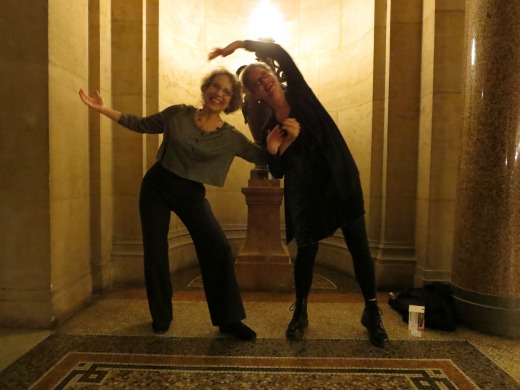
Carolyn has been with the Trisha Brown Dance Company since 1984 and created roles in many great works, later working by Trisha’s side as choreographic assistant.TD writer Lisa Bardarson visited Paris for a week toward the beginning of the process. Here she is in front of Pompidou.
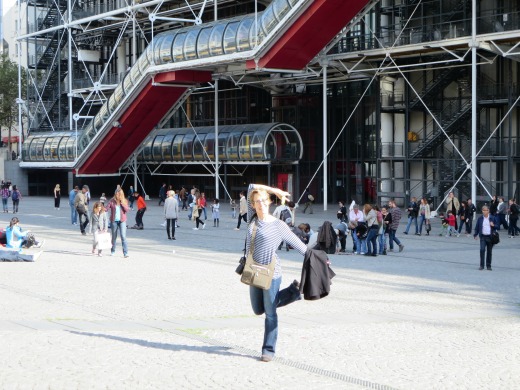
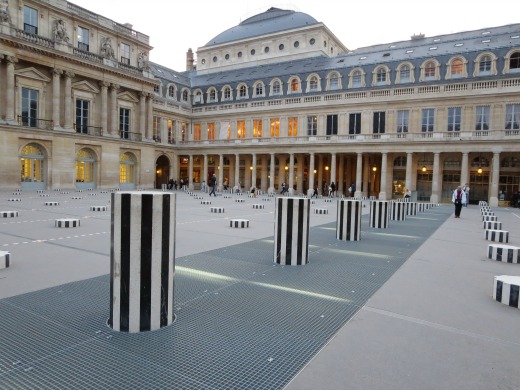
In Paris seeing mixtures of old and new in architecture and art pleases me. This installation next to the Jardin du Palais Royale fits in that category.
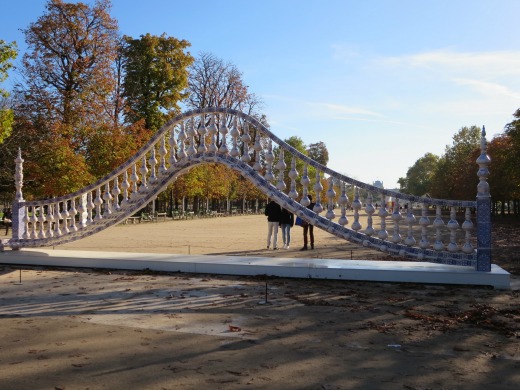
As does this in the Tuileries, an arch to nowhere, Islamist in its painted detail.
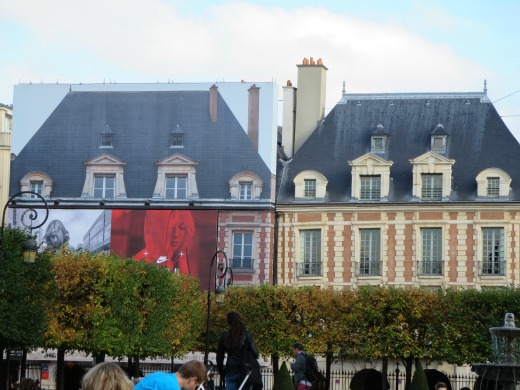
And this mix of actual and painted facades on Place des Vosges.
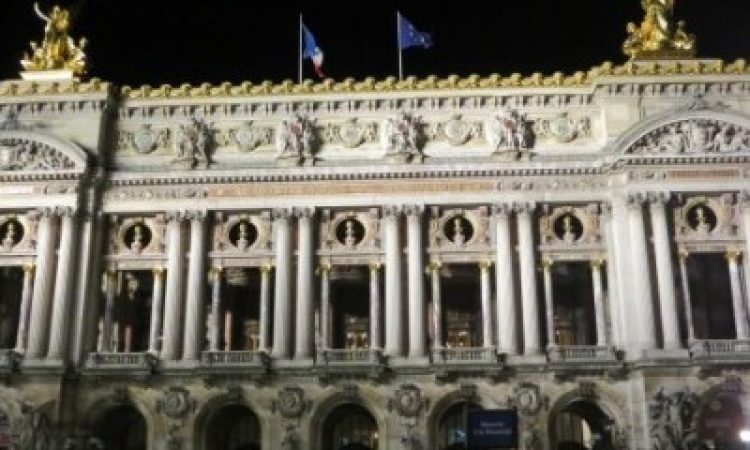
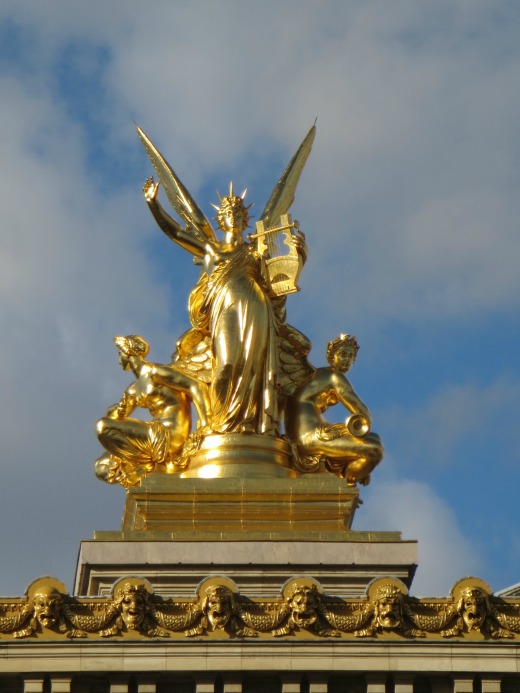
Still, Garnier’s Opera was the star of the show.
Here is a selfie in fading afternoon light on my last day.
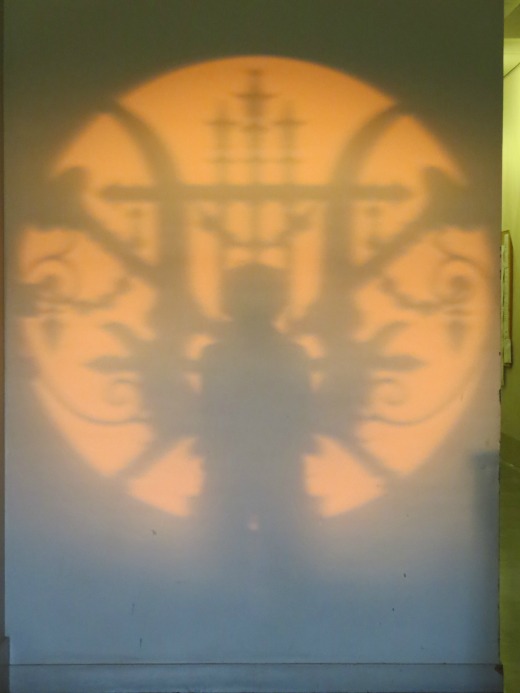
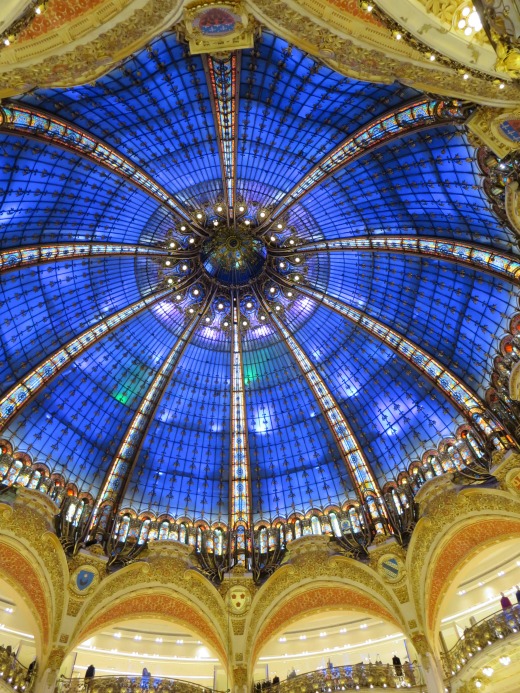
I returned to Philadelphia November 1, and wandering through the old Wanamaker building I see how its central hall is of the same style as Printemps—a huge open space with balcony floors encircling it. It’s holiday time here.

FINIS
Earlier posts in the series are: A Decade’s Difference, Elevators and Etiquette, Dancing Toward a Premiere and How We Teach Trisha’s Dance.