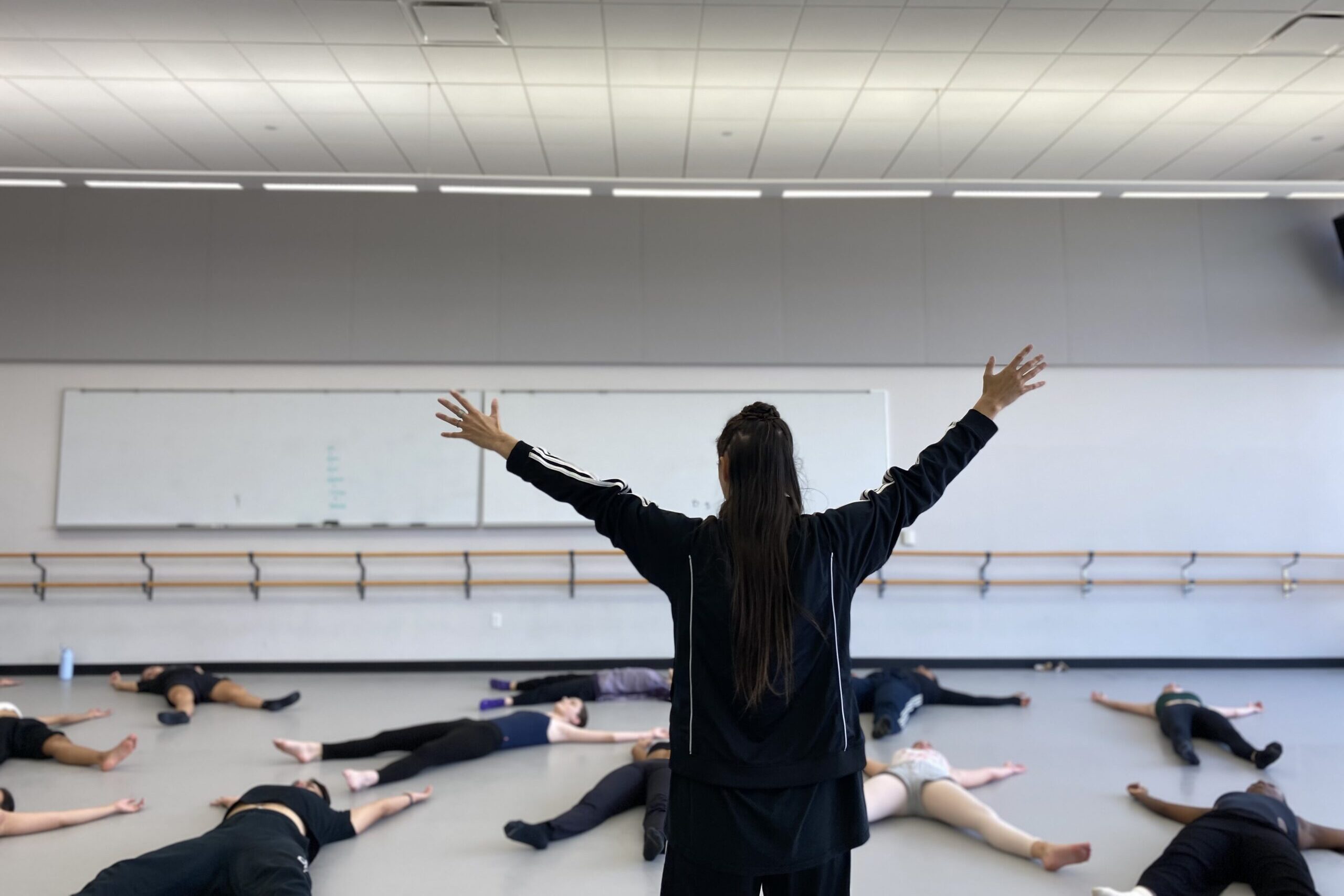
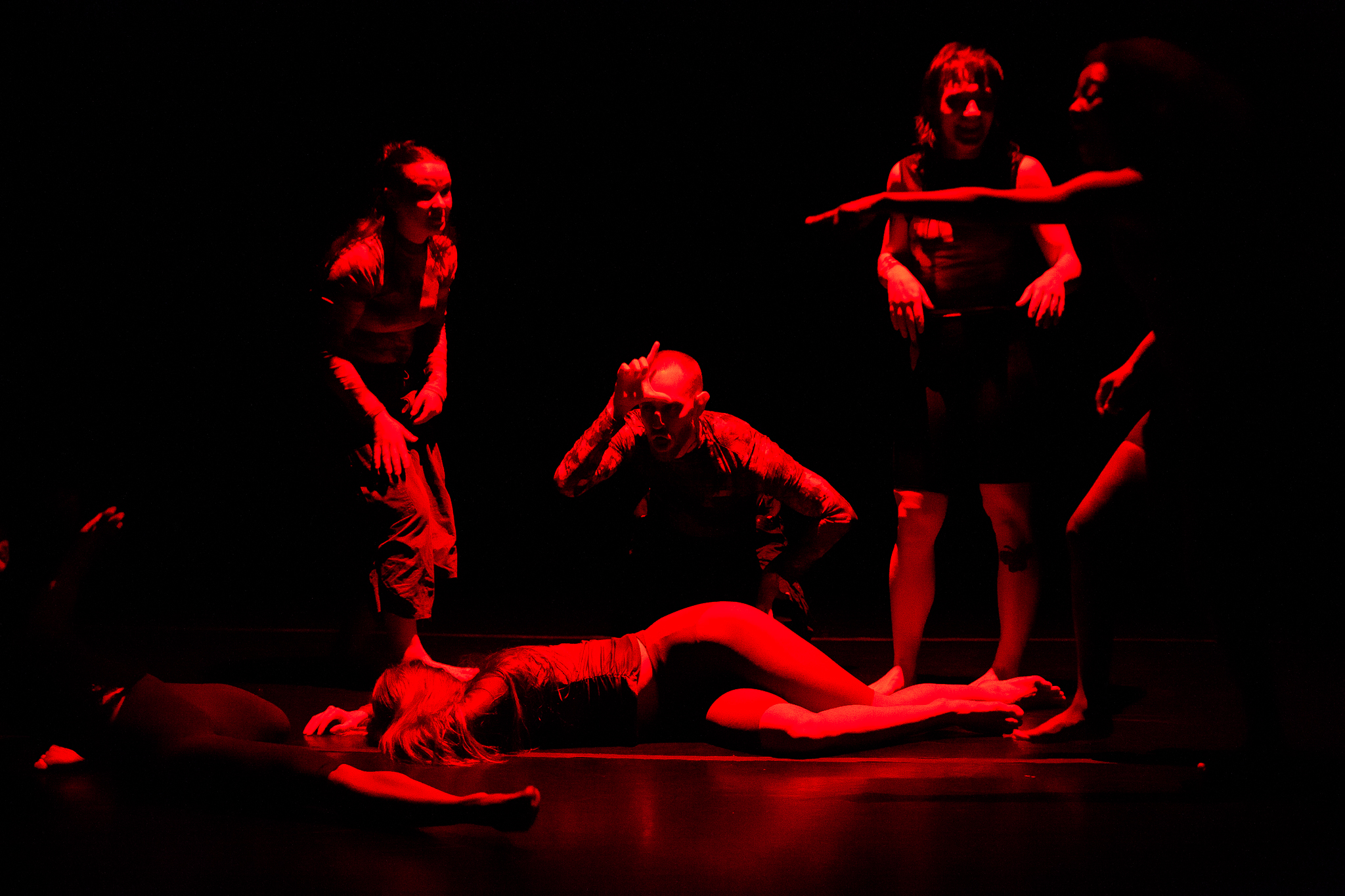
Pictured on homepage, Skye Ballet; on this page, Central Pennsylvania Youth Ballet.
English dance critic Richard Buckle once remarked that, with each Christmas, we are “one Nutcracker nearer death.” I have just emerged from a weekend viewing three Nutcrackers—Pennsylvania Ballet’s on Friday evening, Dec. 20; Skye Ballet Center’s version on Saturday afternoon, Dec. 21; and Central Pennsylvania Youth Ballet’s on Sunday afternoon, Dec. 22. Do I feel three times closer to death? Nope. How then do I feel after my immersion in Nutcracker seas?
First, I want to be clear about my connections to each of these Nutcrackers. Pennsylvania Ballet is the major classical company nearest my home, one that I’ve been cheering on since my Temple college days in the late ’70s. Watching dancers arrive at PAB, blossom, and retire to new undertakings has been a quiet pleasure in my dance life. Skye Ballet Center is run by my stepdaughter, Jody Skye, along with her cheerful husband, Allen Schissler, and the performance this year featured three of our grandchildren. Central Pennsylvania Youth Ballet invited me to be the speaker at their Insights program before the matinees on Saturday and Sunday, so I have been much in contact with the staff there and even contributed, in a small way, to the production. These are important connections to note, not only to lay bare my investment in each production, but because Nutcracker itself is, at its core, about community—that is, about several rings of community: the family-and-friends depicted on the stage in Act I’s Christmas party scene; the dancers of many ages and abilities along with choreographer(s), musicians, and designers; the armies of backstage marshals and crew who manage the hordes of children, costume changes, and prop business; and the audience members, many of whom regard their participation in The Nutcracker as a Christmas ritual—a ritual more likely for some than attending church on Christmas morning.
Community, in the many rings I have described above (and beyond those), is a key factor in Nutcracker’s success. This was borne home to me in my pre-immersion reading, when I lighted on Jennifer Fisher’s insightful and witty Nutcracker Nation: How an Old World Ballet became a Christmas Tradition in the New World (2004). Fisher points out aspects of Nutcrackerdom that have turned me from a “Nut basher” (see my earlier take on this annual ballet tradition) to a respectful fan. Community is among these aspects, and it is a vast theme: dancers who grow from pipsqueak Angels to Sugar Plum Fairies in local ballet companies and then mother the next generation of rising Nutcracker participants; audience members who step into theaters to see a live dance performance only because it is The Nutcracker, not feeling threatened by a possibly abstract theme, a technique they don’t grasp, or the need to sit (with their little ones) perfectly still for two hours; the pride many towns feel in their “own” Nutcracker, the home team version; the flexible ways the divertissements in Act II can be varied to reflect different ethnic communities in a nation of immigrants. As for the ballet community itself, how many professional dancers got their first and most ongoing stage experience by means of this annual tradition? While the ballet is sometimes thought of as a “cash cow” for dance companies, some of the company directors I spoke with assured me that, in fact, it costs more to produce the ballet than ticket sales earned, but it was the source of so much good will in the community and good experience in the school or company that there was no question it would continue.
What about the actual productions I viewed? Two—PAB’s and CPYB’s—were George Balanchine’s the NutcrackerTM, while SBC’s was a shortened Nutcracker featuring only children through teen students, choreographed by Jody and Allen Schissler. Yet even the two Balanchine productions reflected their communities in different ways, with sets and costumes distinct to each one and, of course, interpretations of character unique to each dancer. For example, PAB’s Drosselmeier, played by William DeGregory, emphasized the mystery of the character, while CPYB’s Bruce Thornton (an alumnus and now faculty member of that prestigious school) brought out the magician’s playfulness. As PAB’s Nutcracker concluded, Clara and the Nephew/Nutcracker/Prince floated off through the sky in a flying sled, while at CPYB’s they sailed along the stage in a walnut-shaped boat. All of this was delightful, in both versions, and the dancing throughout was generous, joyous, and drew cheers from the audience. Both were in stunning, ornate halls—the Academy of Music in Philadelphia and the Hershey Theater—the latter drawing a gush from a red-and-silver clad little girl who, ascending the stairs to her seat, sighed, “Oh my gosh, it’s so beautiful.” Both Balanchine productions featured live music, the former by the PAB Orchestra (I heard Associate Conductor Salvatore Scarpa), and the latter by Harrisburg Symphony Orchestra (Stuart Malina conducting).
On the other hand, SBC’s performances were held in a modern, unadorned community center in Reston, Virginia, the school’s hometown, with recorded music and free admission. Costumes were simple compared to the other versions I saw, and the setting was indicated only by means of big wrapped “presents” and an ornate chair. The post-show experience differed for each production, too. The PAB cast retired into the remote backstage warren of the Academy, not to be seen again by the audience, while many CPYB dancers, in costume, mingled with the large, enthusiastic audience leaving the theater, posing for photos and hugging friends and family. With virtually no barrier between audience and dancers, the SBC dancers were immediately thronged by supporters when the show ended; then, many quickly changed from tutus to jeans to help pull up the dance floor, pack away costumes, and dismantle the makeshift stage area.
What brought these three Nutcrackers into the same orbit was the common locus of the theme, Tchaikovsky’s evocative music (at the PAB show, my niece excitedly whispered to me, “As soon as I hear that music, I know it’s Christmas”), and the sense of community tradition—a ritual, indeed—that each dancer’s generous performance shared with those of us watching. I too was touched by its magic: early in Act II of each production, those tiny Angels in their crisscrossing lines floated perfectly into place, spines erect, faces aglow, and candles shining almost as brightly as their smiles. Even I—once a Nut-basher—got just a little misty-eyed.
George Balanchine’s the NutcrackerTM, Pennsylvania Ballet, December 7-29, 2013, Academy of Music, Philadelphia.
George Balanchine’s the NutcrackerTM, Central Pennsylvania Youth Ballet, December 21-22, 2013, Hershey Theater, Hershey, PA.
Nutcracker, Skye Ballet Center, December 21, 2013, Reston Community Center, Reston, VA.