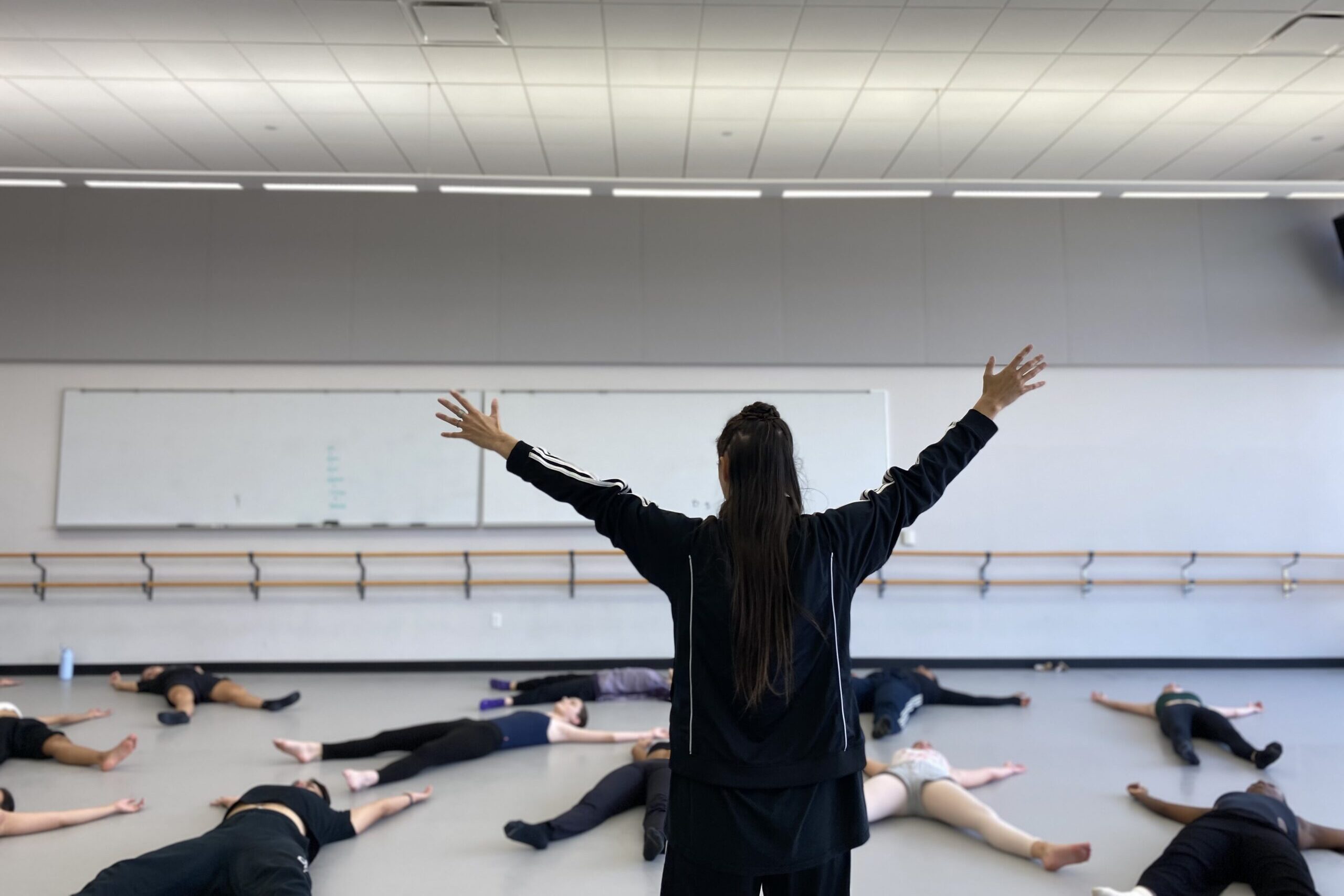
Brian Schaefer is a dance critic who has lived in Los Angeles and Tel Aviv, before moving to New York City this past year. His writing aims to place dance in the context of the larger world. He joined us for a cold Saturday workshop where we discussed our relationship to dance writing, the field of dance, and pop culture, among many other things. He is a board member of the Dance Critic’s Association and his old blog can be found here.
1. He used a monologue from Ratatouille to illustrate his point.
2. He strategized how we can exploit popular internet-reading forms, such as a listicle, to attract readers.
3. But won’t that make our writing as crappy as a Buzzfeed article?
4. Not necessarily. What if we use listicle to attract readers who then are linked to more in-depth articles and ideas?
5. Twitter is a powerful medium, and Syndey Skybetter has done interesting work with it.
6. Our Saturday-morning discussion moved from dance writing, to the field of dance, to the changing world, and back.
7. Which reminded us that writing is about both connecting deeply with the dance field, and with other fields out in the world.
8. He suggested we submit dance articles to publications that don’t generally publish about dance.
9. Or how about creating a google alert for “dance and __________.”
10. He asked, “why is dance important, politically and culturally?”
11. He reminded us that the emerging role of the critic is as facilitator of conversation more so than an arbiter of taste.
12. Not every criticism needs to be an essay.
13. What if we made our writing become more epistolic?
14. Can we actively invite readers to respond to our criticism? We have comment threads. Let’s use them.
15. Or what if our articles were direct letters to the artist, asking them to directly respond?
16. OK, still, and now, how do we define dance?
17. He asked, “Where do we look for dance in the world?” Onstage? In movies? On TV? In music videos? On Youtube? In competitions?
18. Can TD review those other forms of dance? We practiced with Edward Sharpe and the Magnetic Zeros.
19. Which prompted the question: Does a Youtube video have more cultural responsibility because it has wider distribution than a TD article (for now)?
20. He made us ask: does thINKingdance.net have the capacity to embed videos directly into an article?
21. And what is the role of critics to create visibility?
22. He stated his commitment to updating the role of the Dance Critics Association from the inside, as a board member.
23. He reminded us that the marketing of a dance work is part of the piece itself.
24. Which made me think, what is written about a dance work, both before and after, part of the piece itself?
25. A rigorous editing process is as important in a dance as it is in writing.
26. Some publications that could use some further research: Arts Journal, Create Equity, and EMC Arts.