In the midst of Pennsylvania Ballet’s celebratory 50th year, Artistic Director Roy Kaiser announced his retirement and Executive Director Michael G. Scolamiero has accepted the same position with Miami City Ballet. This confluence begs the question of the company’s future direction, and their most recent program, Director’s Choice, served up plenty to chew on. “Inspired by the company’s leaders,” (press release) the evening included works by former Artistic Director Robert Weiss, founder Barbara Weisberger’s protégé Trey McIntyre, and Christopher Wheeldon, whose After The Rain is already a favorite with PA Ballet supporters.
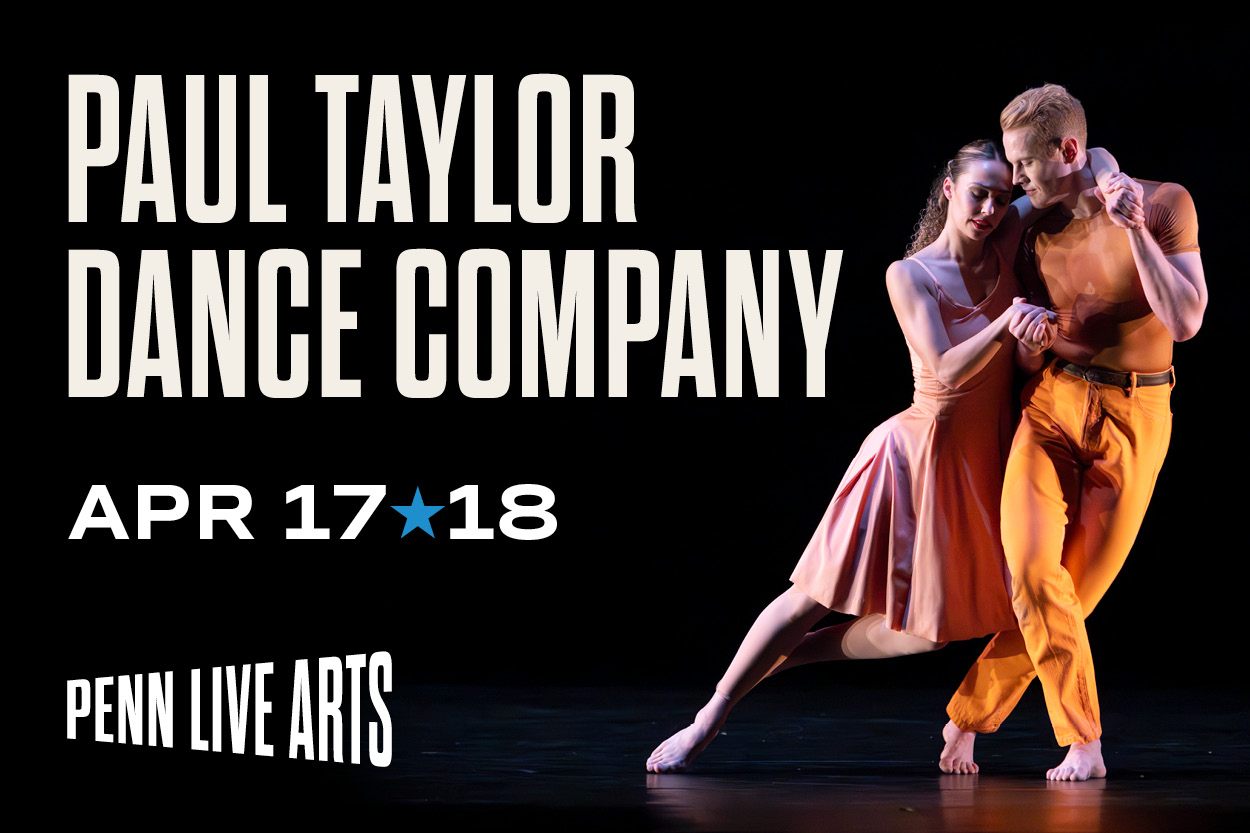
A man and woman (Zachary Hench and Julie Diana) stand side by side in parallel second position. Spare piano notes send their upper halves leaning slowly, right then left; reverse pendulums. In costumes so muted as to dissolve – her rose leotard to his white trousers and bare chest – they approach timelessness. Mirroring the melancholy piano-violin duet that is Arvo Pärt’s Spiegel im Spiegel, they move into, around, and away from one another, the pacing slow and deliberate. At times the partnering is solid and strong, as when Hench turns Diana overhead – her legs straight, feet flexed, elbows bent – like a rotating goalpost. Or when she stands on his thigh, back arched and chest puffed into the wind like a ship’s siren. At others, the link is tender, as when Diana bows her face and Hench lightly kisses her forehead, or when they embrace, melting into and holding one another up. In still other moments, their proximity is belied as one or the other shifts focus away or outward; together yet apart. We spend our lives in this dance, fighting this universal truth: we are all, ultimately, alone.
The duet, Part II of Christopher Wheeldon’s After the Rain (2005), is already part of dance history, arguably as much for the music as for its creation on Jock Soto and Wendy Whelan. A study in relationships, it mines dualities and their porousness: strength and softness, simplicity and depth, union and solitude. That Hench and Diana are husband and wife and have built a life and family offstage heightens the poignancy of this particular iteration. That this also marks Diana’s departure from the stage renders the pas de deux all the more bittersweet.
In Part I, grey backdrop, grey costumes and linear accents suggest the storm before the calm. Set to Pärt’s Tabula Rasa, this section features three couples – Diana and Hench, Lauren Fadeley and James Ihde, and Evelyn Kocak and Ian Hussey – in fast-moving and formidable partnerwork. From flawless pirouettes, the women’s legs slice into arabesques that dip seamlessly to penchés, then sweep open sideways, like single windshield wipers. This image, repeated several times, is fabulously synchronous. Pennsylvania Ballet often struggles with precise unison in timing and line, but not here. While Diana’s retirement is a terrible loss, Fadeley and Kocak – vibrant and razor sharp – augur an exciting future.
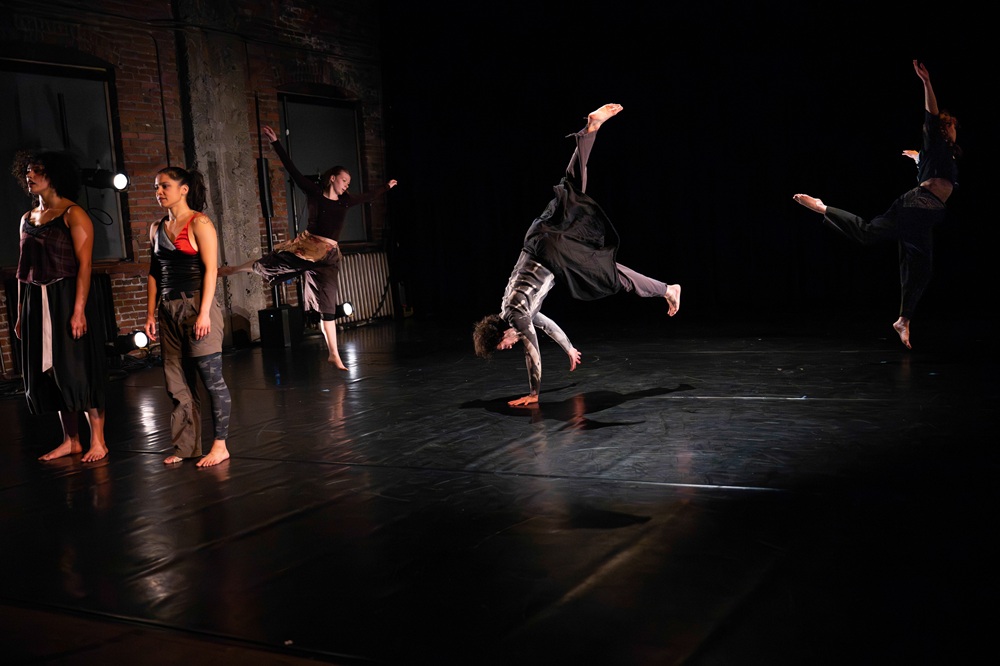
This promise reaches its apex in the evening’s second work, Trey McIntyre’s world premiere The Accidental. Patrick Watson’s buoyant, Spanish-tinged folksy-indie music propels the dancers into a non-stop celebration of the body’s potential in motion and in relation – to self, other, music and space. At turns gestural, balletic, athletic, pedestrian, the disparate movement palette centers around a constant push-pull of action and reaction, in which they bounce off one another and the floor, moving in every direction at once, all the while crystal-clear and grounded. In a showcase for the company’s facility with contemporary vocabulary, fire-haired corps member Alexander Peters is the star. Compact, spry, sensuous, a bullet of energy and containment, Peters’ dynamic virtuosity alone demands an enlarged audience for the company.
Robert Weiss’s Grieg: Piano Concerto takes the company back, aesthetically if not in time. The white costumes – flouncy white tops and knee-length tutus – droop. The dance alternates between monotonous and bombastic, offering up a seemingly endless barrage of stage-wide interweaving formations, canons and less than compelling unison. (My TD colleague Jonathan Stein likened it to a “merry-go-round, where the animals go up and down, up and down…”) Fantastically anachronistic, Grieg floundered in a past best left behind, especially for Pennsylvania Ballet, whose corps just doesn’t usually pull off large-scale, synchronized swimming style choreography.
The company shined in the more contemporary-influenced pieces. This could result from any number and combination of factors – the dancers, the style, their commitment to the vision, the rigor of the rehearsal directors. Leadership is an important piece of this puzzle. Here’s hoping their next directors are as visionary as the dancers were daring in diving into these exciting works.
Director’s Choice, Pennsylvania Ballet, Academy of Music, May 8-11.