Two truths and a lie about this show:
1. The dancers deftly execute highly technical athletic movement with ease.
2. There are nine performances of this show during the 2014 Fringe season.
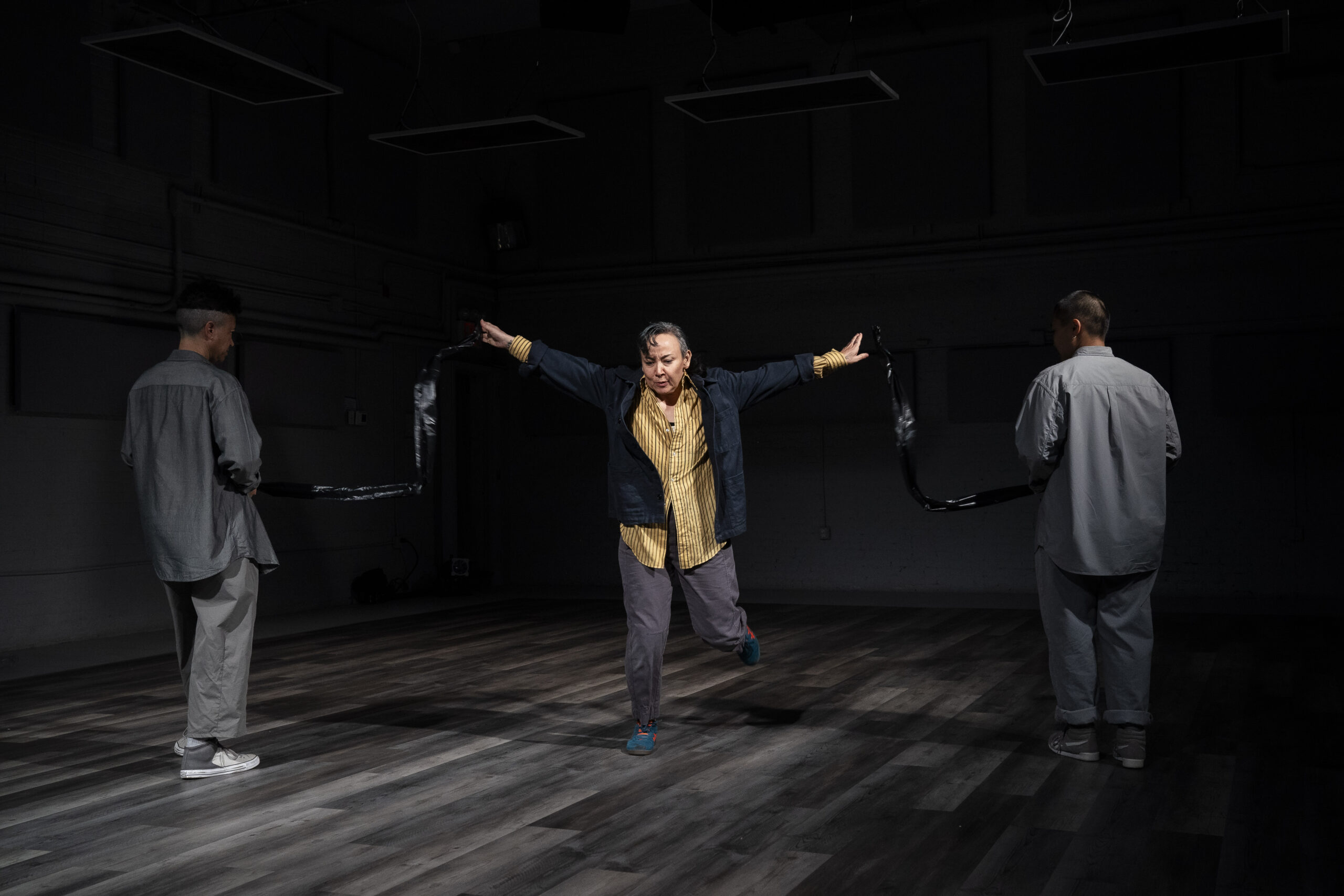
3. The dancers, in textured navy and black, strip from pedestrian clothes to underwear, and eventually to full nudity—their gradual stripping mimicking the vulnerability of exposing the truth behind their lies.
The work, compelling in its investigation of untruths, half-truths, white lies, omissions, and embellishments, left me with questions. What is a lie? Is something a lie if we lie only to ourselves? Is an incorrect assumption a lie? How often do I lie to myself?
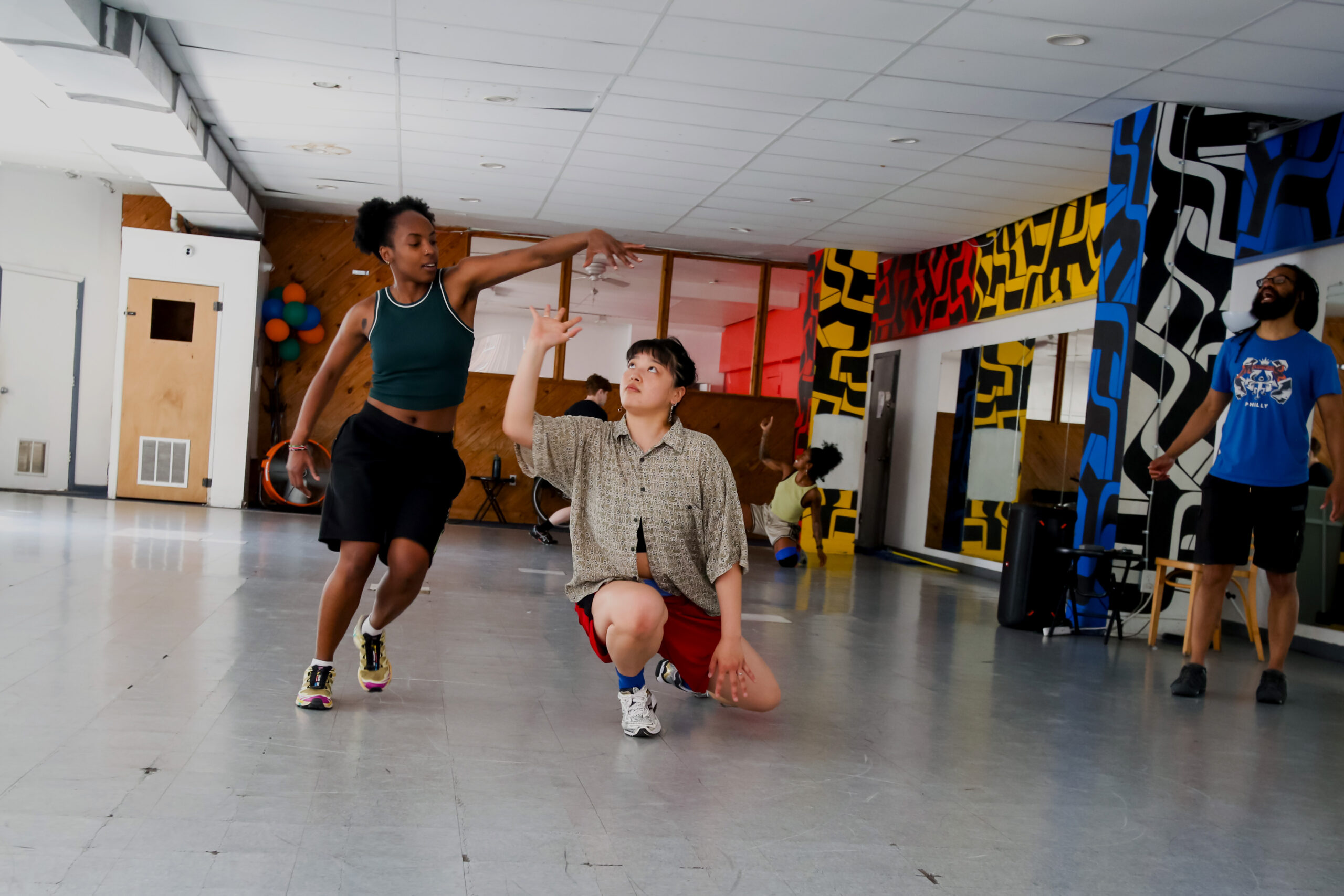
The RealLivePeople performers ask these questions of the audience and themselves, using audience-submitted lies for improvisational skits and performing to audio interviews of cast members detailing their beliefs about, and instances of, lying. Gliding between others’ outstretched limbs, pausing in handstands and shoulder supports, the cast carves, darts, and slides through translucent white curtains. The dancing is often interrupted by a repeated trope: one dancer reads an audience-submitted lie aloud, while others enact the scenario in an improvisational structure that felt like a drama-class warm up—more play-acting (eliciting guffaws from the audience) than physical movement. Though often the text felt separate from the movement, an exception was a duet structure peppered between the more athletic sections: two dancers improvise movement while taking turns making statements about each other. Guessing at assumptions initiates changes in pathways: a correct guess—“Drew’s family is supportive of his dancing”—leads to a forward progression. An incorrect jab—a lie?— “Gina does not experience stress or anxiety in her daily life”—causes a regressing pathway. These moments, where the dancer spoken about considers the truthfulness of the statement, are the most human—most truthful—in the piece.
What about those other moments? Martha Graham famously stated, “Movement never lies.” But the series of over-exaggerated facial expressions—beaming, quizzical, disdainful—that book-ended the piece were clearly put-ons. The set choreography—smooth level changes and weight shifts, deft gravity usage to tumble and rebound—was so well rehearsed that the dancers were each “playing a part,” a phrase used in one performer’s interview about lying during fights. Is this a fiction in movement? The juxtaposition of the “modern dance face” with the honest consideration revealed on the dancer’s visages in improvisation was stark. If that is their “real,” vulnerable self, are the rehearsed parts a “lie”? Is all of that technique facilitating a smoothness in movement akin to the sly persona of a con artist?
Tell me the truth, now.
Would I Lie to You? RealLivePeople, The Latvian Society, Sept 5-10, fringearts.com