For a moment I thought I was in my grandmother’s house or meeting a close friend for tea. The performance space was quaint. The audience sat close to each other, separated from the stage by a line of pillows on the floor. The sunset cast a warm glow and the cool September breeze gently blew through the door.
Everyone knows endearing (and sometimes annoying) remembrances related by elders. “When I was your age, gas was only twenty cents a gallon!” But rather than anecdotal facts, Megan Flynn and Teresa VanDenend Sorge’s Not Your Mother’s Moth recounted a history of lived experiences.
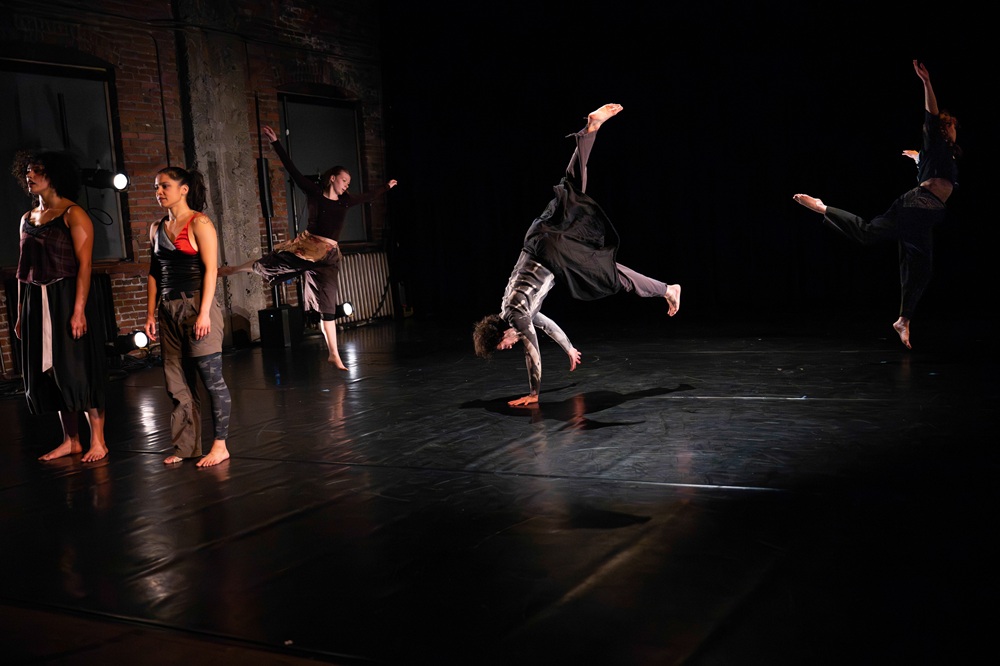
In Terrie (2009), VanDenend Sorge embraced an eccentric character in a black dress, pearls, and white socks. Between exaggerated facial expressions, she fell flat on the floor, laughing hysterically, and froze in mime-like postures. In When I was four… (2014), dancer Meredith Stapleton presented a movement autobiography highlighting life-changing moments. She emerged from behind the curtain, a shy toddler, before transforming, through battements, into a ballerina. We watched her lounge luxuriously in her mother’s summer garden. Not Your Mother’s Moth made me wonder how memories are shifted by subjectivity and reflection. As the program note quoted from Rebecca Wells, “There is the truth of history, and there is the truth of what a person remembers.”
It’s Not So Far Once You’ve Been There (2014) was especially notable. The audience grew teary watching an exacting exploration of the effects of living with Alzheimer’s on both patient and caregiver. Adam Kerbel and VanDenend Sorge rested on each other, nestled neck-in-neck, or simply held hands. They sat side-by-side on a couch, repeating a short sequence of actions at an increasing rate. They fell, in and out of synchrony, from standing to deep lunges on the floor.
Each piece reflected a cultivation of recollections. Each movement harbored significance. A curve of the arm referenced Grandma’s cookies on Sundays. An inward twist of the leg invoked the fear of asking the teacher for bathroom privileges. Deeply embedded memories were compacted into single gestures.
Flynn and VanDenend Sorge captured the spirit of the Fringe season by experimenting within their art form as they intimately shared their pasts.
Not Your Mother’s Moth, Moving Arts of Mt. Airy, no further performances, http://fringearts.com/event/not-your-mothers-moth-09-14-14/