All Day Dance (a poem)

Thomas Devaney

Judson Church 1963

implacable in a chair

she sits in the only way she knows how
completely

then much later
a turn
or rather a push
into a place she looked headed

the sound of a clap hits everyone
a door is opened and remains so

and now
she’s leaning forward
                                           and is arched
                          towards the floor

her legs mark another space

she has moved

               the whole body has moved

shunting the body in this manner is difficult to do
or even to think about doing

it is strange
that this should not be stranger than it is

the chair you sit is not made for this
as the day stretches into one hell of a long night
but you let go or don’t hold on

there is someone else too
another person is moving more lightly more quickly
and maybe more wrongly

is this a duet
               or two solos

you can follow either or neither

he is all over the floor
covering and uncovering more
space revealing more area
though is perhaps but a marker
(holder) or something she is dreaming
                perhaps it’s he dreaming her
or us them or they us

***

and now
        an hour or more later
her feet
have found the floor

she hunches forward and is out
of the picture

her legs are gone
her head gone

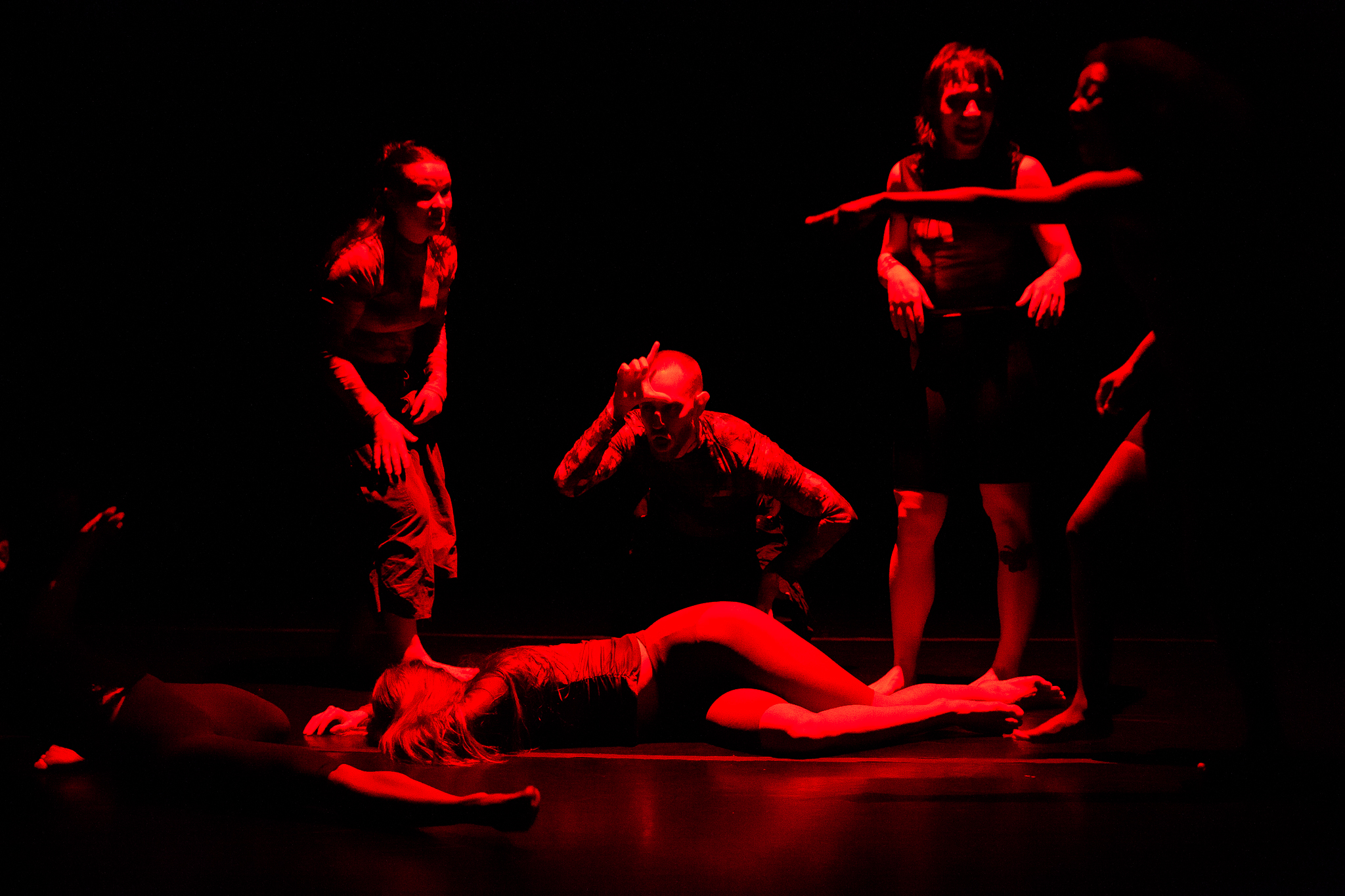
silhouettes
as if this could be an ending

Share this article

Thomas Devaney

Thomas Devaney is a poet and the author of Getting to Philadelphia (Hanging Loose Press), You Are the Battery (Black Square Editions), The Picture that Remains with photographer Will Brown (The Print Center), and co-director of the film Bicentennial City (2020) with Greenhouse Media. His work is featured in Best American Poetry 2019 and the lit hub name Blue Stoop: A Home for Philly was adopted after his poem “The Blue Stoop.” He is a guest writer with thINKingDANCE.

PARTNER CONTENT

Keep Reading

Joy in SPEAK

Emilee Lord

When Masters Converse

From left to right, dancers Dormeshia, Rachna Nivas, Rukhmani Mehta and Michelle Dorrance. They are in motion. Dormeshia and Dorrance wear white pants, thigh length white tunics, and tap shoes. Nivas and Mehta wear white leggings, long white dresses with golden details on the skirts and bodices. They have bands of bells around their ankles and are barefoot. The tap dancers have a quality of bending and sending energy into the floor. The Kathak dancers are lifted, arms raised, poised.
Photo: Richard Termine

On Language Learning

Emilee Lord

A reading of Ways to Move: Black Insurgent Grammars by Jonathan González

Green-toned book cover featuring the silhouette of a forest and leaping figure with the title “Ways to Move: Black Insurgent Grammars by Jonathan González” on the right, and poetic text on the left reading: “i want to be with you in the ways with you of vertigo seas,” “i want to be with you in the ways with you of smashing monuments,” and “i want to be with you in the ways with you of these lonely trees.”
Photo: Courtesy of Jonathan González and Ugly Duckling Presse