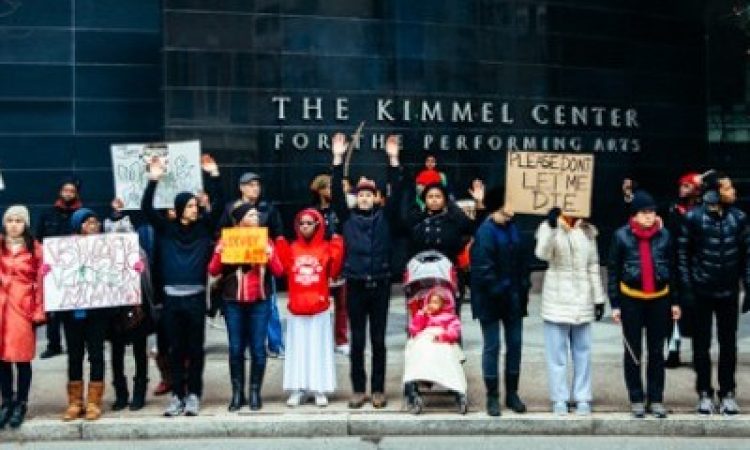
On December 13th 2014, the dance community of Philadelphia converged to march in solidarity with the movement #blacklivesmatter. As we walked, crying out for justice, while similar marches took place in New York City, Chicago and Miami, we mourned the lives of the many people of color whose lives have been taken too soon through police violence.
All photos are by Aidan Un.
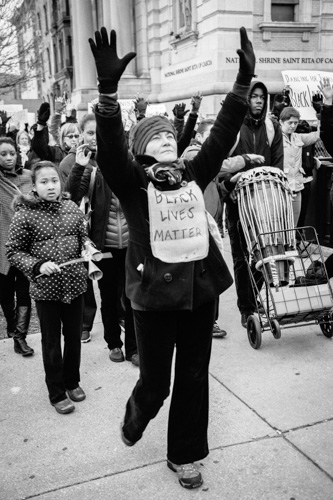
Professor of Dance at Temple University, Merian Soto, embodies the phrase “hands up, don’t shoot” as she marches in solidarity with fellow dancers.
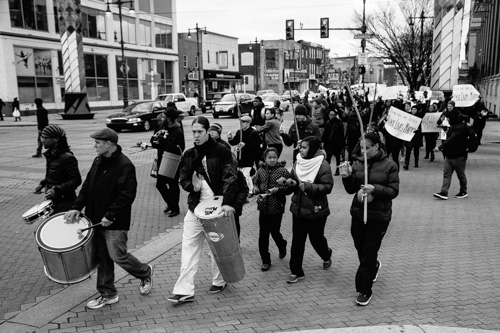
Musicians led Philadelphia’s cohort of “Dancing for Justice” up Broad Street. “Black Lives Matter!” was chanted often as we marched during the protest. (The hashtag #blacklivesmatter was also voted word of the year by The American Dialect Society.)
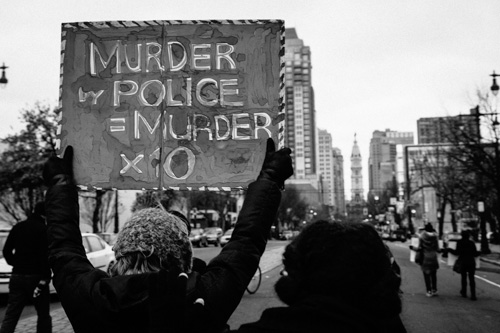
Before taking to the streets, protestors gathered at Headlong Studios where we made signs denouncing police brutality.
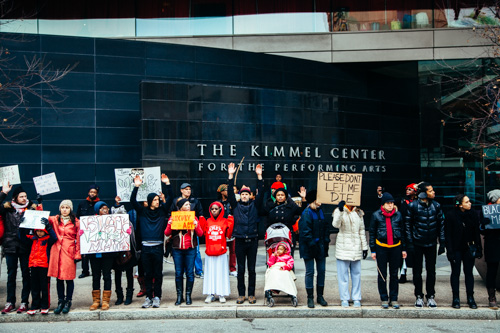
During the protest, marchers formed lines on opposite sides of Broad Street. This action allowed traffic to gain access to the street and was also strategic in making the signs visible.
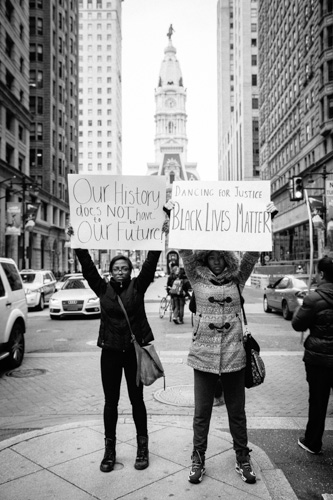
Dancing For Justice brought together Philadelphia’s diverse dance community in support of equality and justice.
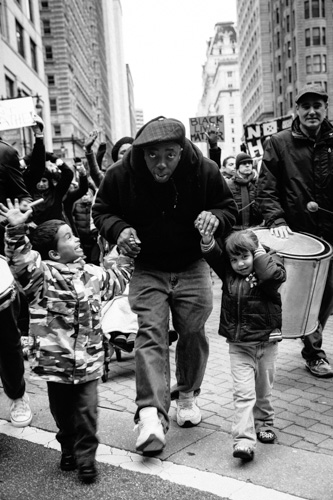
“Our History does not have to be Our Future.”
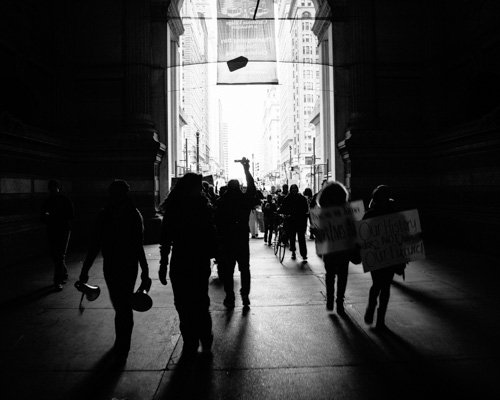
The sound of the drums ricocheted off the walls as we tunneled through the archways of City Hall.
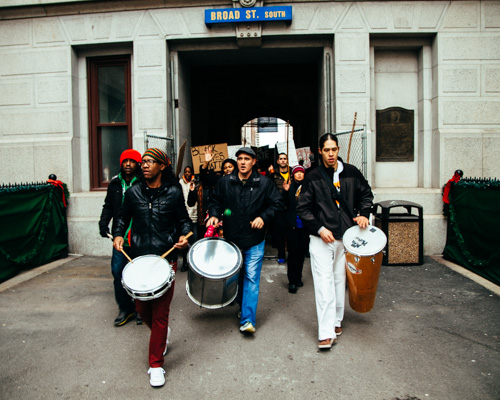
The musicians led the protest to the lawns of City Hall where, after the protest ended, participants dispersed in silence.
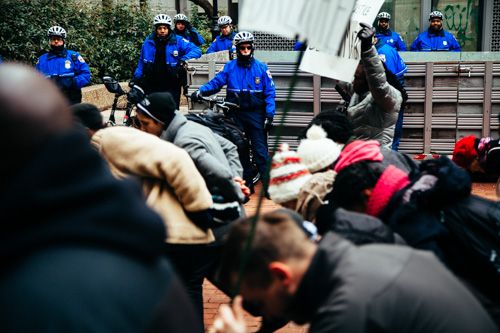
Police onlookers watched in encouragement, in seeming awe. Several remarked on how well organized the march was.
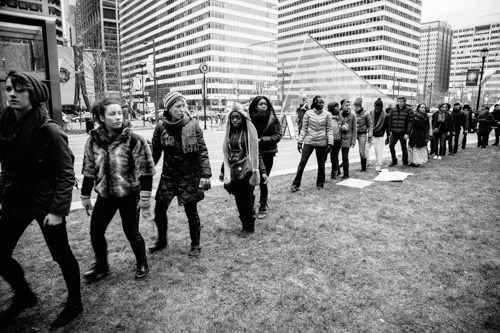
Upon arriving at City Hall, we made three concentric circles—an Adinkra symbol for greatness, charisma and leadership organized by Jeannine Osayande.
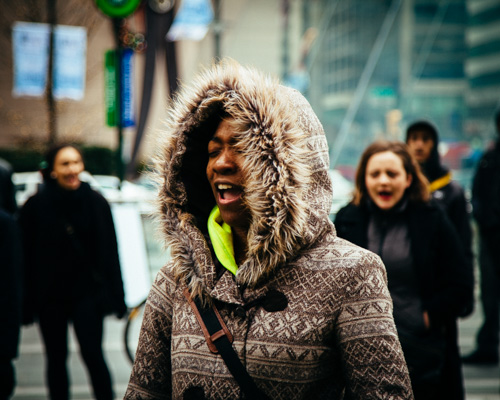
While protest organizer Lela Aisha Jones shouted out the names of 70 unarmed individuals killed at the hands of police, participants responded, “Your life matters, rest in peace!”
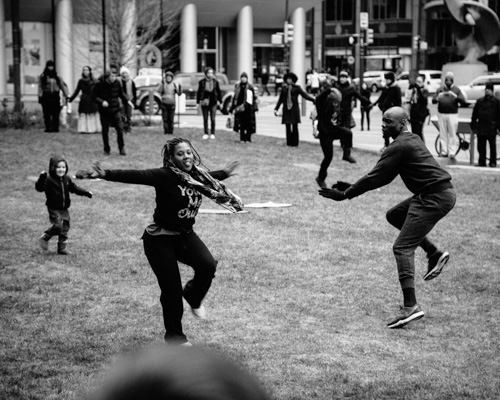
In some cultures, funerals aren’t a place to mourn but to celebrate the life of the deceased. So as we mourned the lives of those we’ve lost, we came together in solidarity to celebrate their lives through dance.
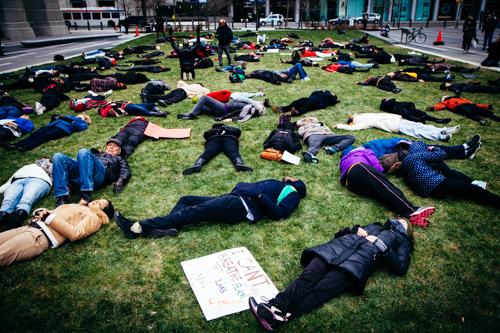
Protesters enacted a die-in symbolizing the seven minutes Eric Garner was left on the sidewalk after being choked by Officer Daniel Pantaleo.
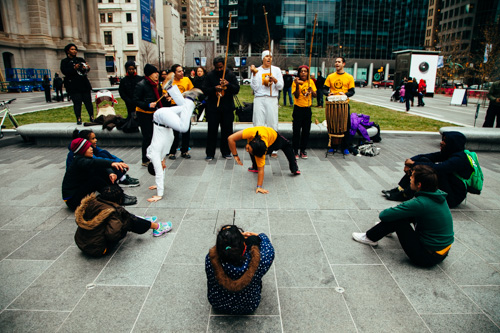
The day ended with Capoeira, an Afro-Brazilian art form blending martial arts, dance, acrobatics and music used to prepare slaves for fighting their masters in a time of uprising.
___________________
An article by Ellen Chenoweth and Gregory King about taking part in the Dancing for Justice event is here.