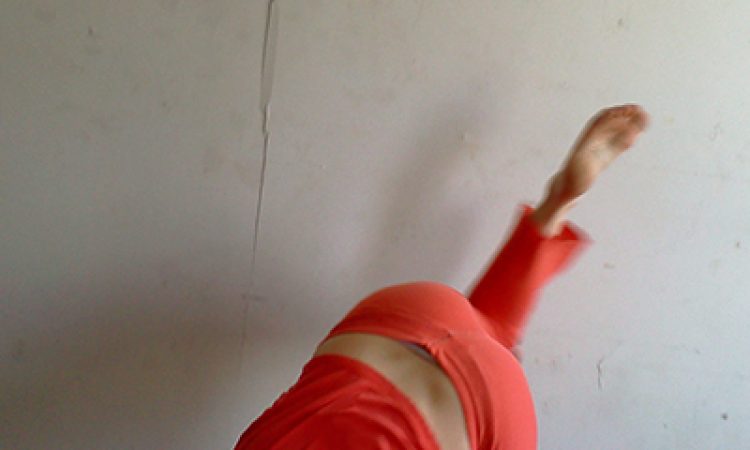
Let’s dive in. We are in the room where I live. Where I sleep, dream, and write, where my cat lives, where I store my clothes, my laptop, my papers, everything I own. This one corner of the room I keep clear of furniture and objects so I can dance. A wall in this corner is marked with leftover traces of other artists’ past projects, holes from where a painting used to hang. There is a long straight crack where two panels of drywall have separated from each other underneath the whitewash. The white wall has white patches of paint and smears of spackle and dirty smudges from touches that have been and gone.
I don’t tell people what to do when I photograph them. I have no agenda and few expectations. I want to respond to what I’m seeing. I’m usually silent trying to be invisible so I won’t make people self-conscious. I am not part of the action, but at another level, of course, I’m always there.


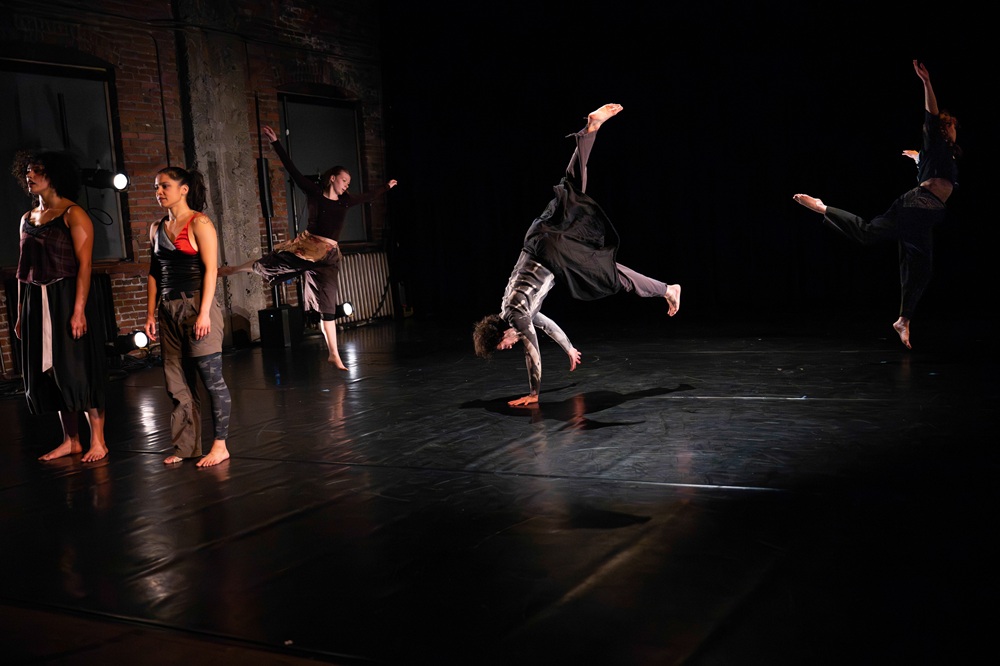
I’m dancing between the white-ish wall and a woman in a simple, almost shapeless long black dress. Her hair is grey and white. Her steps in her soft black shoes are soundless as she follows me, watches me, hovers at the edge of my kinesphere. I continue the endless pattern of my dance, and now the woman in black and I are doing a duet. Her name is Ditta, and she is an artist I met at a dinner party, but I begin to think of her as Greek great-grandmother Krystallo, the one whose dowry included a cow of pomegranate color. I become aware that my hair is short, I’m not wearing a bra, I have no husband, no children, no livestock, no loom. Krystallo is peering at me from 100 years ago. She is examining me, following my alien dancing that has no rhythm.
In any interaction, I think your own history shapes your vision.
My dancing is called “improvisation,” I tell Krystallo, with my mind. It’s a spontaneous solo of my own feelings, my own being, like the zeibekiko. I’m free. I can do what I like with my body. I can feel all of its sensations. I show her the top of my head, my back, my neck, my fingers, my arms, my thigh, my foot, all in various relationships to gravity: upright, upside-down, sideways. I guide and follow my bones, moving my limbs in arcs and lines; my fingers weave invisible webs in the air.
When I’m photographing, I don’t try to control the situation. I like letting go of that control, allowing surprise. Later, when I’m editing the photographs, culling and sequencing them, then I need to have the control.

It is daytime. If I face Ditta with my back to the not-so-white wall, the grayish sunlight passes through the window and pushes softly into the left side of my face. I reign in the momentum of my larger gestures, making sure not to touch my partner or surprise her with unexpected surges. Physical contact is not part of the contract of our duet. I will not touch her, but the light touches me, and it touches her eyes, and we are connected that way. We are both doing what we do, simultaneously. I am dancing and being seen, she is looking and taking pictures.
I’m interested in watching people at their work. When I’ve photographed dancers in the past, their gestures seemed too polished, too complete. I couldn’t see the process. Photographing you was different. Watching you, I felt no separation between work and performance. Your dance is open, it allowed me and my camera in.


by Asimina Chremos and Ditta Baron Hoeber