Serge Diaghilev, legendary impresario of the Ballets Russes, instructed his choreographers, “Astonish me!” This phrase fit the opening night of Pennsylvania Ballet’s last program of 2014-15. For one, the works were all premieres of some sort: both William Forsythe’s The Second Detail (1991) and Larry Keigwin’s Canvas (2013) were company premieres, while Nicolo Fonte’s Grace Action was a world premiere. And, at the pre-show conversation with Artistic Director Angel Corella, he repeatedly commented that he himself was “blown away” by PAB’s dancers, by the choreographers who so generously staged works on the company, and even by the children who attended that afternoon’s dress rehearsal with open appreciation. The most critical component of the evening’s astonishment, though, was the razor-sharp performance of the dancers.
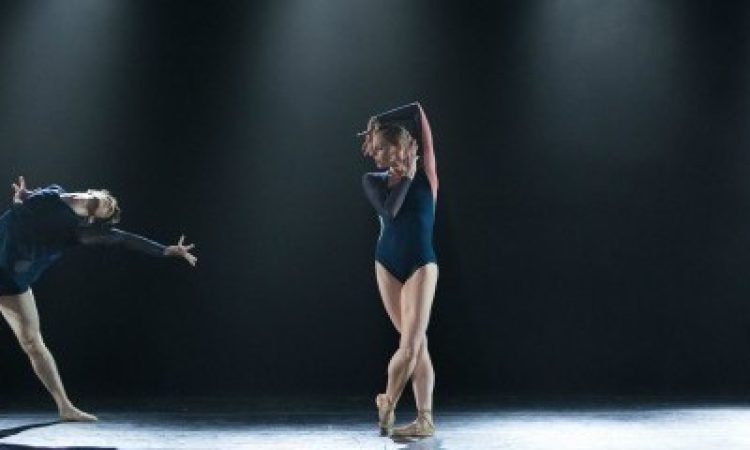
Second Detail opened the program, propelling the dancers into austere, unrelenting motion. Corella had noted during his talk that Forsythe has done for today’s ballet what Balanchine did in the early-to-mid-twentieth century: pushing the form’s potential, prodding its structures, extending its lines. PAB’s fourteen-member cast flawlessly handled the percussive complexity of body use (every limb, every joint seemed to be in motion at once), the flow from pedestrian strolls to rocket-fast leaps and extensions, the moves in and out of synchronicity. The work is powerful, despite its pastiche of music (Thom Willems), stripped-back set (side curtains retracted to expose the wings), and austere costumes (unadorned, pale blue leotards), precisely because of its formalism. Forsythe retains such conventions as frontality, turn-out, partnering, even musical pulse, to allow his work to probe other concerns: presentation, expression, verticality, groupings, symmetry, bodily range. The dancers, deeply concentrating on their work, appear strangely anonymous—automata set into inevitable motion, until the choreographer gives them moments of respite on the row of stools extended along the upstage white scrim. It was nice to catch them then intently watching others perform, smiling on occasion, preparing for their own hurtling entrances. The audience loved it.
Equally formal—and astonishing—was a surprise that Corella added to the program. He came into the directorship of PAB with this season already set (and it’s been a terrific line-up—kudos to Roy Kaiser, Corella’s long-time predecessor as PAB Artistic Director). So Corella wanted to leave audiences with a taste of the upcoming season, the first he will have created for what he proudly referred to in his remarks as “my company.” Between acts II (Canvas) and III (Grace Action) we were treated to what felt like a super-rich dessert: the third-act pas de deux from Marius Petipa’s Don Quixote (1869), which Corella will stage for the company in March 2016. A Spaniard, Corella chose the work and the dancers to suit his flare. Recent company additions Mayara Pineiro and Arián Molina Socca, both Cuban by background and training, were breathtaking in this bravura performance. They showed off their balances, extensions, turns, and leaps in the familiar Petipa formula that somehow never fails to bring audiences to their feet—as it did this time, deservedly. Pineiro and Molina Socca clearly loved parading their virtuosity; they supported and played with one another in a graciously courtly way and they nailed every trick. It was so delicious I dropped my pen and just ate it up the dancing. So did everyone else in the house, bursting into the kind of ecstatic applause and “bravos” that made the surrounding pieces seem pale.
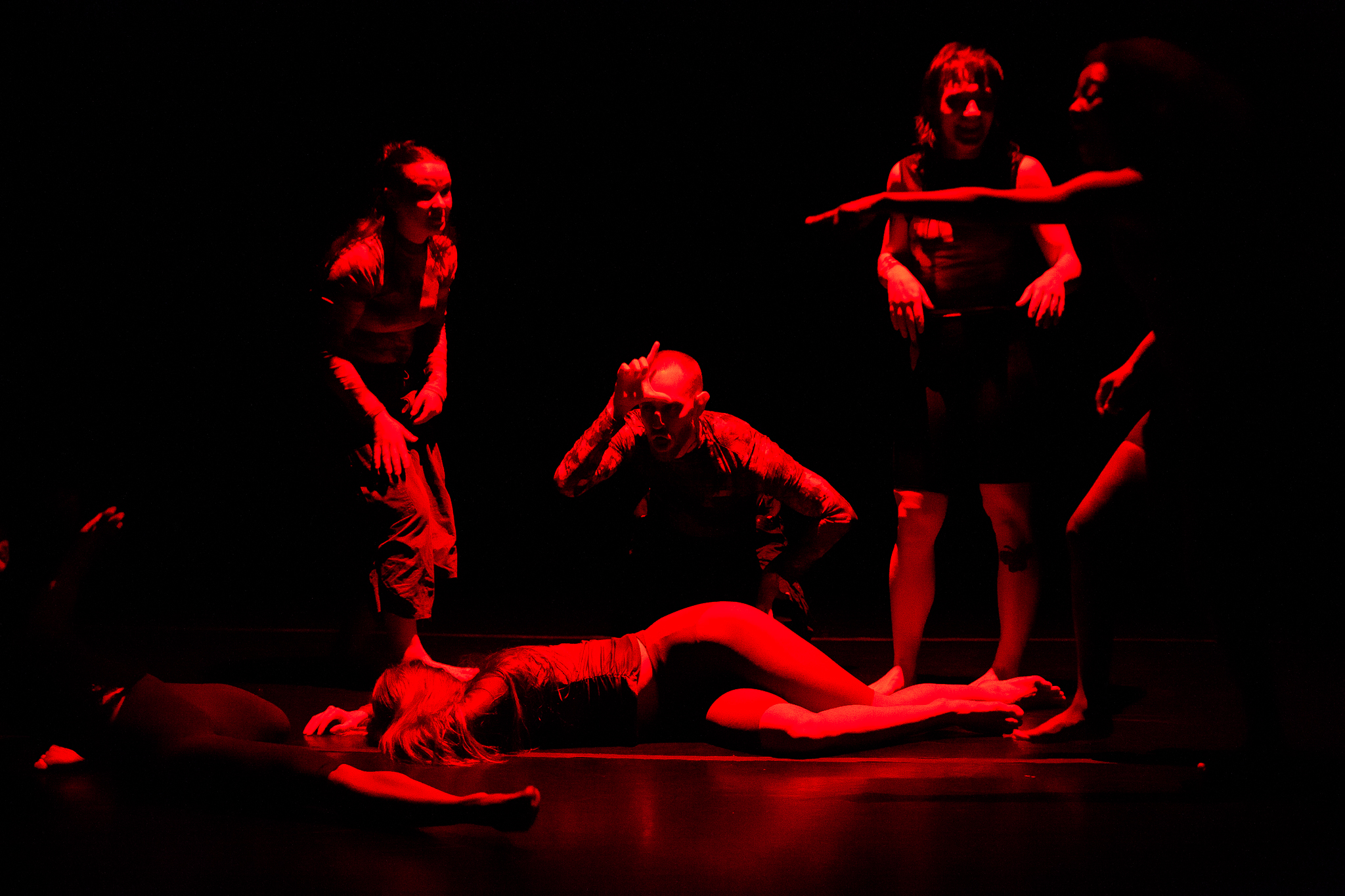
Indeed, Keigwin’s Canvas is a bit like a pallid version of Paul Taylor’s exuberant, friendly group pieces (Esplanade or Aureole). The recurring duets by James Ihde and Brooke Moore, reworking subtle movement motifs (he adjusts her bent leg from here to there) and spatiality (he slides her along a steep diagonal) were the highlight of the choreography. Fonte’s Grace Action had some of the most stunning lighting I have ever seen (by Brad Fields), but its movement struck me as an undifferentiated swath of flying arms, hyper-arched backs, and split-second tableaux that smacked of “lyrical dance.” Only the dancers’ intent focus and committed performances could draw my eye from the moving formations of stage light that created the work’s sense of mystery. No matter. Watching these dancers is its own reward.
I can’t wait to see them in Corella’s season next year.
Pennsylvania Ballet, Merriam Theater, June 11-14.
By Lynn Matluck Brooks