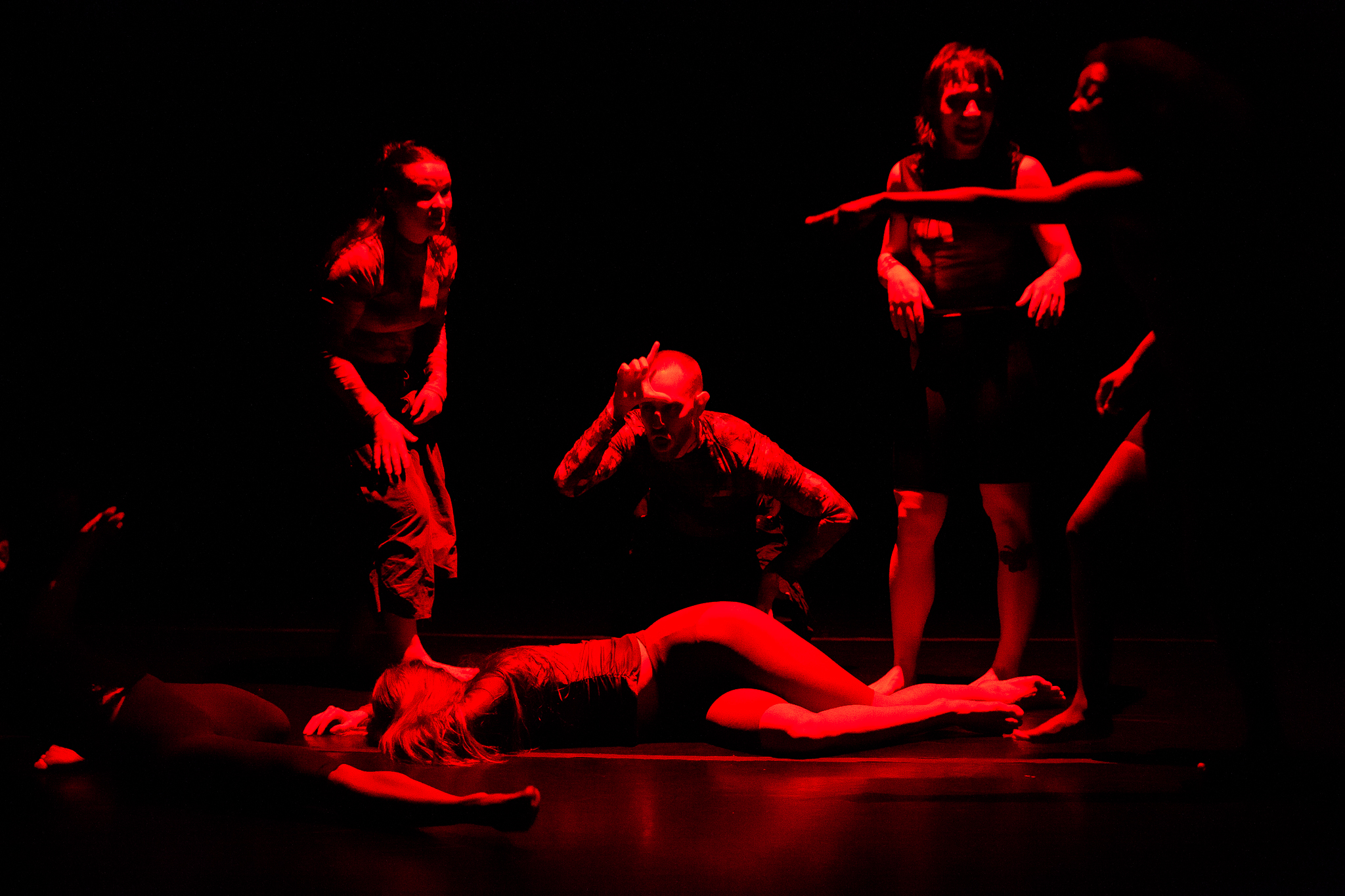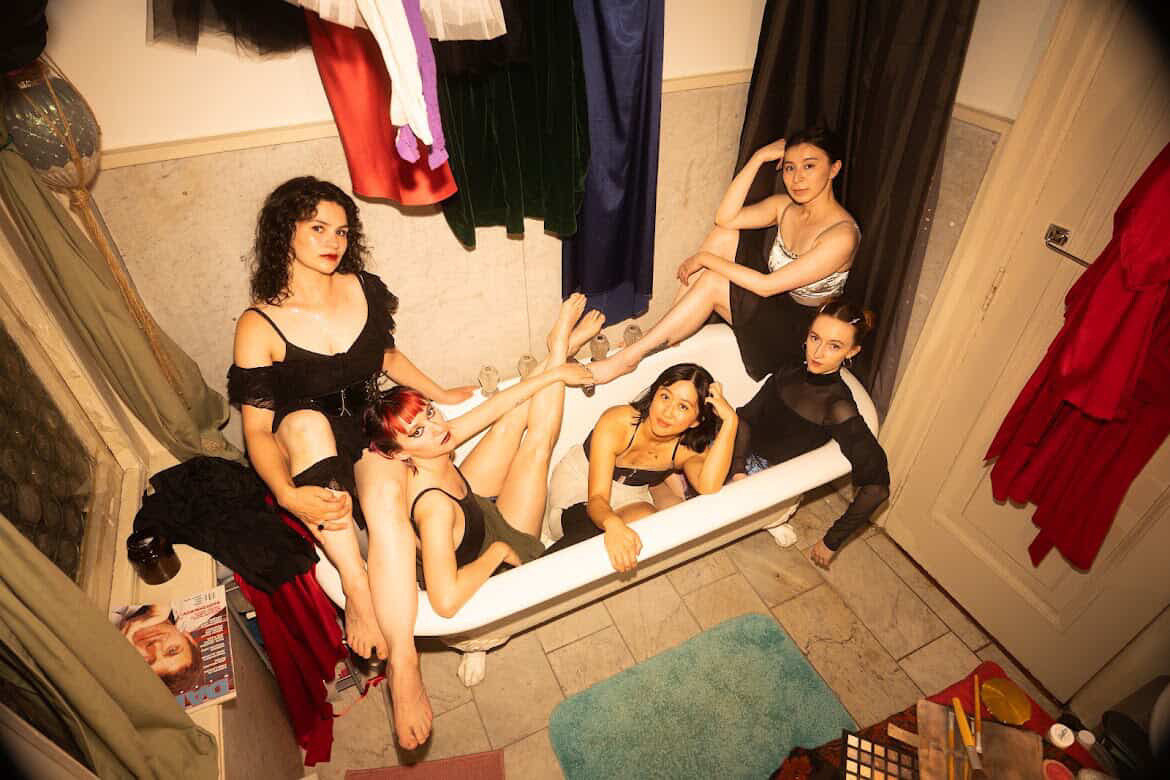
Three Sisters and a Wolf is a first entry to the Philly Fringe by wee keep company, an interdisciplinary group recently moved to Lancaster, PA, where its co-founders, graph theory scholar Landon Rabern and theatre artist/scholar Rachel Anderson-Rabern, now work and teach.[*] The four featured women—powerful performers all—layer time, place, language, music, and movement into a crazy-quilt pattern of female longing and fear.
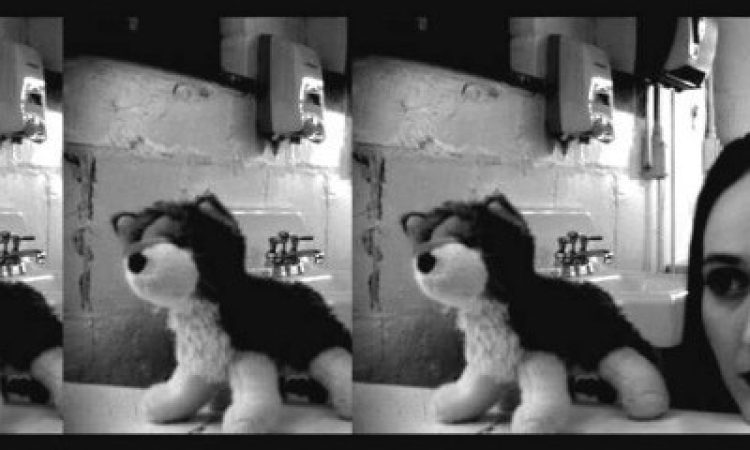
The times: 1900 (or so), 1860 (and thereabouts), right now (more or less). The places: the Russian countryside, Pennsylvania woodlands, the everywhere metropolis of contemporary global culture. The language: Anton Chekhov’s letters and his play, The Three Sisters; wolf lore and facts of radical disappearance; a teacher’s secret thoughts on her students’ writings and responses. The music ranges from recorded pop hits to Christmas carols and yearning folk songs sung by the cast and stage assistants. The movement—here is where some gems strew the stage—is most memorably performed by Pamela Vail as a fuzzy-coated wolf-woman, hauntingly stalking the society that not only pens her in, but pushes her to extinction, the society represented by the three disparate (as well as desperate) sisters who variously fear, long for, and give into their sexualities and isolation.
Holly Andrew (big-sister Olga) is upright and uptight, yet innocently beautiful, as she tries to keep order in her space, her family, and her body. Masha, played by Charlotte Brooks, is softly delicious and sexually explosive. Amanda Schumacher as Irina is both winningly naïve and childishly sly. Vanessa Hart and Charlie Wynn, both assistant directors, as well as students of director Anderson-Rabern, help the sisterly trio to reorder, reshape, revise the small and always messy square of world in which their joys and miseries unfold. All happens beneath the unsighted gaze of Papa Chekhov (or so I construed—but maybe he’s each woman’s imagined lover, or even male-dominated Big Business), whose presence as a suit-jacket, tie, and bowler hat hung on a wheeled coat rack presides silently in the background of the action.
The characters allude, in movement and words, to gloom, to the inevitable failure of dreams to materialize. The wolf’s angled, insistent intrusions onto the stage of this dark and doom seals our knowing that all will reach a fated and unhappy end where women, wonders, and wolf-packs all come to naught.
Three Sisters and a Wolf, wee keep company, Adrienne Theatre, September 5, 6, 12, and 13.
[*] Both teach at Franklin & Marshall College, as does Lynn Matluck Brooks.