Antonia Z. Brown’s Body of Water imagines the dancers “as different states of water,” with bodies that “liquefy, boil, freeze, and melt,” according to the program note by dramaturg Meredith Stapleton. This exploration by Antonia & Artists has yielded a series of studies linked together by blackouts and sound shifts—recorded music by HVZX, Youth Lagoon, Kevin MacLeod, and “Nature” (I heard rushing water, thunder, waves ebbing and flowing, and the performers’ hissing breaths). Eloquently embodied by four dancers (Sean Thomas Boyt, Leanne Grieger, Hillary Pearson, and Kat Sullivan), this watery world was sharper and more angular than the fluid depths that the show’s web page had prepared me to expect. I found myself grappling with that unanticipated dynamic throughout the show.
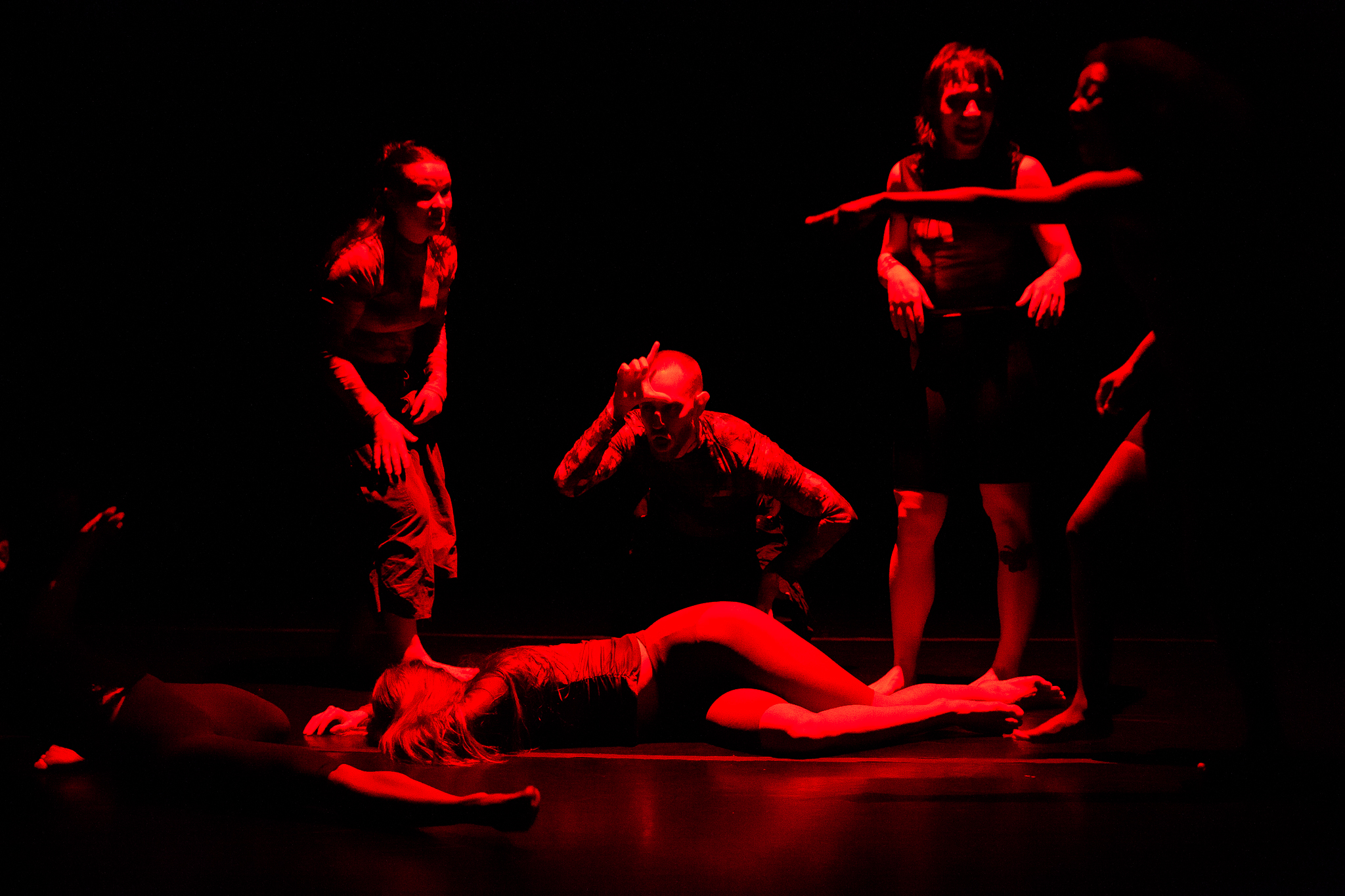
Moments of calm and quiet did punctuate the 45 minutes of dancing. Rolling and rocking like logs, the dancers spread across the stage at times, or stood quietly before sinking ever so slowly in a recurrent pattern of falling-rolling-and-rising, or posed in still shapes silhouetted against the backdrop. At times, the angular shapes the dancers took, or the thrusting of their limbs into space, called to mind the trunks and branches of trees washed away by storms, perhaps shoved against eroded stream banks or jagged rock piles. At other moments, the dancers appeared to be following the deep paths of their own watery innards, or flowing along a torrent slightly out of their own control.
Stapleton’s program note recommends poetry and collage as analogies for this dance and, indeed, the phrases do build, spread from dancer to dancer, repeat, and dissipate. The resulting series of images splashes in succession across the small CEC stage, which—delightfully—these dancers manage to make appear spacious. I sense the performers’ concentration on the images that move their bodies from within, on the spaces between one another, and on the moments that they join in contact or in synchrony (the latter moments could, at times, have been more precise). The periodic return of familiar phrases from the opening of the dance creates continuity in the course of the work, which in future iterations might continue to be shaped, pruned, and reduced to bring us the essence of water, in all its states, and thus leave us just thirsty enough for more.
Body of Water, Antonia & Artists, Community Education Center, September 5, 6, 11, and 12.