I wanted to cover Urban Bush Women’s performance at the Annenberg Center, but I was nervous. How could I, a woman from the white world of Boulder, Colorado, write about Urban Bush Women and their danced commentary on race in a way that is useful and informed?
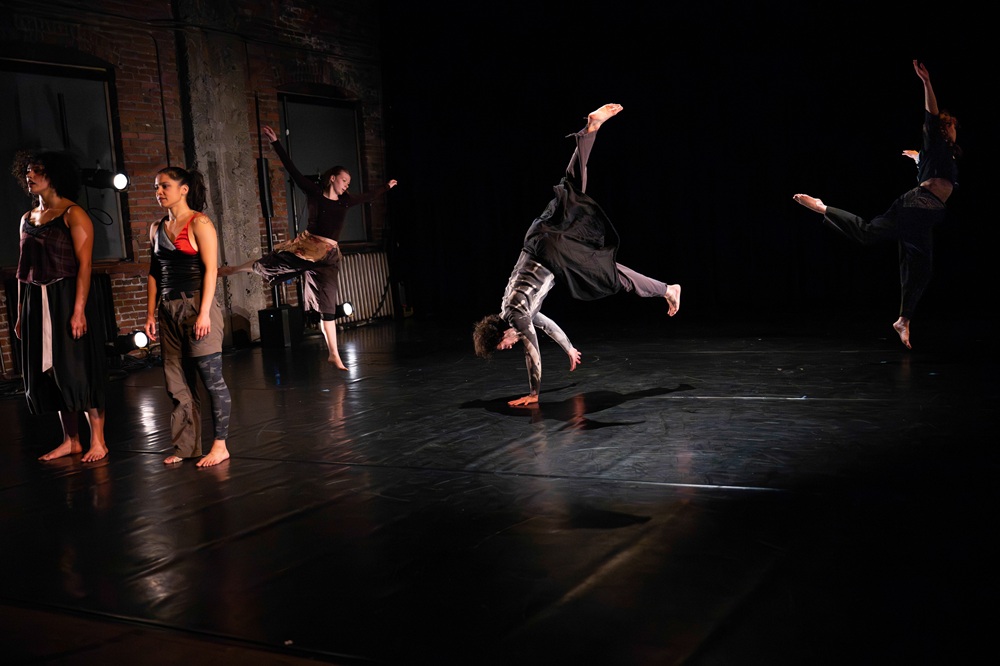
Urban Bush Women begin with 30th Anniversary Mash Up, choreographed by Jawole Willa Jo Zollar. Dancer Chanon Judson stands on a dimly lit stage. A voice calmly booms: “Sojourner Truth.” The voice lists names of significant African Americans who played a role in the emancipation of slaves, in the quest for civil rights, in the shaping of this nation. Judson’s movements to this soundtrack begin slowly. Her arms form angular shapes and then she returns to stillness. She is focused and strong. As the voice lists names that head toward the present, Judson accelerates. Her phrases lengthen. Her whole body forms angular shapes.
The voice booms: “Trayvon Martin, Tamir Rice, Eric Garner, Michael Brown.” My breath catches; the tone of the dancing shifts. Soon the rest of the company joins Judson on stage. The dancers crouch down and stomp their feet in unison. The dancing becomes fast paced, a sudden frenzy. The Urban Bush Women yelp, cry, and shout. Someone in the audience yelps along.
As quickly as the frenzy begins, it dissipates. One by one, the dancers begin to exit the stage. There is just a moment with no one on stage until Du’Bois A’Keen, the only man in the company, stumbles into view. His arms bend at the elbows, hands up. He sings, “I can hear my people cry. I can’t breathe.” He repeats his song. He backs away from the audience with his hands still up. His expression is a mixture of deep sorrow and fear. I am on the verge of tears.
A’Keen backs off stage. The rest of the company flies out in another flurry of leaping, crouching, and stomping. The tone shifts again. A’Keen returns on stage to a rap circle in which the dancers introduce themselves to us—rapping about their lives while using gestures specific and personal to their experiences. Many viewers become excited, clapping along, shouting out in support. The Urban Bush Women make the room feel like a community. We are all welcome. We’re invited to the party.
But so much of the night is not a party. The tonal shifts that continue through the next two pieces, dark swan (choreography by Nora Chipaumire) and HEP HEP SWEET SWEET, (Jawole Willa Jo Zollar) render me exhausted. There is so much sadness and built-up anger, such a pressing need for strength, so much joy. There are “really really big dreams,” but dreams are also crushed.
The dancing surprises me: in dark swan the dancers shake and tremble, propelling themselves backwards on their heels. Eventually, the trembling stops, the women touch their breasts, and slide their hands down their pants. They exude defiance. Tendayi Kuumba stammers out jazz-influenced sounds, “b-b-b-b-b-b-b-b-b-b-b-black.”
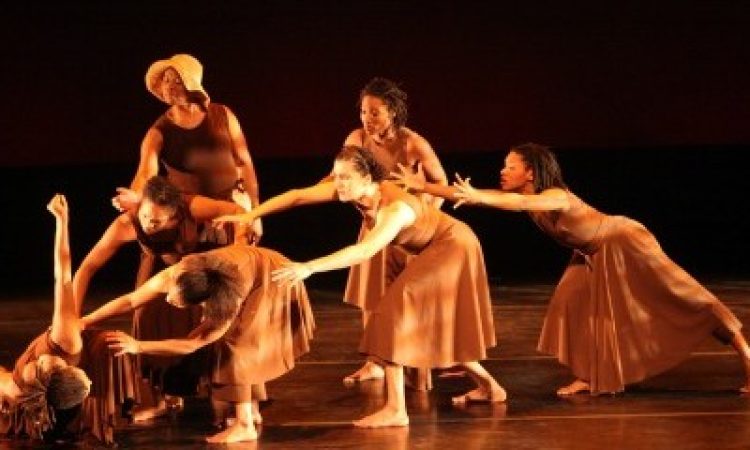
HEP HEP SWEET SWEET centers around a fictitious nightclub. Live piano, trombone, and singing accompany the dancers in their sparkling costumes. The dancers joyously portray showgirls, but soon, the tone becomes more somber, reflecting the crushed dreams of African Americans who migrated North. The dancers slump over chairs, their faces angry or sad. From this brokenness, the music picks up, and we return to joyful dancing.
And what of me and my whiteness? Am I attacked—ashamed for the actions of white people from the past? No. Urban Bush Women create a space for me to learn. They ask to be heard; I listen.Urban Bush Women, Annenberg Center, October 22-24. http://www.annenbergcenter.org/event/urban-bush-women