Six projected videos line the walls of the iMPeRFeCT Gallery in Germantown. Bean bag chairs are set on a plush carpet for visitors to lounge in. I plop myself down into one of the chairs, feeling relaxed, receptive. I am instantly drawn into the meditative pace of Documenting Place & Self, a dance film installation by Merian Soto.
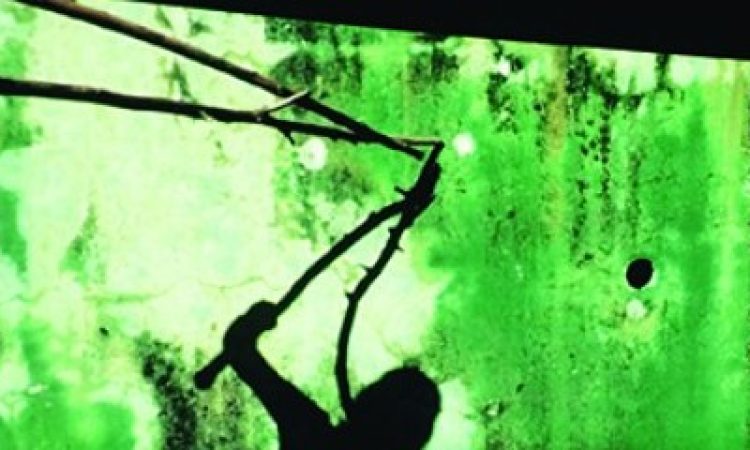
In three videos aligned side by side in a corner of the gallery, the shadow of Soto stomps through a leaf-strewn forest, accompanied by a soundtrack of leaves crunching underfoot. This is the only sound in the space.
I stand in front of a video of Soto slowly revolving with a branch on her head. Leaning against a gallery wall is a bundle of branches. I ask the attendant if I can handle a branch. “Sure,” she replies.
I move into the center of the carpet and place a branch on my head, still facing the video of Soto. Behind her the sharp sun and brightly colored houses of a hilly, Mediterranean town frame her measured shifts of weight. Two men, middle-aged locals in swimsuits who appear to have little time for this branch-dancing woman, join her in the frame. She moves as if oblivious to them. As the weight of the branch bobs down, she waits for it to calm. The branch is not controlling her action, nor is she controlling the branch. Her awareness of the branch’s weight allows them to connect, to share in this moment of breeze and sun and passing pedestrians—a dance of wood and woman. In the background, a high-speed train passes in beautiful contrast to the elegantly unhurried duet.
The same film then jumps to a woodland scene. It is winter, snow covering the forest floor. Soto gradually sinks into the snowy underbrush. I mark time with her in this giving in to gravity. I descend, carefully negotiating the shifts of the branch now balanced precariously on my fingertips. The space expands for me. I realize that I’m tapping into a felt sense, similar to that of the projected figures of Soto that surround me. In all of these films, she’s connected to this same centered state of being, and I empathize with her in this moment. I feel the potency of this quieting.
I wonder what would happen if we all felt this grounded place, this present self. The gallery attendant is watching me. “Can I try?” she asks.
Documenting Place & Self, Merian Soto, iMPeRFeCT Gallery, Nov. 7 – 28, http://imperfectgallery.squarespace.com/new-page/